Staring at a PC component spec sheet can feel like deciphering a secret code. You see terms like "PCIe 4.0 x16" and just... nod along, right? Let's fix that. Understanding what PCIe is isn't just for hardcore techies; it's the key to unlocking your PC's true potential, ensuring your graphics card and SSD aren't stuck in a digital traffic jam. This simple guide breaks down PCIe Gen 4.0 and 5.0 speeds for you.
So, What is PCIe, Anyway? 🔧
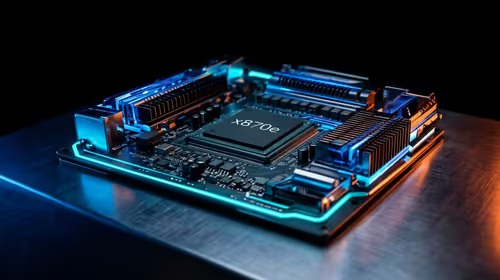
Think of your motherboard as a bustling city. PCIe, or Peripheral Component Interconnect Express, is the system of super-highways connecting the most important locations. It’s the physical slot on your motherboard that allows high-speed components like your graphics card, NVMe SSD, or capture card to talk directly to your CPU.
Without these fast, direct lanes, your powerful components would be bottlenecked, unable to deliver the performance you paid for. The motherboard is the central hub of your PC, and its PCIe capabilities determine how fast everything can run together.
Understanding PCIe Generations: Gen 4.0 vs 5.0 Speeds ⚡
The most important thing to know about PCIe generations is simple: each new version roughly doubles the bandwidth (speed) of the previous one. This "generational leap" is huge for performance.
Here’s a quick breakdown of the maximum theoretical bandwidth per lane:
- PCIe 3.0: ~1 GB/s
- PCIe 4.0: ~2 GB/s
- PCIe 5.0: ~4 GB/s
Since a primary graphics card slot typically uses 16 lanes (written as x16), the total potential bandwidth is massive. A PCIe 5.0 x16 slot can theoretically handle a mind-boggling 128 GB/s of data!
For gamers, faster PCIe Gen 4.0 speeds mean your NVMe SSD can load games and textures incredibly fast, thanks to technologies like Microsoft's DirectStorage. For creators, it means smoother 4K video editing and quicker file transfers. PCIe 5.0 speeds are all about future-proofing, creating headroom for next-generation graphics cards and insanely fast storage we haven't even seen yet.
Check Your Compatibility! ✨
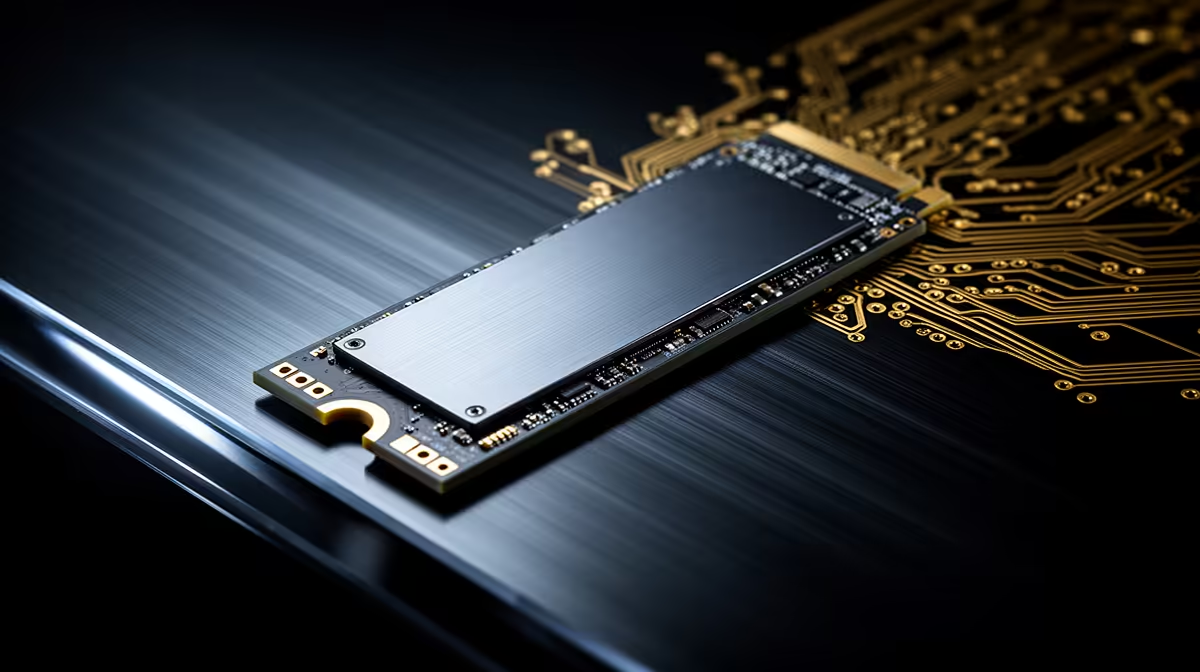
A PCIe 5.0 SSD won't give you Gen 5.0 speeds if you plug it into a motherboard that only supports PCIe 4.0. The components are backwards compatible, but they will only run at the speed of the slowest part. Always match your component's generation to your motherboard's capability to get the performance you paid for!
Do You Actually Need PCIe 5.0 Right Now?
Here’s the honest answer for most South African gamers: probably not.
While the jump to PCIe 5.0 speeds is impressive, even the most powerful graphics cards on the market, like the GeForce RTX 4090, don't fully saturate a PCIe 4.0 x16 slot. For now, PCIe 4.0 remains the performance sweet spot, offering incredible speed for current-gen GPUs and SSDs without the premium price tag of a full Gen 5.0 system.
However, if you're building a top-tier rig from scratch and want it to last for years, investing in a motherboard that supports PCIe 5.0 makes a lot of sense. Most of the latest Intel motherboards for 12th, 13th, and 14th Gen CPUs offer at least one PCIe 5.0 slot for the primary GPU. Similarly, AMD's AM5 motherboards have made PCIe 5.0 a standard feature, preparing you for the next wave of PC hardware.
The Final Verdict: Building for Today vs Tomorrow 🚀
Understanding what PCIe is empowers you to make smarter buying decisions. You can now look at a spec sheet and know exactly what you're getting.
- Building on a budget or upgrading? A solid PCIe 4.0 motherboard offers all the performance you need for today's games and applications.
- Building a high-end, future-proof machine? Opting for a PCIe 5.0-ready motherboard is a wise investment that will pay off as more powerful components become available.
The choice depends on your needs and budget, but now you can choose with confidence.
Ready to Build Smarter?
Understanding what PCIe is and how Gen 4.0 and 5.0 speeds impact your performance is the first step to a killer build. Now, put that knowledge to work. Explore our massive range of motherboards and find the perfect foundation for your next PC.