Quick Answer
For typical SA gaming, DLSS 4 is a meaningful step up from DLSS 3, adding Multi Frame Generation and a sharper transformer-based upscaling model for cleaner image quality. DLSS 4's frame generation is exclusive to RTX 50 cards, while its improved upscaling reaches older RTX GPUs. Both boost frame rates; DLSS 4 pushes them higher with better detail.
What DLSS 4 Adds Over DLSS 3
DLSS 3 introduced single-frame generation, inserting one AI-generated frame between rendered ones to lift smoothness. DLSS 4 extends this to Multi Frame Generation, producing up to three generated frames per rendered frame, and swaps the upscaler for a transformer model that resolves fine detail, edges and motion more cleanly.
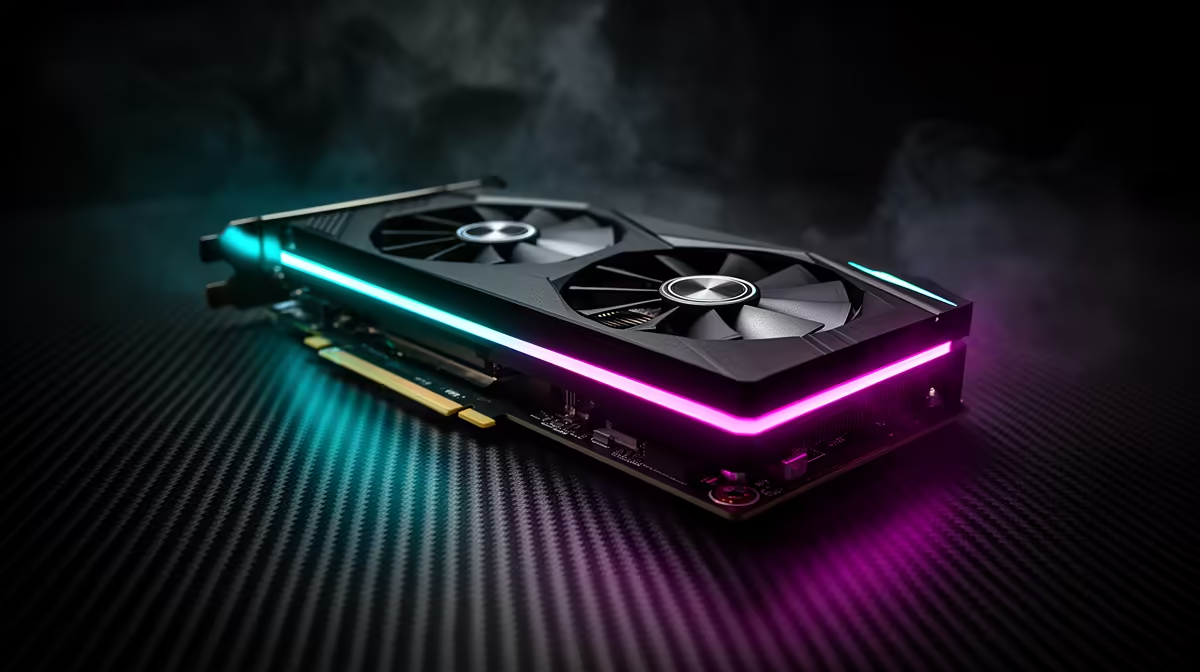
For a typical SA gaming-and-everyday build that has to last several years, the upscaling improvements reduce shimmering and ghosting and apply across RTX 20, 30, 40 and 50 cards. Multi Frame Generation, however, requires an RTX 50 GPU, so the biggest frame-rate gains are tied to the newest cards stocked at Evetech.
Latency, Hardware and SA Value
Frame generation raises the displayed frame rate but does not lower input latency on its own, which is why it pairs with NVIDIA Reflex to keep responsiveness in check. For fast %s, that latency behaviour is worth understanding before relying on generated frames. The transformer upscaler costs a touch more performance than the old model but looks better.
RTX 50 cards at Evetech start around R12,000 for entry models and climb steeply for the flagships. For typical SA gaming, if you already own an RTX 40 or 30 card, DLSS 4's better upscaling still benefits you even without Multi Frame Generation.
FAQ
Does DLSS 4 work on my RTX 30 or 40 card?
Partly. DLSS 4's improved transformer upscaling and Ray Reconstruction reach RTX 20, 30 and 40 cards, sharpening image quality for typical SA gaming. The new Multi Frame Generation is exclusive to RTX 50 GPUs, so older cards keep single-frame generation at best.
Does frame generation add input lag?
Generating frames does not reduce latency by itself and can add a little, which is why NVIDIA pairs it with Reflex to offset the cost. For fast-paced play, enable Reflex and test whether the smoother visuals feel right to you.
Is DLSS 4 worth upgrading my GPU for in SA?
If you specifically want Multi Frame Generation's large frame-rate gains, that needs an RTX 50 card from around R12,000 up. If you already own an RTX 40 or 30, DLSS 4's upscaling upgrade arrives via driver and game updates without new hardware.
Buyer Tip
On an RTX 50 card, turn on Multi Frame Generation with NVIDIA Reflex enabled and the transformer DLSS model; on an RTX 40 or 30, you still gain the sharper upscaler without the new frame-gen.