Quick Answer
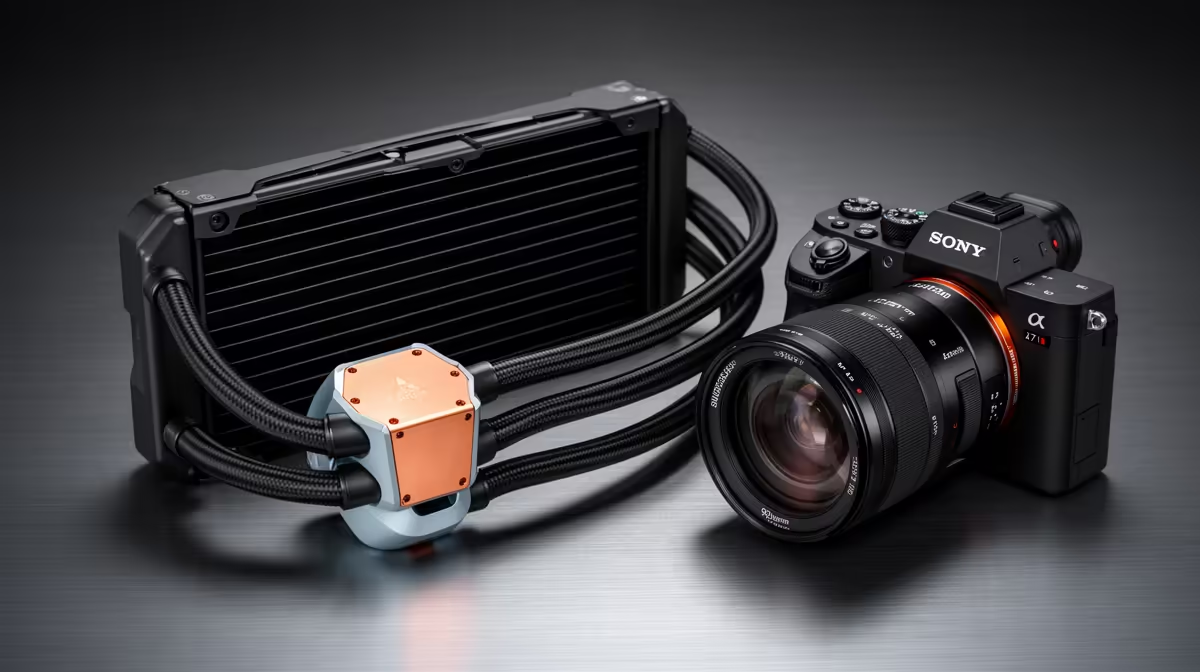
For a combined gaming, streaming, and content creation workload, the features that matter most are radiator size (360mm minimum), pump performance, fan static pressure ratings, and acoustic quality at mid-range RPMs. LCD displays and advanced RGB are secondary. The sustained multi-threaded load of streaming while gaming makes thermal and acoustic performance the primary selection criteria.
Why Simultaneous Workloads Demand More from an AIO 🎮
Gaming alone is a moderately demanding CPU task. Streaming via OBS or Streamlabs adds a sustained multi-core encoding load on top of game physics, and content creation like 4K rendering or Blender pushes all cores for extended periods. A Ryzen 7 9800X3D under this combined load can sustain 150W or more, well above its gaming-only profile. An AIO adequate for gaming alone may throttle or run loudly under the combined load. A 360mm unit with a 30mm-plus radiator and strong pump manages these bursts without thermal compromise.
Acoustic Performance for Streaming and Recording 🎙️
Content creators and streamers share a key problem: microphone pickup of fan noise during recording. An AIO running fans at 1,800 RPM during a stream is clearly audible on most USB microphones. Premium AIOs with fluid dynamic bearing fans stay quiet at 900 to 1,200 RPM, where most combined gaming and streaming workloads settle on a 360mm radiator. For SA creators recording without a soundproofed room, this matters directly for production quality. Look for fan noise below 25 dB(A) at 1,000 RPM.
Software Integration for Multi-Task Monitoring 🔧
For users running multiple workloads simultaneously, software integration between the AIO and system monitoring tools is genuinely useful. An AIO with an LCD pump head display showing coolant temp and CPU utilisation lets the streamer or creator see thermal status at a glance without alt-tabbing from a game or timeline. Companion software that integrates with tools like Corsair iCUE or NZXT CAM can trigger fan speed changes based on CPU load thresholds, automatically ramping up cooling during a render and quietly backing down when the workload finishes. This automated response is particularly valuable when you switch between browsing, gaming, and rendering frequently throughout a South African work-from-home day.
Use OBS Hardware Encoding to Reduce CPU Thermal Load ⚡
Enabling NVENC (Nvidia) or AV1 hardware encoding in OBS offloads stream encoding from the CPU to the GPU. This can drop CPU load during streaming by 20 to 40 percent, reducing cooler demand and allowing quieter fan speeds during streams without sacrificing output quality.
FAQ
Is a 360mm AIO enough for a Ryzen 9 9950X used for 4K video editing and gaming?
For most editing workflows at stock settings, a quality 360mm AIO manages a Ryzen 9 9950X adequately, keeping temps in the 80 to 88 degree range under sustained render loads. Enabling AMD's Eco Mode reduces TDP to 65W, dropping temps significantly while preserving most real-world editing performance.
Should a streaming PC use a separate cooler from a gaming PC, or is one unit enough?
A single high-quality 360mm AIO on a dual-use gaming and streaming PC handles both workloads well. A dedicated streaming PC is only warranted at a professional broadcasting level where separate systems offer workflow advantages beyond thermal management.
Do content creation workloads wear out an AIO pump faster than gaming alone?
Sustained high-load workloads do run the pump at higher thermal cycles, which contributes marginally to wear over years. Practically, the difference is small on a quality unit. A premium AIO's pump lifespan of five to seven years typically covers the useful life of the CPU it is paired with regardless of workload intensity.
Running a combined gaming, streaming, and creation rig?
Find a 360mm AIO at Evetech engineered for sustained multi-threaded workloads.