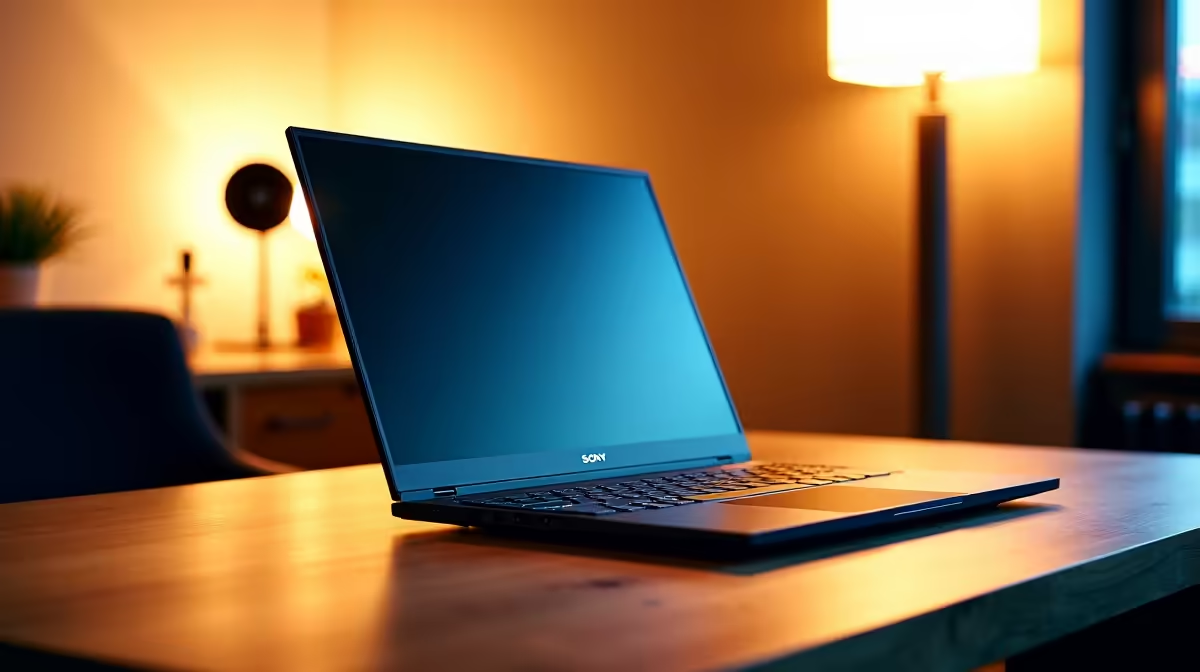
The ASUS Vivobook S14 OLED at R10,719 suits a design student who needs a Windows 11 laptop with an OLED screen for visual work without jumping straight to a bulky gaming machine. For coursework, layout reviews, mood boards, presentations, and everyday campus admin, that is a sensible middle ground rather than overkill.
Best starting point for student design work
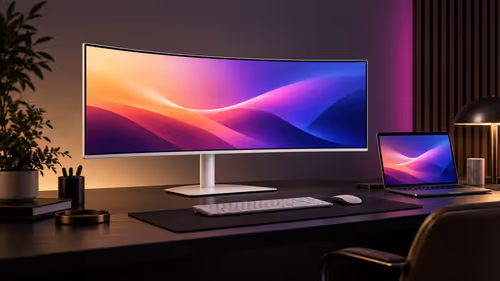
The ASUS Vivobook S14 OLED at R10,719 is the cleanest first pick because the OLED panel is the standout spec for colour-aware study tasks. A design student still needs to check work on calibrated studio screens where possible, but an OLED notebook makes rough compositions, image choices, and portfolio previews easier to judge than a basic display.
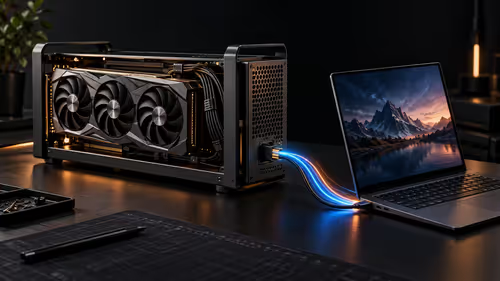
If the brief includes heavier rendering, 3D class projects, or Adobe work that benefits from graphics support, the Lenovo LOQ RTX3050 at R9,500 is the stronger value option. Its RTX3050 spec gives it a different role: less about slim campus polish, more about handling demanding creative workloads at a surprisingly low price.
The Lenovo IdeaPad Slim 3 i7 at R13,400 and ASUS Vivobook X1504VA i7 at R13,999 make sense when CPU headroom matters more than graphics. Both give an i7 route for multitasking, browser-heavy research, and running creative apps alongside notes, references, and submissions.
Creator Desk Reality For A South African Student
On a student desk, the real question is not whether Windows 11 is too much, but whether the machine matches the mix of lectures, assignments, and portfolio work. The ASUS ExpertBook P1503 i5 at R9,858 is reasonable for lighter design courses, while the ASUS ExpertBook P5405 at R12,700 is a cleaner step up for students who want a more business-like study machine.
Ready to choose the right laptop?
Start the student desk shortlist with ASUS ExpertBook P1503 i5 at R9,858, especially if windows laptop overkill design student points you toward its listed spec.