Quick Answer
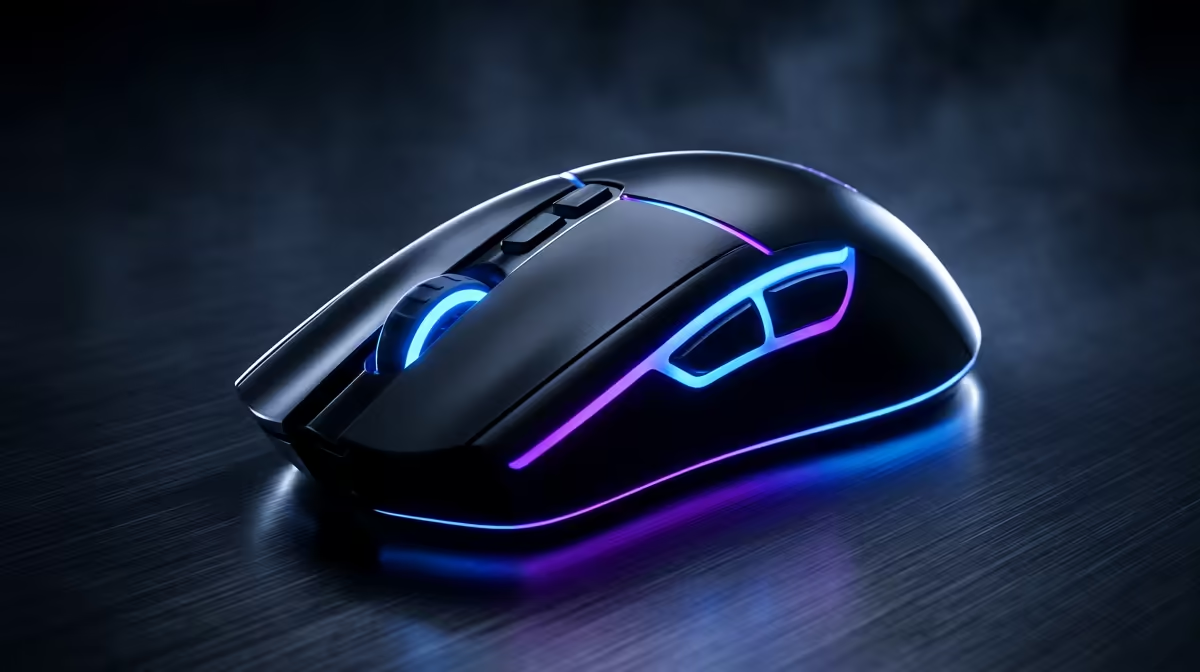
Wireless is the cleaner default for most players, while wired still wins on price and zero charging chores for general gaming setups because modern 2.4GHz gaming mice deliver 1,000Hz polling, low latency and far less cable drag. Wired mice still make sense around R300-R900, but premium wireless models such as Logitech G Pro X Superlight 2, Razer Viper V3 Pro and Razer DeathAdder V3 HyperSpeed justify the move for many SA players.
Why wireless replaced the old compromise
Older wireless mice were heavier, slower and easier to distrust. Current gaming models are different: many sit around 55g-75g, support 1,000Hz or higher polling, and run for dozens of hours per charge. That means the player feels the shape and sensor more than the cable.
For esports, the biggest benefit is freedom of movement. For general gaming, the gain is comfort: no cable snag, cleaner desk space and easier placement around keyboards, controllers, stream decks or notebooks.
Where wired still wins
A wired mouse is still the value pick when the budget is tight. It never needs charging, it avoids dongle management, and good wired models can have excellent sensors. If the buyer is spending below R800, wired options often beat cheap wireless models that cut corners on weight or sensor quality.
Wireless becomes compelling when the model has a proven 2.4GHz receiver, good battery life, USB-C charging and a shape that suits the hand. Bluetooth-only mice are not the same thing as gaming wireless.
Specs SA buyers should check
Compare sensor, weight, polling rate, switch feel, feet, warranty and replacement skates. A 4,000Hz or 8,000Hz mode is only useful if the PC and game can benefit; 1,000Hz is already fine for most players. A cautious local price band is R1,200-R3,800 for strong wireless gaming mice.
FAQ
Is wireless mouse latency still a problem?
Not on good 2.4GHz gaming models. Modern wireless latency is low enough that shape, weight and sensor quality matter more for most players.
Should competitive players still use wired mice?
They can, but they do not have to. Many competitive players now choose wireless because cable drag is a bigger practical problem than latency.
What should I avoid in a wireless mouse?
Avoid Bluetooth-only gaming claims, very heavy bodies and models with unclear sensor specs. USB-C charging and a dedicated receiver are safer signs.
Buyer check
Choose the mouse by shape first, then weight and wireless system; a famous model that does not fit your grip will still feel wrong after a week.