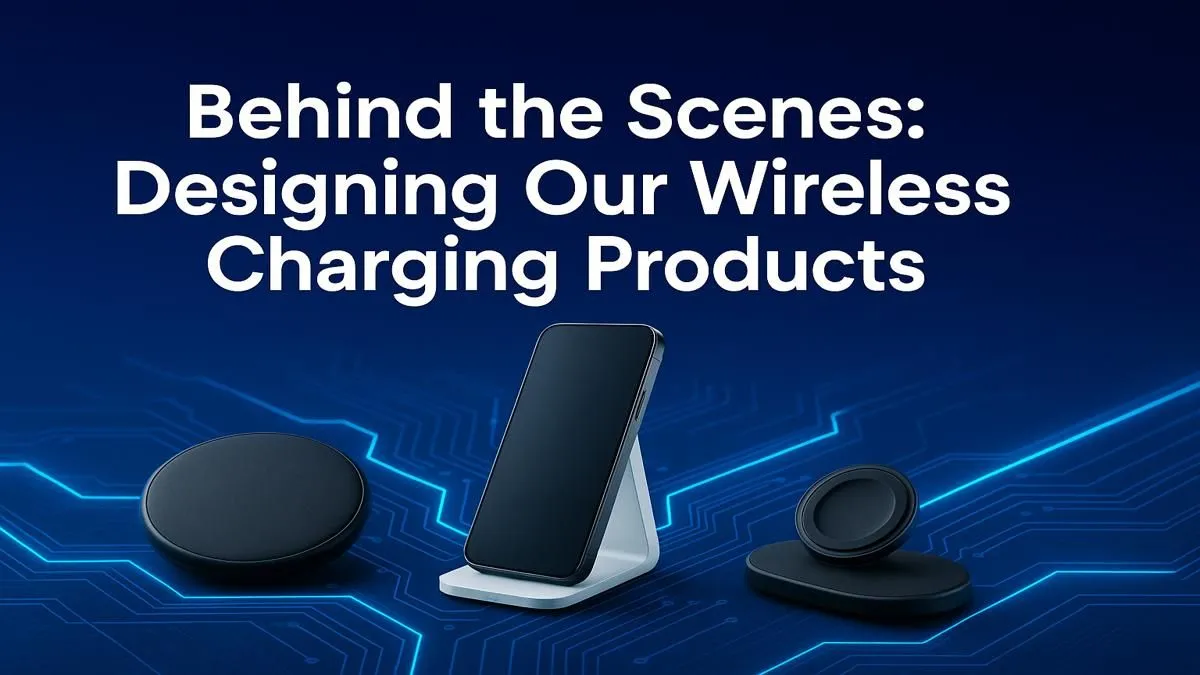
Ever just dropped your phone on a pad and watched it magically start charging? It feels simple, but behind that convenience is a complex journey of engineering and design. Ever wondered what it takes to go from a simple idea to the sleek gadget on your desk? We're pulling back the curtain on the wireless charger design process, showing you exactly how these essential tech accessories are born, from the first spark of an idea to the final product.
The Blueprint of a Wireless Charger Design Process
It all starts with a question: who is this for? A gamer needing a fast charge between rounds? A professional wanting a clean, minimalist desk? The initial phase of the wireless charger design process is all about defining the user and the use case. This determines everything that follows, from power output (like 5W, 10W, or 15W fast charging) to the physical shape. Engineers then create schematics, choosing core components and ensuring the design adheres to the universal Qi standard for maximum compatibility across devices. This foundational work ensures that the final product is not just functional but genuinely useful, forming the basis for our entire range of chargers.
From Concept to Circuitry 🔧
Once the blueprint is approved, the real magic begins. The core of any wireless charger is its induction coil. The design team must meticulously plan the coil's size, shape, and winding to maximise charging efficiency and minimise heat. Safety is paramount here. Features like over-voltage protection, temperature control, and foreign object detection (to stop the charger from activating if you accidentally place your keys on it) are integrated at the circuit board level. This is where premium brands like Promate truly shine, investing heavily in robust safety protocols to protect your valuable devices. It's a delicate balance of power and protection, engineered to be flawless.
Power Up Smartly ⚡
Not all chargers are created equal. Check your smartphone or earbuds' maximum supported charging speed (e.g., 15W). Matching it with a charger that has the same output ensures you're not waiting around forever for a full battery. Using an underpowered charger is safe but incredibly slow!
Aesthetics and Ergonomics in Design
A charger is part of your space, so it has to look the part. The industrial design phase focuses on the charger's shell... its look, feel, and usability. Will it be a flat pad or an upright stand? What materials will be used? A soft-touch silicone finish prevents your phone from slipping, while a sleek aluminium base adds a premium feel and helps dissipate heat. Even the colour and brightness of the LED indicator light are carefully considered—it needs to be visible but not so bright that it lights up your whole bedroom at night. You can see this attention to detail when exploring Promate's design philosophy, where function and form are given equal importance.
The Final Polish: Testing and Optimisation ✨
Before a single unit ships, prototypes go through a gauntlet of tests. This crucial final step in the wireless charger design process validates every decision made so far. Compatibility tests ensure it works flawlessly with a wide array of phones and accessories. Durability tests might involve thousands of plug/unplug cycles for the power cable, while thermal tests push the charger to its limits in controlled environments to ensure it never overheats. This rigorous quality assurance is what separates a reliable daily driver from a dud, making it one of the most essential gaming accessories for keeping your gear powered up and ready for action.
Ready to Cut the Cord?
A great wireless charger isn't just a gadget; it's a quality-of-life upgrade for your desk or bedside table. Explore our massive range of chargers and find the perfect one to simplify your setup and keep you powered up.