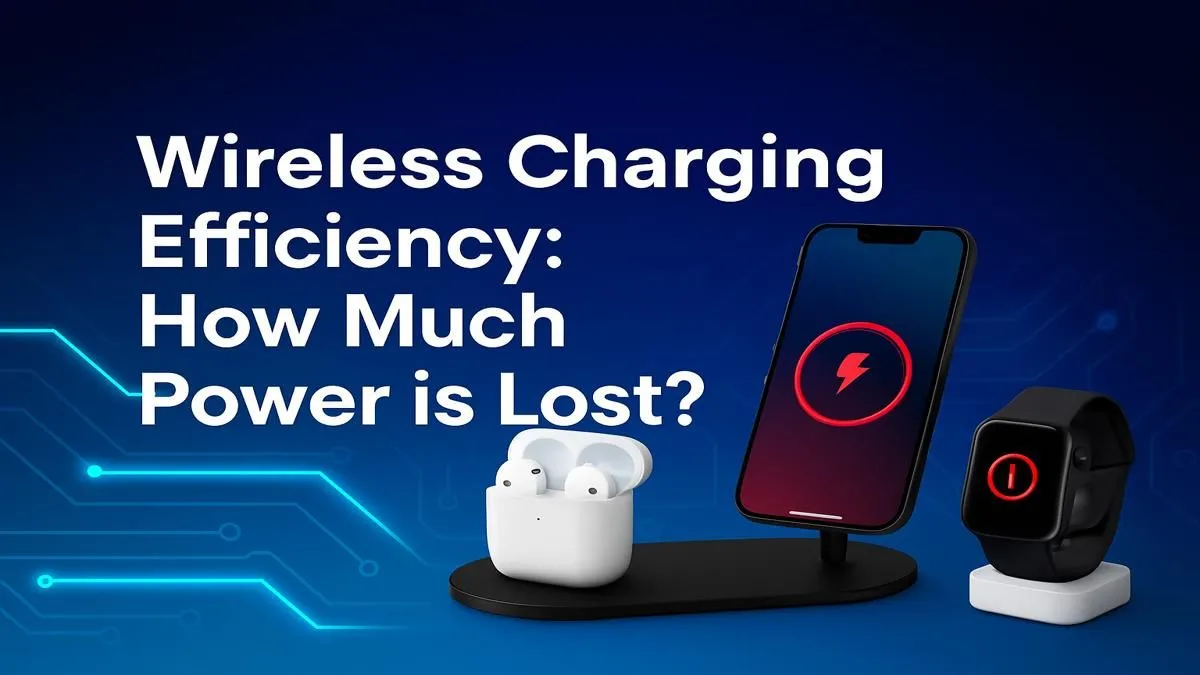
That feeling of just dropping your phone on a pad and watching it charge is pure magic. No fumbling for cables in the dark... it just works. But have you ever picked it up and felt how warm it is? That heat is wasted energy. So, just how much power is really lost with wireless charging, and does it actually make a difference to your electricity bill here in South Africa? Let's break it down.
Understanding Wireless Charging Power Loss
At its core, wireless charging (or inductive charging) uses magnetic fields to transfer energy between a charging pad and your device. It’s brilliant tech, but it’s not perfect. The biggest enemy of wireless charging efficiency is heat. Every bit of warmth you feel from the charger or your phone is electrical energy that didn't make it into your battery. ⚡
So, what's the damage? Compared to a standard USB cable, you can expect a wireless charger to be anywhere from 20% to 50% less efficient. This means that to get the same amount of charge into your phone's battery, the charger has to draw significantly more power from the wall. While this won't drastically spike your monthly bill, the waste adds up over time, and a less efficient charge is also a slower charge. This is why investing in a quality charger from the start is so important.
Key Factors Affecting Efficiency
Not all wireless charging sessions are created equal. Several factors can impact how much power is lost and how quickly your device juices up. Getting these right can make a huge difference.
Perfect Placement is Everything
The single biggest factor in wireless charging efficiency is alignment. The transmitting coil in the charging pad and the receiving coil in your phone need to be lined up almost perfectly. If they're off-centre, the magnetic field weakens, forcing the system to work harder. This generates more heat and wastes more energy. Some chargers have magnets or guides to help with this.
The Trouble with Thick Cases
That rugged, drop-proof case might be great for protecting your phone, but it could be sabotaging your charge. The extra distance and material between the coils increase energy loss. Cases with metal components or pop sockets are even worse, as they can interfere with the magnetic field and even pose a safety risk. For best results, a slim, wireless-charging-compatible case is the way to go.
Quick Efficiency Boost 🔋
Before you go to bed, take your phone out of its case. Charging a bare phone directly on the pad ensures the best possible alignment and minimal interference. This simple habit not only improves wireless charging efficiency but also helps your phone's battery stay cooler, which can extend its long-term health.
Quality Makes a Difference
Let's be honest, not all chargers are built the same. Cheaper, uncertified chargers often use lower-quality components and less sophisticated coils. This leads to more heat and greater power loss. Sticking with reputable brands like Promate ensures you're getting a product designed for optimal performance and safety, minimising wasted energy. Their gear is built to meet standards that protect your device.
So, Is Wireless Charging Still Worth It in SA? 🤔
Absolutely, but with a caveat. The convenience is undeniable, especially for a desk setup where you’re constantly picking up and putting down your phone. It reduces wear and tear on your phone's charging port, too.
For a South African gamer, a wireless charging stand on your desk is a fantastic way to keep your phone topped up during a long session without cluttering your space with more cables. You can find some great charging accessories for your gaming setup that blend right in. However, if an unexpected outage is looming and you need to get the fastest charge possible, a high-quality cable is still your best bet. It’s about using the right tool for the job. You can explore Promate's range of charging solutions to find both wired and wireless options that fit your lifestyle.
The key takeaway is that while some power loss is inevitable, you can minimise it by choosing quality gear and using it correctly. The small loss in efficiency is often a price worth paying for the sheer convenience. ✨
Ready to Cut the Cord Efficiently?
The debate over wireless charging efficiency is real, but a quality charger makes all the difference. Stop wasting power and start charging smarter. Explore our massive range of charging solutions and find the perfect match for your setup today.