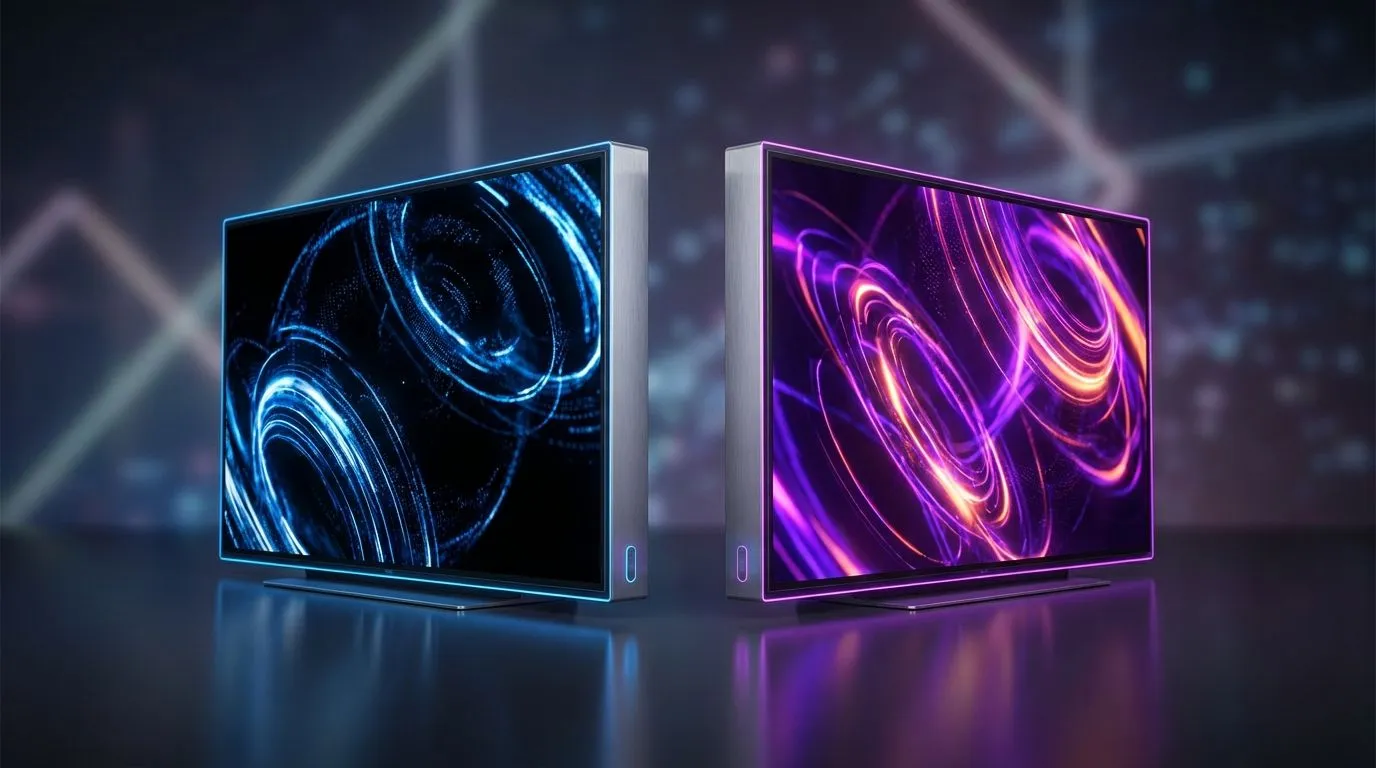
You’re speccing out your dream 2026 rig. The GPU is sorted, the CPU is a beast… but the monitor? That’s where the real battle is. You're facing the ultimate display showdown: WOLED vs QD-OLED. One promises pristine whites and mature technology, the other eye-popping colour and searing highlights. So, which panel technology is the right investment for your South African setup? Let's break down which one will likely win in 2026.
The OLED Battleground: Understanding the Core Tech
Before we dive deep, let's get the basics straight. Both WOLED and QD-OLED offer the holy grail of display tech: per-pixel lighting. This means perfect blacks, infinite contrast, and near-instantaneous response times that leave traditional LCDs in the dust. The main difference in the WOLED vs QD-OLED debate lies in how they create colour.
- WOLED (White OLED): Pioneered by LG Display, this tech uses a stack of blue, yellow, and green OLED materials to create a white light source. This light then passes through a colour filter to produce red, green, and blue subpixels. Think of it as a highly advanced, self-lit version of an LCD panel.
- QD-OLED (Quantum Dot OLED): Championed by Samsung Display, this approach uses a blue OLED layer as its sole light source. This blue light then hits a layer of quantum dots, which convert it into highly pure red and green light, while blue passes through directly.
This fundamental difference is what fuels the entire debate over which is the superior panel technology.
WOLED vs QD-OLED: The 2026 Showdown
As we look towards 2026, both technologies are evolving at a blistering pace. The gap is closing, but key distinctions remain that will influence your choice. Let's compare them across the factors that matter most to gamers and power users.
### Colour Vibrancy and HDR Impact 🚀
This is QD-OLED's home turf. Because it doesn't use a colour filter that absorbs light, QD-OLED can deliver higher colour volume. This means colours look incredibly rich and saturated, even at peak brightness levels. For cinematic games like Starfield or watching HDR movies, the sheer pop and vibrancy of a QD-OLED panel are hard to beat, especially on a stunning Curved screen that pulls you into the action.
WOLED, on the other hand, excels at full-screen brightness thanks to its white subpixel. While its colours are fantastic and a huge leap over older tech, they can sometimes appear slightly less saturated than QD-OLED's in the brightest scenes.
OLED Care 101 🛡️
To maximise your OLED's lifespan, vary your content! Use a dark mode where possible, set your taskbar to auto-hide, and use a screensaver or set the display to turn off after a few minutes of inactivity. These small habits go a long way in preventing image retention and ensuring your panel stays pristine for years.
### Gaming Performance and Motion Clarity
In terms of raw pixel response time, it's a dead heat. Both OLED technologies offer sub-1ms response times, virtually eliminating ghosting and motion blur. For competitive gaming, this is a massive advantage. When you're playing at high refresh rates, found in our 170Hz – 240Hz monitor range, every frame is delivered with pristine clarity.
To ensure a tear-free experience, pairing your GPU with the right sync technology is crucial. Whether you're on team green with G-Sync (NVIDIA), team red with FreeSync (AMD), or using the universal Adaptive Sync standard, both panel types support these features flawlessly.
### Text Clarity and Everyday Use
Here's where things get interesting. Early QD-OLED panels used a triangular subpixel layout that could create minor colour fringing on text, which some users found distracting for productivity. While newer generations have improved this significantly, WOLED's more conventional subpixel structure generally provides slightly sharper, cleaner text out of the box.
If your monitor will be your daily driver for both work and play, especially on a traditional Flat screen, a WOLED panel might be the more comfortable all-rounder. While high-end IPS panels have long been the standard for professional colour accuracy, the contrast and response of OLED is in another league entirely.
The Verdict: Which Panel Wins in 2026? ✨
So, after weighing it all up, which tech comes out on top in the WOLED vs QD-OLED battle? By 2026, the answer will be even more nuanced, but here’s our prediction: there won't be a single winner. Instead, the best choice will depend entirely on you.
- Choose QD-OLED if: You are a cinematic gamer or content consumer who craves the absolute best HDR impact and the most vibrant, saturated colours money can buy.
- Choose WOLED if: You are a hybrid user who needs excellent text clarity for work but also wants top-tier gaming performance, or if you prefer brighter full-screen performance for well-lit rooms.
Ultimately, both technologies represent the pinnacle of display performance. The competition is driving incredible innovation, meaning that regardless of which you choose, you're getting a phenomenal visual experience.
Ready to Find Your Perfect Match?
The WOLED vs QD-OLED debate is thrilling, but the best way to decide is to see the latest technology for yourself. Explore our massive range of PC monitors and find the perfect panel to elevate your setup.