



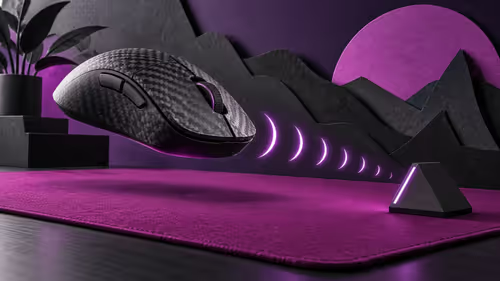
ATK Phantom: choose grip fit before chasing dual 8K polling
ATK Phantom pairs a 44g carbon-fibre composite shell with dual 8K polling. Treat those as specifications, then test shape, receiver placement and the settings your games can use.
Read moreBoulies EP600 offers adjustable seat depth, back height and armrests. Use those ranges to check your seated fit and desk position; a feature count cannot establish comfort for your body.
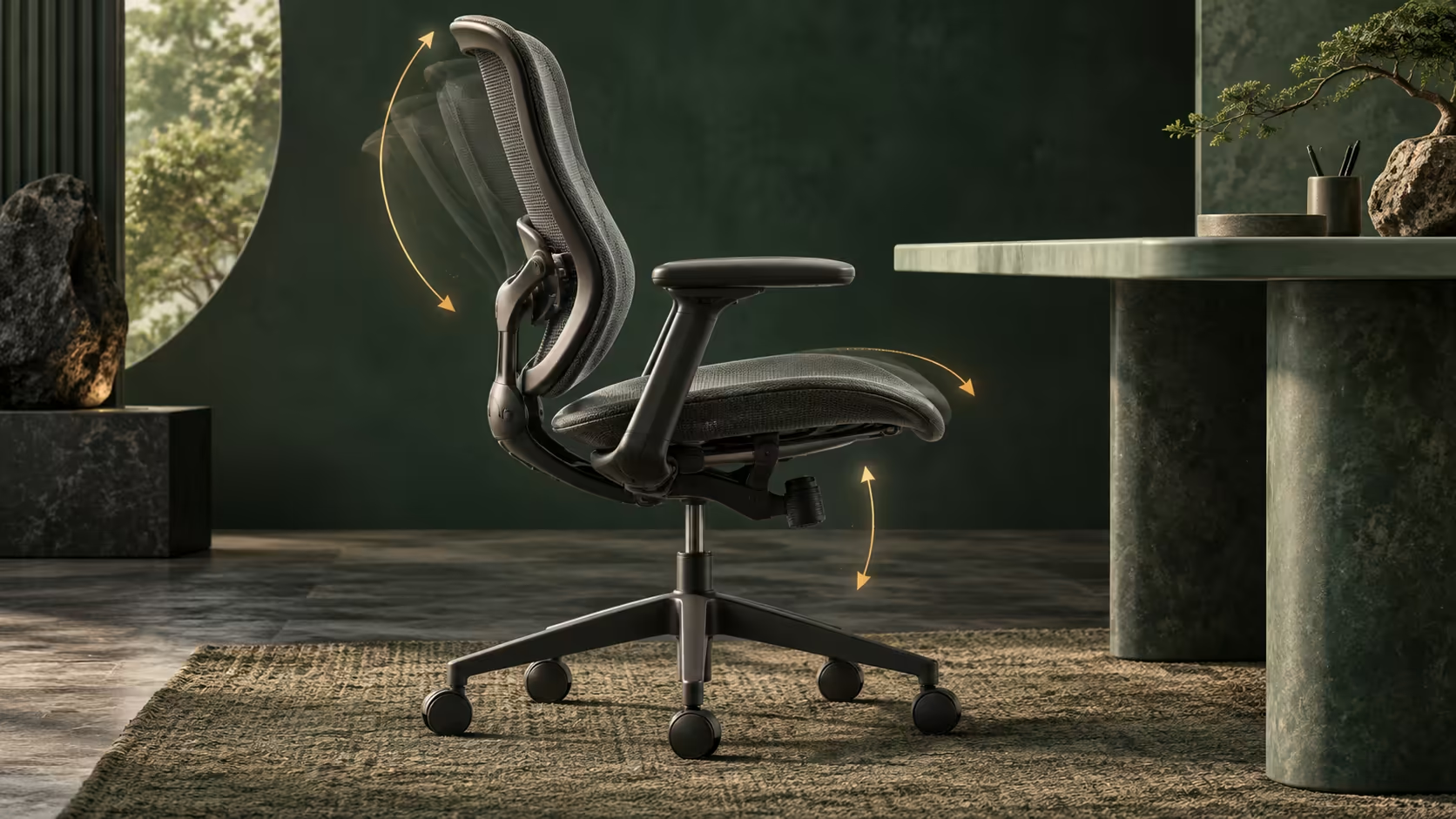
The most adjustable chair in a comparison can still leave your arms too high for the desk. Boulies EP600 brings a mesh-chair announcement with seat, back and armrest adjustments to consider. The useful shopping exercise starts with your feet, knees and keyboard position, because those parts must work together through a normal day.
Boulies lists the EP600 for users around 165-190cm tall, with a 136kg capacity, 50mm seat-depth adjustment and 70mm back-height adjustment. Those dimensions guide a fit check; they do not guarantee individual comfort. South African EP600 stock and pricing are not established here. For a dated local comparison, the HBADA P1 Air white chair cost R2299 on 12 October 2026, a separate local option.
Begin with a position that supports the feet and leaves comfortable space behind the knees. Sliding a seat forward or back changes which part of the thighs is supported. The announced 50mm range is useful only if the resulting positions include one that suits your legs. A tall back and a generous feature list cannot correct a seat that places its edge in an uncomfortable spot.
Body height is an approximate shopping filter, not a complete description of seated proportions. Two people of similar height can need different seat depth and back support. If you can try a chair, sit as you normally work rather than perching on the front for a short demonstration. Check whether the position remains natural while reaching for the keyboard and mouse.
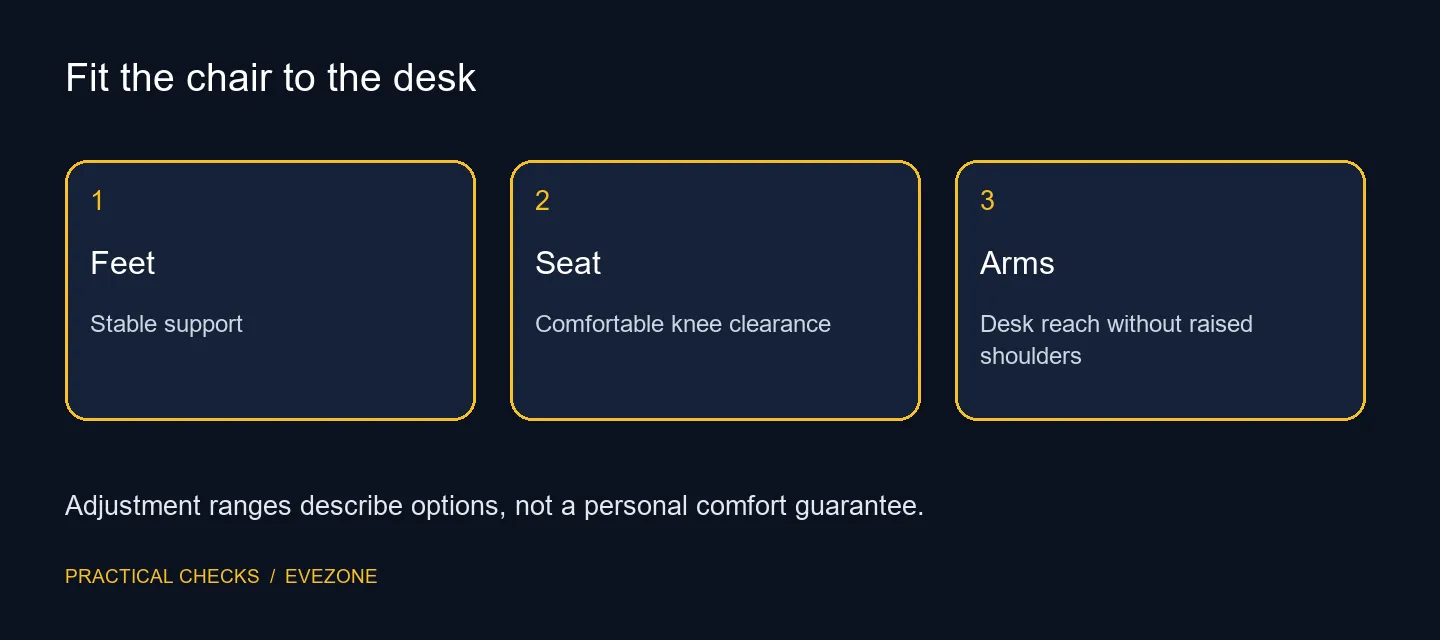
Armrests need to support a useful working position without forcing the shoulders upward or preventing the chair from approaching the desk. The EP600 announcement uses a 6D armrest label, but the relevant question is which adjustments make your desk easier to reach. Test mouse movement as well as typing, since a wide movement can expose an awkward arm position.
Look beneath the desk for drawer units, frame supports and anything that restricts how close the chair can move. An otherwise comfortable chair can leave you reaching forward if its arms or base meet an obstruction. Compare gaming and office chairs with your desk measurements beside the chair specifications. The two pieces of furniture form one working setup.
The listed 70mm back-height adjustment and 4D lumbar support provide ways to change the contact position. Move them gradually and assess the feeling during ordinary work. Setting every adjustment to its maximum is not a useful default. The supported posture should allow normal movement rather than requiring you to hold yourself against a particular part of the backrest.
Recline is another position to test in context. The announced range reaches 120 degrees, but the usable space behind the desk and your intended activity decide whether that position helps. Check that returning to the typing position is straightforward. A chair that feels pleasant while leaning back may behave differently when both hands return to the keyboard.
The R2299 HBADA reference gives a dated local budget point. It does not establish equivalent adjustments, materials or fit. Use office chairs under R4000 to compare available options around the dimensions that matter to you, then confirm the exact model and delivery details. Keep the warranty and parts-support questions separate from the appearance of the chair.
A foreign product page cannot establish the delivered South African total or who will assist if an adjustment fails. Obtain those details before committing to an imported model. If you cannot try the EP600, prioritise clear dimensions and practical return terms. The goal is a chair that works with your body and existing desk, not a collection of adjustment labels that you rarely use.
Boulies lists a recommended user height of 165-190cm and a 136kg capacity. Personal seated fit still needs checking.
The product page lists 50mm of seat-depth adjustment. Check where the seat edge sits behind your knees.
Boulies lists 70mm of back-height adjustment. Set support around your own seated position rather than the maximum setting.
The announcement describes 6D armrests and 4D lumbar support. Test the useful positions at your desk instead of buying by the labels.
No. South African stock, delivered pricing and warranty support must be confirmed separately for the exact seller.
The catalogue priced an HBADA P1 Air white office chair at R2299 on 12 October. It is a separate chair, not an EP600 price match.
Measure your seated workspace Record seat reach, desk clearance and arm position, then compare chairs using those measurements and local support terms.
Boulies lists a recommended user height of 165-190cm and a 136kg capacity. Personal seated fit still needs checking.
The product page lists 50mm of seat-depth adjustment. Check where the seat edge sits behind your knees.
Boulies lists 70mm of back-height adjustment. Set support around your own seated position rather than the maximum setting.
The announcement describes 6D armrests and 4D lumbar support. Test the useful positions at your desk instead of buying by the labels.
No. South African stock, delivered pricing and warranty support must be confirmed separately for the exact seller.
The catalogue priced an HBADA P1 Air white office chair at R2299 on 12 October. It is a separate chair, not an EP600 price match.
ATK Phantom pairs a 44g carbon-fibre composite shell with dual 8K polling. Treat those as specifications, then test shape, receiver placement and the settings your games can use.
Read more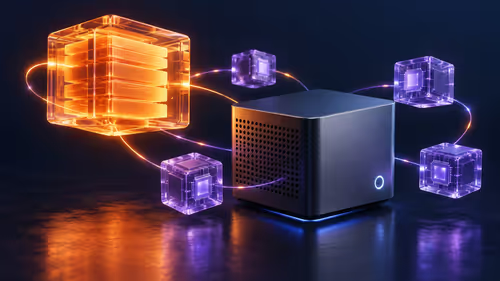
AMD details a validated Halo software environment and says Windows-based Project Zenith systems are coming soon. Separate tested software claims from the operating system offered with a specific unit.
Read more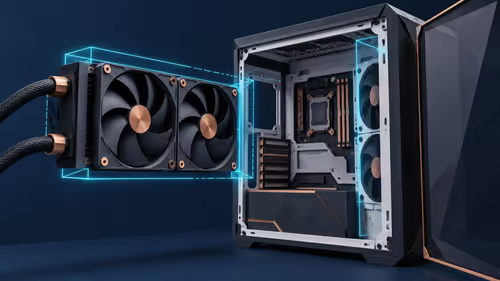
Montech CyberFlow arrives in 240mm and 360mm versions with a 32mm radiator. Measure the complete radiator-and-fan stack before choosing; socket support alone does not prove case fit.
Read more
For the new tax year, a Ryzen mini PC is worth considering when the spend needs to stay near the R4,150 to R4,600 range shown in the source. The Minisforum NAB6 Lite is R4,150, with the UM750L and AI-X1-255 around R4,600, so the decision is mainly about workload and desk space.
Read more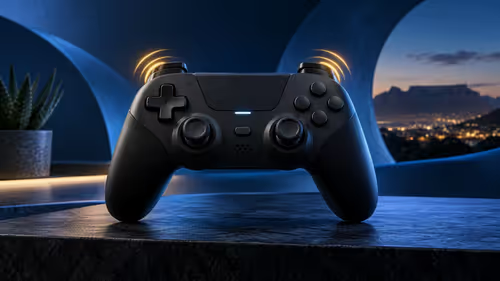
abxylute P5 controller combines Hall Effect sticks with adaptive triggers for PS5. The international launch listing is not a South African quote. Confirm game support, connection modes and warranty for the exact unit rather than buying on the stick technology alone.
Read more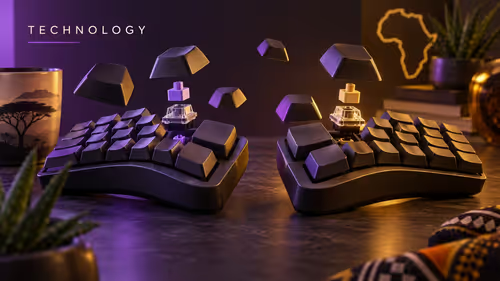
Yuzu KLP Lame keycaps add custom legends to sculpted PBT sets for split keyboards. MX and Choc variants use different stems and spacing. Count every key and thumb position before ordering; the profile is not a complete replacement set for an ordinary TKL.
Read more
Steam content servers unreachable needs a download-path check, not an immediate reinstall of every game. Restart the client, inspect download settings and compare another connection when practical. Clearing the download cache is separate from deleting installed games.

Keychron G6 HE has built-in and swappable battery versions with different weights. The product brief lists 42g and 46g respectively, each with a 3g tolerance. Choose by grip and battery preference before treating one headline weight as universal.

Corsair HS80 v2 MAX supports 2.4GHz wireless and Bluetooth. Its maximum battery figures use RGB-off conditions and differ by connection. Check microphone routing, comfort and the exact device support before assuming every wireless mode behaves alike.

Windows taskbar notification badges can be shown or hidden in Taskbar behaviours. This changes the small app indicators, not the underlying messages. Choose a calmer desktop while keeping a deliberate routine for checking important conversations and app updates.

Windows transparency effects can be switched off to make supported backgrounds more opaque. Use Accessibility, Visual effects or the colour settings, then compare a menu against your wallpaper. This R0 preference changes appearance; it is not a promised.

Windows title bar window shake can minimise other open windows when you shake the active window by its title bar. Inspect the Multitasking setting and switch it off if that gesture interrupts your work. The preference costs R0 and does not require new hardware.

Windows Print Screen opens Snipping Tool when its keyboard preference is enabled. Change the option under Accessibility, Keyboard to choose another workflow. Test whether you need a clipboard image or a saved file.

Windows desktop icons missing may be a visibility setting. Right-click the desktop, choose View and inspect Show desktop icons. If only system icons are absent, use Desktop icon settings. Check the Desktop folder before assuming files were deleted.

RTX 5090 should be enough for Palworld at 1080p when the rest of the PC is balanced. Use this SA-focused guide to weigh settings, monitor refresh, CPU balance, and upgrade room without relying on unsupported FPS claims.

student laptop guide for Gqeberha gamers should be shortlisted around the job it must do. South African buyers should compare CPU, GPU, RAM, and screen quality, warranty path, and upgrade room before treating any pick as best.

A second-hand GPU on a R5,000 SA budget can save money but adds condition risk. Check warranty, temperatures, fan noise, ports, seller proof, power draw, and return options first.

gaming monitor delivery and pickup in Gqeberha should be shortlisted around the job it must do. South African buyers should compare panel type, resolution, refresh rate, and ports, warranty path, and upgrade room before treating any pick as best.