Ever dreamed of turning your passion for aviation into profit? For many South Africans, the roar of a jet engine is a calling. But the cost of a pilot's license can feel... astronomical. What if you could bring that thrill to the masses, right here on the ground? Starting a flight simulator business in South Africa is no longer a fantasy. It's a viable, exciting venture that merges cutting-edge tech with a timeless love for the skies. ✈️
Launching Your Flight Simulator Business: Core Hardware
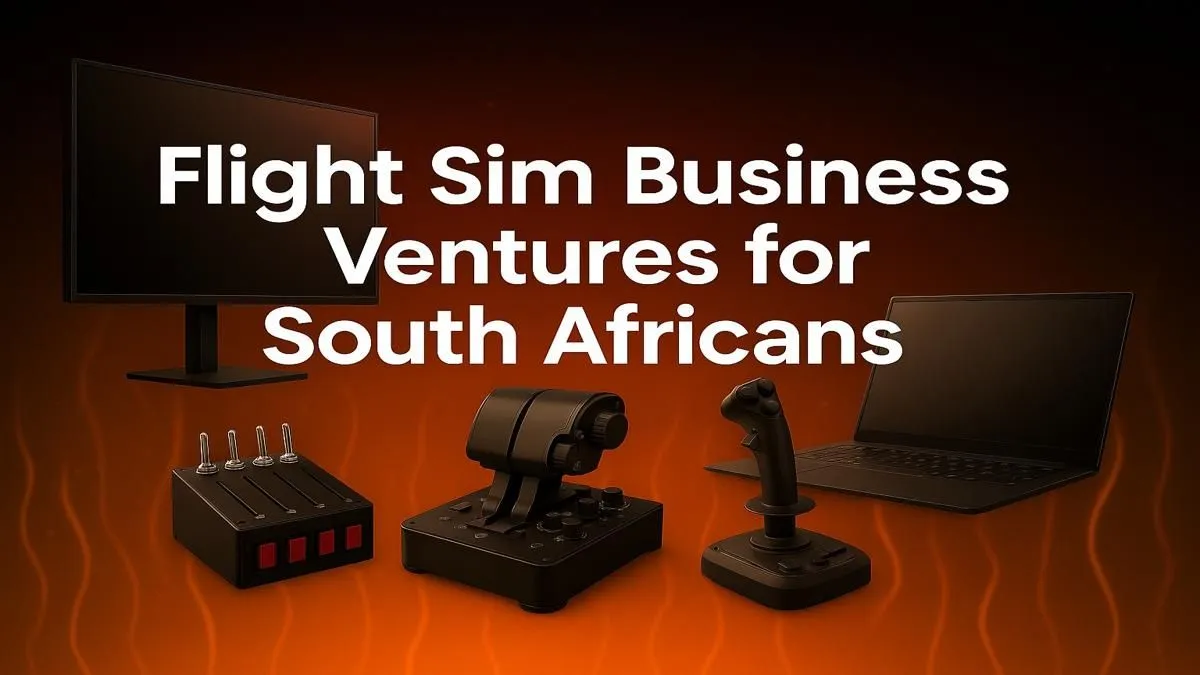
Before you can charge for airtime, you need to build your cockpit. This isn't just about buying a PC; it's about crafting an experience. The goal is immersion... making your clients forget they're in a room and believe they're at 30,000 feet.
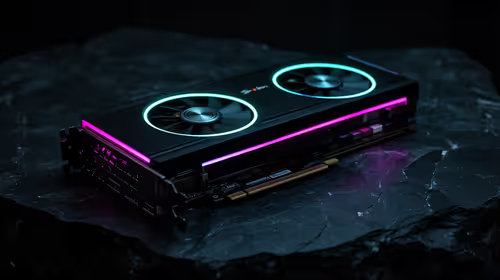
Your journey starts with the heart of the machine. A powerful PC is the engine of your entire operation, and you can't afford to skimp. Systems purpose-built for demanding titles like Microsoft Flight Simulator are optimised to handle complex physics and breathtaking visuals without stuttering. This is your foundation.
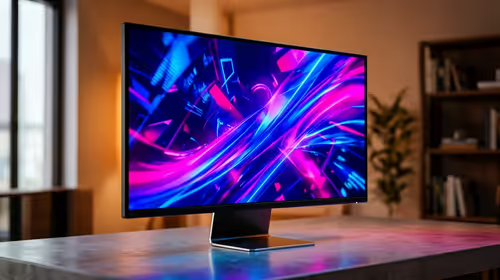
Next, consider the view from the cockpit. While multi-monitor setups are the dream, a single, immersive screen can be a great starting point. High-refresh-rate curved monitors wrap the action around you, enhancing peripheral vision and making the feeling of flight far more convincing.
6 Profitable Flight Simulator Business Ideas in South Africa 💰
With the basic hardware in place, how do you turn it into a successful flight simulator business? Here are six ideas tailored for the South African market.
1. The "Experience Centre" Model
Think of it as a high-tech arcade. Set up in a mall or entertainment hub and offer pay-per-session flights. Customers can choose to take off from O.R. Tambo, land in Cape Town, or even attempt a tricky approach in bad weather. It's casual, fun, and has a broad appeal.
2. Aspiring Pilot Training Aid
This is a more serious, high-value offering. Market your simulator to local flight schools and student pilots as a tool to practise procedures, navigation, and emergency scenarios in a safe, cost-effective environment. For this to work, you must invest in quality controls. A realistic yoke and throttle quadrant from a brand like Thrustmaster can make or break the experience for a genuine trainee.
3. Corporate Events & Team Building
Looking for a unique team-building activity that isn't another round of paintball? Offer corporate packages where teams work together as pilot and co-pilot to complete challenges. It’s memorable, fun, and businesses in Sandton or the V&A Waterfront are always looking for something new.
4. Fear of Flying Clinics
Partner with a local therapist to offer exposure therapy for individuals with aviophobia. A controlled, simulated flight can be a powerful tool to help people overcome their fears in a safe space. It's a niche market with a massive real-world impact. ✨
5. Mobile Simulator Trailer
Why wait for customers to come to you? Build your simulator into a custom trailer and take the experience on the road. Think festivals, school fetes, and private parties. A mobile flight simulator business has lower overheads and can reach markets across the country.
6. Content Creation & Streaming
If you've got the personality for it, turn your simulator into a studio. Stream your flights on Twitch or create cinematic YouTube videos. As your audience grows, so do opportunities for sponsorships and ad revenue. If you plan on streaming your flight simulator business adventures, comfort is key for those long-haul flights. A proper ergonomic gaming chair isn't just a luxury; it's a necessity for your health and performance.
Cockpit Pro Tip 🚀
For maximum immersion, focus on your Field of View (FOV). In Microsoft Flight Simulator, a wider FOV on a curved or triple-monitor setup makes you feel like you're really 'in' the cockpit. Experiment with the zoom settings until the perspective from the pilot's seat looks and feels natural, not stretched or squashed.
Optimising Your Setup for Ultimate Realism
To truly stand out, especially if you're targeting aspiring pilots, realism is everything. This means going beyond a single screen and basic joystick.
For a truly panoramic view that mimics a real cockpit, consider a triple-screen setup. Getting three matching, high-quality PC monitors allows you to see out of the side windows of the aircraft, which is crucial for visual landings and maintaining spatial awareness.
The right peripherals add that final layer of tactile realism. A yoke, rudder pedals, and a throttle quadrant are non-negotiable for a professional-grade flight simulator business in South Africa. They provide the physical feedback that turns a game into a believable simulation.
Ready to Take Flight?
Turning your passion for aviation into a business starts with the right gear. From powerful PCs to immersive peripherals, we have everything you need to build your dream cockpit. Explore our range of Flight Sim PCs and components and get your business off the ground today.