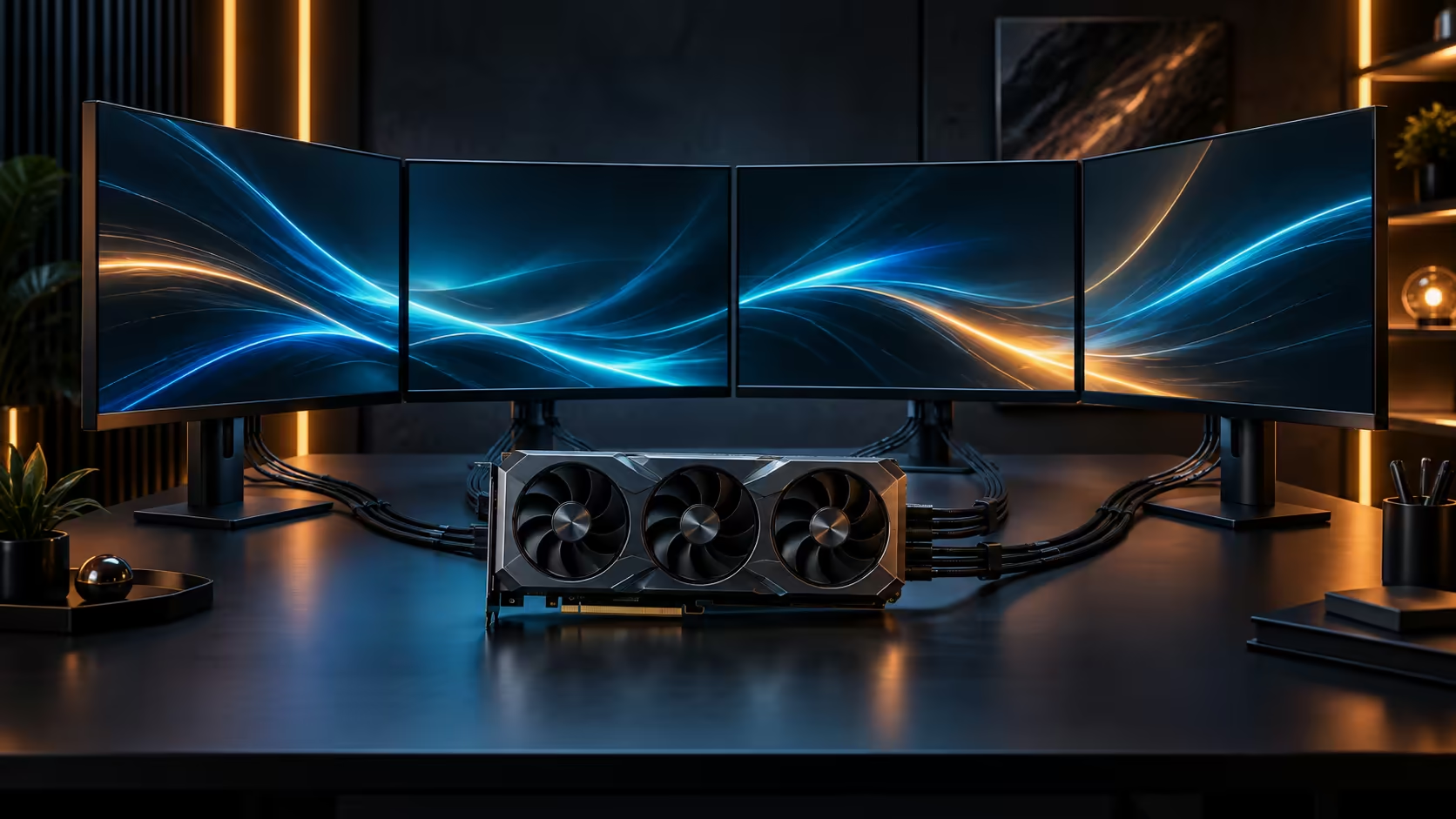
A screen bolted onto a graphics card sounds like a gimmick until you are three hours into tuning a fan curve and realise you have not had to alt-tab once. Whether a detachable AMOLED display earns its place on a card comes down entirely to whether you are the kind of owner who actually opens a monitoring tool.
Quick Answer
It is useful if you tune your machine, and it is decorative if you do not, and there is no dishonest middle answer here. The detachable curved AMOLED panel on the Astral Edition 20 puts temperature, clock speed and load where you can see them without leaving a game, and it comes off cleanly for a plainer build if you would rather not have it. The card costs R119,999.
🎯 The honest case for it
The advantage a physical panel has over a software overlay is timing. A driver overlay shows the same numbers, but only when you remember to summon it, usually by tabbing out of whatever you were doing. A panel mounted on the card shows those numbers continuously, which matters specifically during the moments you are actively changing something, adjusting a power limit, testing a new fan curve, or watching temperature during a stress test, where seeing the effect of a change the instant you make it beats seeing it a few seconds later after switching windows.
For anyone who never touches those settings, this advantage simply does not apply. The numbers are only useful to someone actively acting on them, and confirming a change took effect within 2 seconds beats waiting on a software overlay to refresh mid-adjustment.
🔍 The honest case against it
A curved AMOLED panel adds cost to the card's manufacturing, often several hundred rand once the bracket and cabling are counted, and that cost is baked into the price whether or not you use the feature. If your interest in the card is purely the compute behind it, the 32GB of memory, the 512-bit bus, the 2760MHz boost clock, the panel contributes nothing to any of those numbers.
It is also one more thing that can be knocked or scratched on a build handled during transport or repeated case opening, which is a minor but real consideration for anyone who moves their machine between locations 2 or 3 times a year, such as to a LAN event or a client site.
🧭 Deciding for your own use case
The honest test is whether you have opened a hardware monitoring tool in the last month for a reason other than idle curiosity. If yes, the panel earns its keep. If no, remove it, keep the build cleaner, and put the same attention into cooling and cable management instead, where it will do more for the finished build than a screen you will not glance at.
Either decision is reasonable, and neither affects the card's actual performance. Check the specific RTX 5090 listing if pricing this exact configuration is your next step, and look further afield in the graphics card lineup if a model without this feature suits your build better and core specification is what you are shopping on instead. The graphics card accessories range covers mounting hardware if you decide to reposition rather than remove the panel.
Frequently Asked Questions
Does removing the panel void the warranty?
It is designed to be detachable as a normal feature of the card, not a modification, so removing it as intended does not affect warranty in the way opening the card's own shroud would.
Is the panel only useful for overclockers?
No. Anyone adjusting fan curves, checking thermal performance in a warm room, or simply wanting a live temperature reading benefits from it, not only people pushing clock speeds.
Does the panel affect gaming performance?
No. It draws its signal through a header wired independently of the shading and compute pipeline, so nothing about frame rate changes whether it is fitted or not.
Can I add a panel like this to a card that does not include one?
Not directly. This is a feature built into the card's own design and header layout, not a universal accessory that fits any graphics card.
Ready to decide if a screen on your card is a feature or a distraction?
Ask whether you actually tune your machine, then choose based on that answer, not the novelty.