For years, the esports gospel was simple: 1080p and max frames. Anything more was a luxury that cost you precious milliseconds. But here in South Africa, the game is changing. With modern hardware, using 1440p for esports isn't just possible... it's a powerful competitive edge that top-tier players are embracing. It offers a stunning visual upgrade without compromising the buttery-smooth performance you need to climb the ranks. Ready to see what you've been missing?
Why 1440p is the New Competitive Sweet Spot
The biggest argument for using 1440p for esports is simple: clarity. A 1440p (or QHD) monitor packs in 77% more pixels than a standard 1080p screen. What does that mean in a high-stakes match of Apex Legends or CS2?
It means spotting an enemy head peeking over a distant crate is significantly easier. Character models are sharper and less pixelated at range, making them easier to track during fast-paced fights. You're not just getting a prettier picture; you're getting more visual information, which can translate into quicker reaction times. Think of it as upgrading your scope... you can see the target more clearly, making the crucial shot that much easier to land. 🎯
Balancing Pixels with Peak Performance
"But what about my frame rate?" It's the most common question, and a valid one. A few years ago, running 1440p for esports at a consistent 144+ FPS was a task reserved for only the most expensive rigs. That's no longer the case.
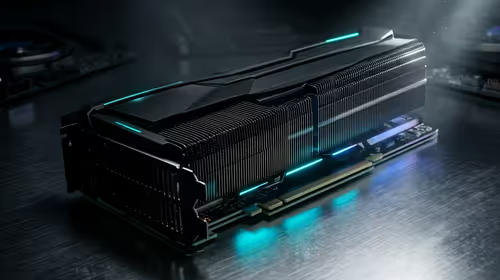
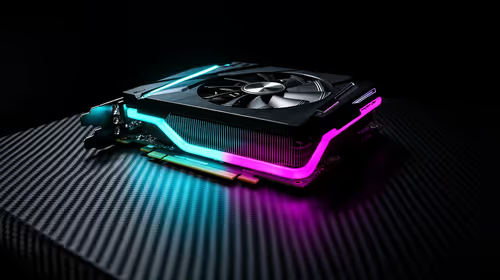
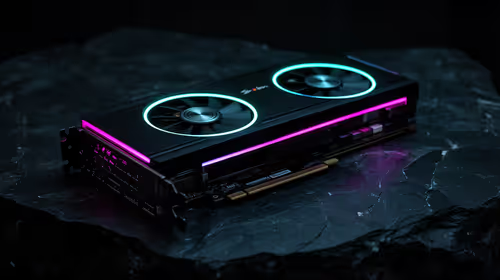
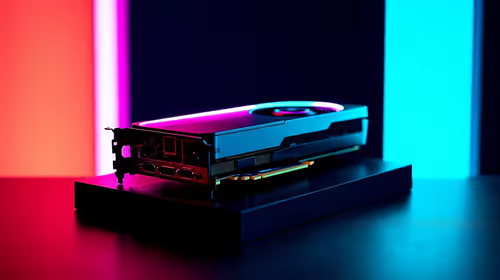
Modern GPUs have completely changed the landscape. Cards from the latest generations are more than capable of delivering the high refresh rates competitive players demand. Whether you're looking at the raw power of the latest AMD Radeon graphics cards or the feature-rich performance from NVIDIA's lineup, the power is there. Even new contenders like Intel ARC graphics cards are making high-resolution gaming more accessible than ever before. The technology has advanced so much that you no longer have to choose between resolution and speed.
Frame Rate First ⚡
To maximise your FPS at 1440p, leverage upscaling tech! Enable NVIDIA DLSS or AMD FSR in your game's settings and choose the "Performance" or "Ultra Performance" mode. This renders the game at a lower internal resolution and uses AI to upscale it, giving you a massive frame rate boost with minimal impact on visual quality. It's the secret weapon for 1440p competitive gaming.
Gearing Up for Your 1440p Esports Journey
Making the jump to 1440p requires two key components: a capable monitor and a graphics card that can keep up. For the monitor, look for a 27-inch screen with at least a 144Hz refresh rate and a 1ms response time.
For the GPU, your choice is the heart of the build. This is where you'll invest to ensure you get the performance you need. The market for NVIDIA and AMD graphics cards is vast, with options for every budget. While top-tier cards offer the best performance, even mid-range options can provide an excellent 1440p esports experience.
It's amazing to see how far the technology has come. While incredibly powerful workstation graphics cards are built for heavy rendering tasks, the innovations there have pushed gaming cards forward. Even older generations, like some of the more powerful NVIDIA GeForce GTX graphics cards, can still be a solid entry point for less demanding esports titles at 1440p.
Is the 1440p Upgrade Worth It for You?
If you're serious about competitive gaming and already have a rig that can push high frames at 1080p, the answer is a resounding yes. The upgrade to 1440p provides a tangible competitive advantage through enhanced visual clarity, allowing you to spot and engage targets more effectively. It’s the new gold standard that balances beautiful visuals with the razor-sharp performance needed to win. ✨ For any South African gamer looking to get an edge, 1440p for esports is no longer a luxury... it's the next logical step.
Ready to See the Difference?
Upgrading to 1440p is a real competitive advantage in today's esports scene. That extra clarity can be the difference between a win and a loss. Explore our incredible Gaming PC deals and find the perfect machine to dominate the server.