Gaming Monitor Power Consumption: TN vs IPS vs VA in SA
Eskom just flipped the switch… again. While your UPS keeps your rig alive, did you know your choice of gaming monitor could be silently draining its battery life? The debate between TN, IPS, and VA panels isn't just about colour accuracy or response times anymore. In South Africa, understanding gaming monitor power consumption is key to saving money and squeezing out extra game time during an unexpected outage. Let's break down which panel is the most efficient.
Why Monitor Power Usage Matters in Mzansi
Let's be real, the cost of electricity in South Africa isn't going down. Every watt your PC setup pulls from the wall adds up on your monthly bill. While your graphics card is the main culprit, your monitor is an always-on component that contributes significantly. A more efficient display can literally save you hundreds of Rands over its lifespan. This is especially true for gamers who spend hours in front of their screens. Lower power draw also means less heat, a welcome bonus during a hot Durban summer. ☀️
The Big Three: A Quick Panel Primer
Before we talk watts, let's quickly recap what makes each panel type unique. Your choice here impacts everything from visual fidelity to your budget.
TN (Twisted Nematic)
The OG of gaming panels. Known for lightning-fast response times and high refresh rates, making them a favourite for competitive esports titles like Valorant or CS:GO. Their main trade-off? Poorer viewing angles and less vibrant colours compared to the others.
IPS (In-Plane Switching)
The artist's choice. IPS panels deliver stunning colour accuracy and wide viewing angles, making games look incredibly rich and immersive. Historically, they had slower response times, but modern IPS gaming displays have closed the gap significantly, offering a fantastic all-round experience. You can browse a wide variety of options in Evetech's collection of PC monitors.
VA (Vertical Alignment)
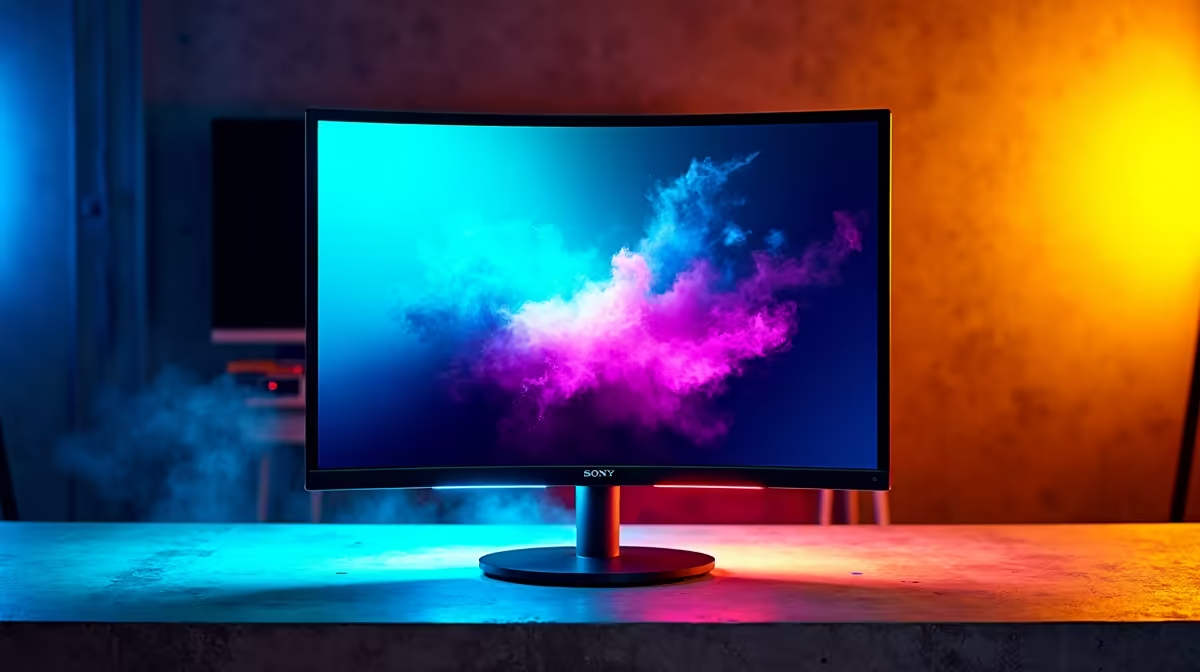
The king of contrast. VA panels offer the deepest blacks and a contrast ratio that IPS and TN panels can't touch. This makes them amazing for watching movies or playing atmospheric horror games. They often come in immersive formats, making them a popular choice for curved monitors that pull you right into the action.
The Power Draw Showdown: TN vs. IPS vs. VA
So, which panel sips the least electricity? While exact gaming monitor power consumption varies by model, size, and features, a general hierarchy has emerged.
- TN Panels (Most Efficient): Because of their simpler liquid crystal structure, TN panels generally require less power for their backlight to shine through. They are often the most energy-efficient choice, making them a savvy pick for gamers on a tight electricity budget.
- VA Panels (The Middle Ground): VA panels typically sit comfortably in the middle. Their power draw is very reasonable and offers a great balance between efficiency and the superb contrast they're known for.
- IPS Panels (Most Power-Hungry): To achieve their brilliant colours and wide viewing angles, IPS panels need a stronger backlight. Their crystal structure is less transparent than TN, meaning more power is needed to push light through. This often makes them the least energy-efficient of the three, though the difference might only be a few dozen watts.
Eco-Gamer Pro Tip ⚡
Activate your monitor's 'Eco Mode' or simply lower the brightness from 100% to around 70-80%. You'll barely notice the difference in a dimly lit room, but you could reduce power consumption by up to 20%. It's a small change that adds up to real Rand savings over a year!
Beyond the Panel: What Else Affects Power Consumption?
The panel type is a huge factor, but it's not the only thing determining your monitor's electricity usage. Keep these points in mind when browsing for your next screen.
- Resolution: Pushing more pixels takes more power. A 4K monitor will almost always use more energy than a 1080p monitor of the same size and panel type. If you're looking to upgrade, our range of 5K & 4K monitors offers incredible detail, but be prepared for the corresponding power draw.
- Brightness: This is the big one. The brighter your screen, the more power the backlight consumes. Cranking it to the max can significantly increase energy use.
- Refresh Rate: A higher refresh rate (like 144Hz or 240Hz) requires the monitor's internal components to work harder, leading to a slight increase in power consumption compared to a standard 60Hz display.
- Size: A larger screen has more area to illuminate, naturally leading to higher power consumption. For those on the move or with limited power, ultra-efficient portable monitors are an excellent low-power alternative.
Making the Smart Choice for Your Rig and Wallet ✨
Choosing your next gaming monitor involves balancing performance, picture quality, and now, power efficiency. If your top priority is competitive performance with the lowest possible running cost, a TN panel is a strong contender. If you crave stunning visuals for single-player epics and don't mind a slightly higher electricity bill, an IPS is unbeatable. For a fantastic middle-ground with epic contrast, a VA panel is a superb choice.
Ultimately, the best monitor is the one that fits your needs and budget. Don't forget to complete your setup with the right monitor accessories for perfect ergonomics. By keeping an eye on the latest PC monitor deals, you can snag a brilliant screen that won't break the bank... or your electricity budget.
Ready to Upgrade Your View? The TN vs. IPS vs. VA debate has a clear winner... the one that's right for your setup and budget. Understanding gaming monitor power consumption is just one piece of the puzzle. Explore our massive range of all gaming monitors and find the perfect screen to dominate the competition.