Why Helldivers Physics AMD vs Intel Matters for Your Next Build
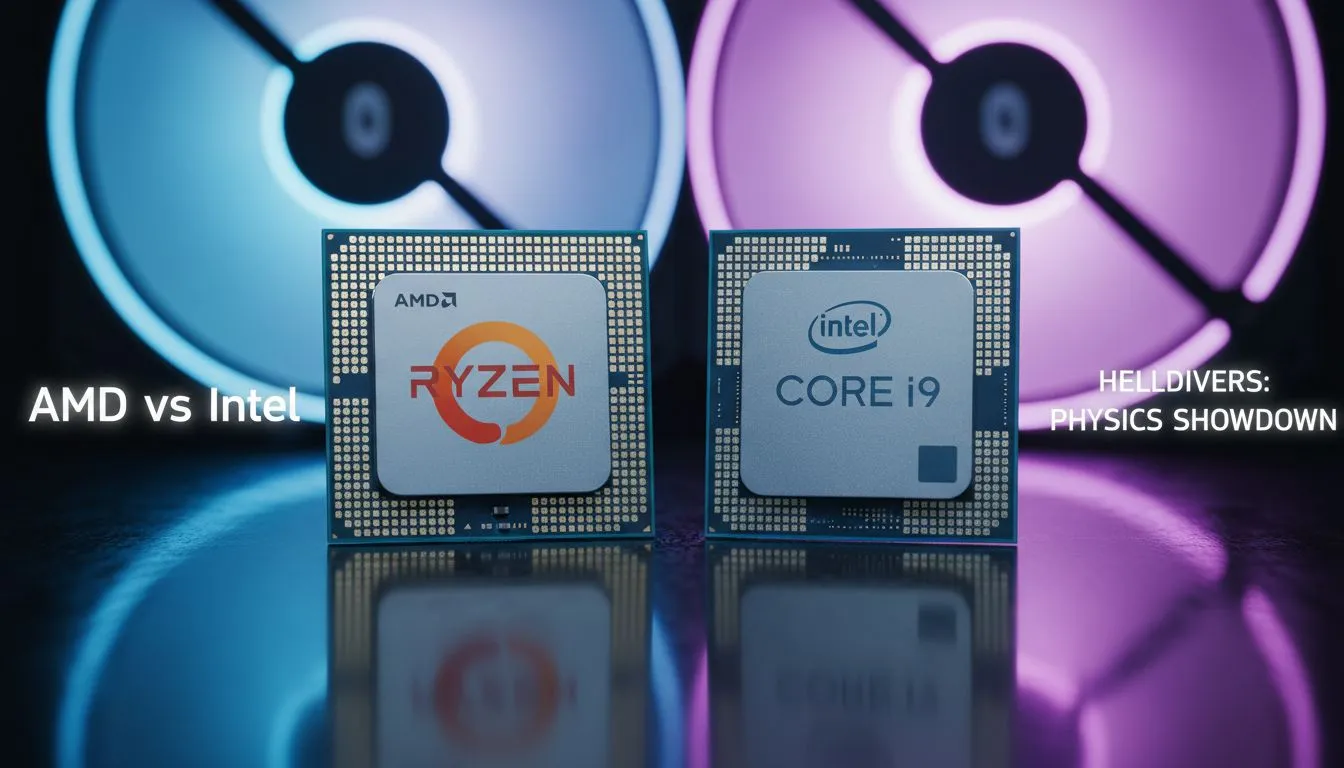
Dropping into a Level 9 Helldive is pure, unadulterated chaos. Between the 500kg bombs and the swarms of Terminids, your processor is screaming. If you are building a new rig in South Africa, you need to know about Helldivers physics AMD vs Intel performance. Does the raw clock speed of Team Blue win... or does Team Red’s massive cache keep the frame rates stable? 🚀
How Helldivers 2 Pushes CPU Physics to the Limit
Unlike many modern shooters that offload everything to the graphics card, Helldivers 2 relies heavily on the CPU to calculate complex interactions. Every piece of shrapnel, every limb flying off a Charger, and every crumbling building is a physics calculation. This is where the choice between processors becomes vital.
When you buy Intel CPUs for a physics-heavy title, you are usually betting on high single-core frequencies. Intel’s Performance-cores (P-cores) are excellent at handling the immediate, serial instructions required to decide where a piece of debris should land after an orbital strike. This often leads to very high peak frame rates in less crowded areas of the map.
Democracy-Saving Tip ⚡
If you are seeing stuttering during heavy orbital strikes, try lowering the 'Object Detail' setting. This reduces the physics load on your CPU without completely ruining the visual spectacle of spreading managed democracy across the galaxy.
The AMD Advantage in Multi-Threaded Chaos
On the other side of the fence, the Helldivers physics AMD vs Intel debate gets interesting when we look at the 3D V-Cache technology. AMD’s Ryzen X3D chips have become legendary in the South African gaming community for a reason. Physics calculations require constant access to data... and having a massive pool of L3 cache right on the processor die reduces the time the CPU spends waiting for information from your RAM.
If you decide to buy AMD CPUs like the Ryzen 7 7800X3D, you might notice more consistent 1% low frame rates. In plain English, this means when four players are all calling in Stratagems at once, your game is less likely to stutter or "hitch" compared to processors with smaller cache sizes.
Finding the Best Value for South African Gamers
Budget is always a factor when we look at local pricing in ZAR. While the top-tier chips from both brands perform admirably, the mid-range is where the battle is won. Intel’s i5-13600K and 14600K offer incredible "per-rand" performance for those who also use their PCs for video editing or streaming.
However, for a pure gaming machine dedicated to the front lines, AMD’s platform longevity is hard to ignore. You can browse the full range of CPU processors online to see how the latest generations compare in price. Generally, Intel provides a slight edge in raw speed for physics-heavy tasks... while AMD offers a smoother, more stable experience during the most intense combat sequences. 🔧
Final Verdict: Which Handles Physics Better?
There is no single winner, but there is a right choice for your specific needs. If you want the highest possible clock speeds to brute-force through physics calculations, Intel is your go-to. If you want a processor that remains unfazed when the screen is filled with hundreds of enemies and explosions, AMD’s X3D line is the current gold standard. ⚡
Whichever side you choose, ensure your cooling solution is up to the task. Physics-heavy games generate significant heat as every core works to keep the simulation running smoothly.
Ready to Find Your Perfect Match? The Helldivers physics AMD vs Intel debate shows that both giants have their strengths, but your specific budget and build goals matter most. Explore our massive range of CPU specials and find the perfect hardware to spread democracy with maximum efficiency.