Is the new PCIe 5.0 standard worth the hype… and the hefty price tag in South Africa? You’ve seen the marketing: mind-blowing speeds and next-gen performance. But with high import costs, is it a smart upgrade for your gaming rig right now? We’ve looked at the real-world performance data to give you the straight-up answer, helping you decide where to best spend your hard-earned cash on your next build. 🚀
Understanding the PCIe 5.0 Speed Boost
Before we decide if PCIe 5.0 is worth it in South Africa, let's quickly break down what it is. Think of Peripheral Component Interconnect Express (PCIe) as the super-highway inside your PC, connecting your most important components—like your graphics card and storage drives—to your processor.
Each new generation effectively doubles the speed of this highway. PCIe 5.0 offers a staggering 128 GB/s of bandwidth on a full x16 slot, twice that of the already speedy PCIe 4.0. In theory, this means faster data transfer for everything, leading to quicker load times and smoother performance. But does theory translate to reality for gamers?
Is PCIe 5.0 Worth It for Gaming Performance?
Here's the honest truth: for your graphics card, not really… at least not yet.
Even the mightiest GPUs on the market, like the GeForce RTX 4090, don't fully saturate a PCIe 4.0 x16 slot. Our tests and industry benchmarks consistently show that running a top-tier card on a PCIe 5.0 slot versus a 4.0 slot yields almost no discernible difference in frame rates. The bottleneck for gaming performance is almost always the GPU itself, not the data lane it's connected to.
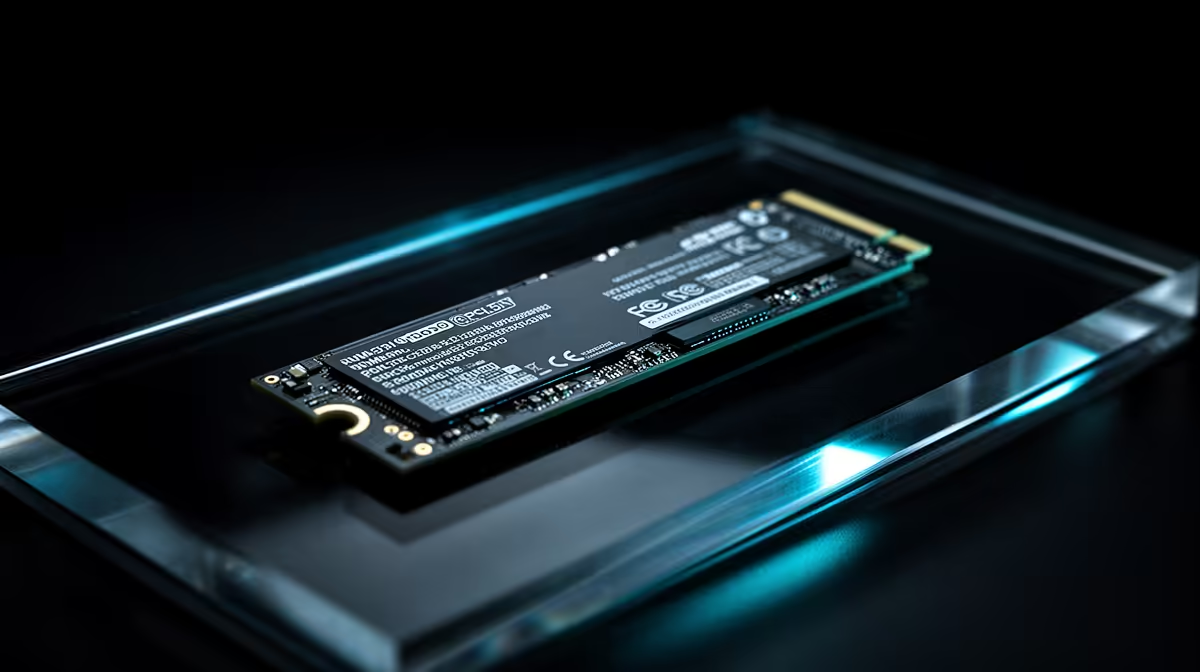
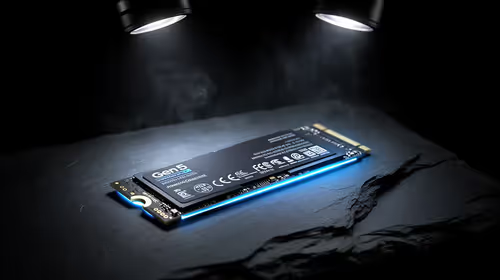
The real performance gain from PCIe 5.0 comes from NVMe SSDs. A Gen5 SSD can reach read/write speeds exceeding 12,000 MB/s, which is absolutely bonkers. This can be a huge benefit for professionals who move massive files, but for gaming? While it might shave a second or two off loading screens, the difference over a quality Gen4 drive is barely noticeable in most current titles. Future games using DirectStorage technology might change this, but we're not there yet. You'll find PCIe 5.0 support on many of the latest Intel motherboards, but pairing it with a Gen5 drive is where the cost truly climbs.
The South African Price vs. Performance Equation
This brings us to the biggest factor for any tech enthusiast in SA: the price. The "early adopter tax" is very real. Motherboards and SSDs supporting the new standard carry a significant price premium in ZAR.
When you're planning a build, every Rand counts. The extra thousand or two you'd spend on a PCIe 5.0-ready motherboard and a Gen5 SSD could instead go towards a better graphics card, more RAM, or a faster CPU. For 99% of gamers, that's a much smarter investment that will deliver a far greater and more immediate performance boost in your favourite games. The PCIe 5.0 performance jump for storage is impressive on paper, but the cost to achieve it is steep, a feature you'll find on both high-end AMD motherboards and their Intel counterparts.
Check Your Slots! 🔧
Before you buy a new motherboard, always check the M.2 slot specifications! Many boards have multiple slots, but often only one will be the top-tier PCIe 5.0, with the others running at PCIe 4.0 speeds. Reading the spec sheet ensures you don't buy a blazing-fast Gen5 drive only to install it in a slower slot.
Who Really Needs PCIe 5.0 in South Africa Today?
So, if PCIe 5.0 isn't quite worth it for the average gamer, who should consider it? ✨
- Hardcore Future-Proofers: If you have the budget, want the absolute latest platform, and plan to keep your PC for many years, buying into the ecosystem now means you're ready for whatever next-gen GPUs and games demand.
- Creative Professionals: If your daily work involves editing 8K video, working with massive datasets, or other storage-intensive tasks, the time saved by a Gen5 SSD could genuinely justify the cost and boost your productivity.
For everyone else, the value just isn't there yet. A solid PCIe 4.0 system built around one of our great value Intel or AMD based motherboards offers far more bang for your buck today and will crush any game you throw at it.
The Verdict
For the vast majority of South African gamers and PC builders in 2024, PCIe 5.0 is not worth the significant extra cost. It's a fantastic piece of future-facing technology, but its practical benefits for gaming are minimal right now. Your money is better spent on components that deliver real, tangible performance increases, like a more powerful GPU or a faster processor.
Ready to Build a Smarter Rig?
The PCIe 5.0 vs 4.0 debate shows that the latest tech isn't always the best value. For maximum performance for your Rand in South Africa, a balanced build is key. Explore our massive range of PC components and find the perfect parts to conquer your world.