The Realities of Ray Tracing Performance: Showroom vs Track Cost
We have all seen the trailers. Neon lights reflecting off rain-slicked tarmac in 4K... it looks breathtaking. But once you toggle that setting in-game, your frame rate often takes a massive hit. This is the core of ray tracing performance: showroom vs track cost. One is the visual promise of "the showroom"... the other is the heavy performance tax your hardware pays on the "track" to keep things moving.
In South Africa, where we value every frame per second (FPS), finding the right balance is essential. You want that cinematic lighting without turning your gameplay into a slideshow. It is about understanding what your hardware can actually handle before the fans start screaming.
Calculating the Performance Tax on Your Hardware
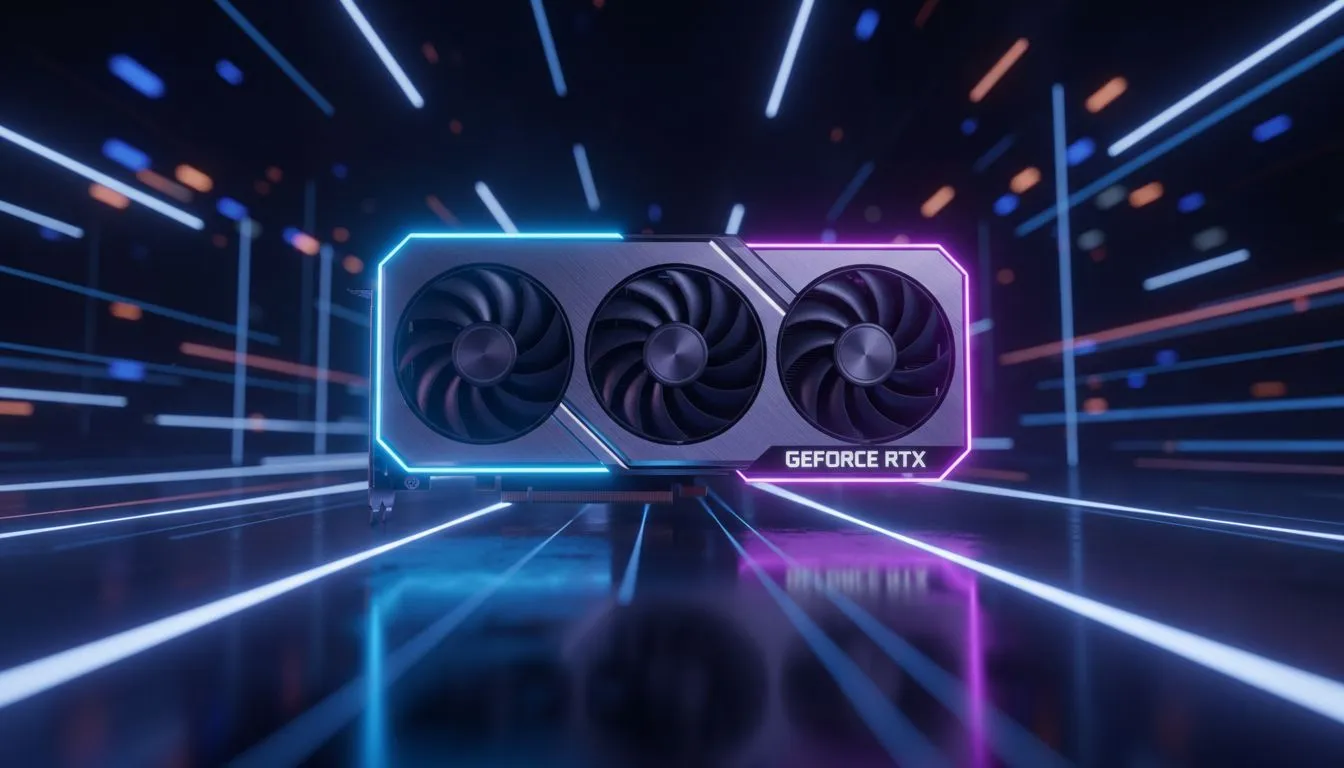
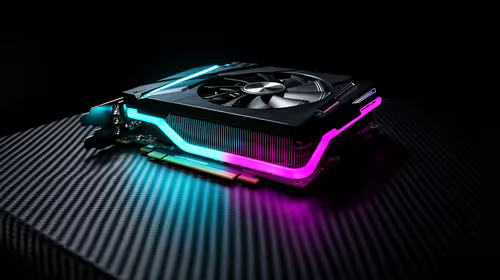
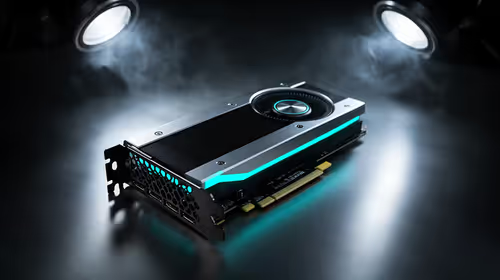
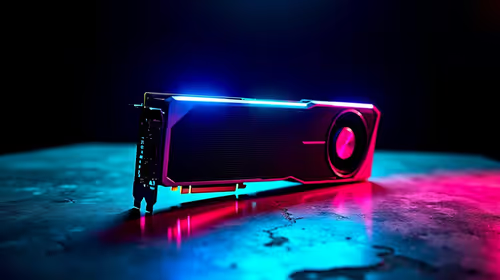
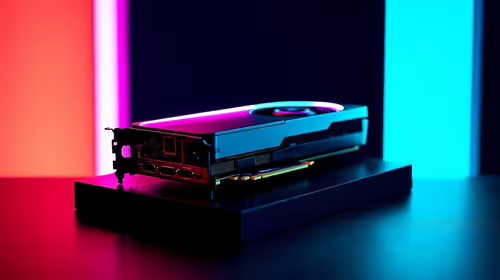
Ray tracing simulates the physical behaviour of light. It calculates how rays bounce off surfaces in real-time. This requires immense processing power. If you are browsing the latest NVIDIA and AMD graphics cards, you will notice dedicated cores for these tasks.
NVIDIA uses RT Cores, while AMD uses Ray Accelerators. Even with this dedicated hardware, the "track cost" is high. Enabling full path tracing can cut your FPS by more than half in some titles. This is why many gamers choose the reliability and premium cooling found on MSI graphics cards to maintain stable clock speeds under heavy thermal loads.
The Showroom Appeal: Why We Want It
The "showroom" effect is hard to ignore. Global illumination and accurate reflections add a layer of immersion that traditional rasterization cannot match. Shadows look softer... reflections in windows actually show the world behind you. It transforms a game from looking like a digital toy to looking like a high-budget film.
Optimising the Track Cost for Local Gamers
You do not always need a R40,000 GPU to enjoy better lighting. If you are on a tighter budget, you can find surprisingly capable entry-level ray tracing with Intel Arc graphics cards. These cards use clever upscaling tech to help manage the performance hit.
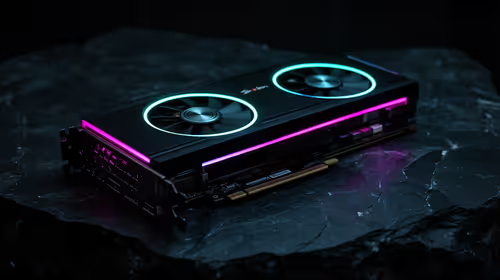
For those who prioritise raw rasterization power and high VRAM for textures, the AMD Radeon graphics cards offer a different value proposition. They often provide more frames in traditional rendering, even if the ray tracing "track cost" is slightly higher than their competitors.
Performance Pro Tip ⚡
If your FPS drops too low with Ray Tracing enabled, try turning off 'Ray Traced Reflections' first while keeping 'Ray Traced Shadows' or 'Ambient Occlusion' on. Reflections are often the most demanding part of the ray tracing suite. This subtle tweak can save you 15-20% in performance while keeping the lighting looking modern.
Professional Rendering and Workstation Demands
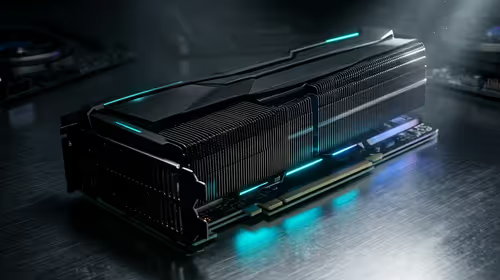
It is not just about gaming. If you are a designer or architect in Johannesburg or Cape Town, ray tracing is a tool for work. The "track cost" here is measured in render times. Investing in workstation graphics cards ensures that your software remains stable while calculating complex light paths for architectural visualisations.
In the professional world, the showroom look is the final product you sell to a client. You cannot afford for the hardware to fail when the deadline is looming.
Finding the Sweet Spot in South Africa
Ultimately, ray tracing performance: showroom vs track cost is a game of compromise. Most gamers find the "sweet spot" by using upscaling technologies like DLSS or FSR. These tools render the game at a lower resolution and use AI to sharpen the image. It effectively lowers the "track cost" while keeping the "showroom" visuals intact.
Whether you are playing at 1080p or 4K, the goal is the same... smooth gameplay that looks incredible. 🔧 ⚡ 🚀 ✨
Ready to Find Your Perfect Match?
The ray tracing debate is complex, but for maximum power, choice, and value in South Africa, Evetech has the hardware you need. Explore our massive range of graphics card specials and find the perfect machine to conquer your world.