Quick Answer
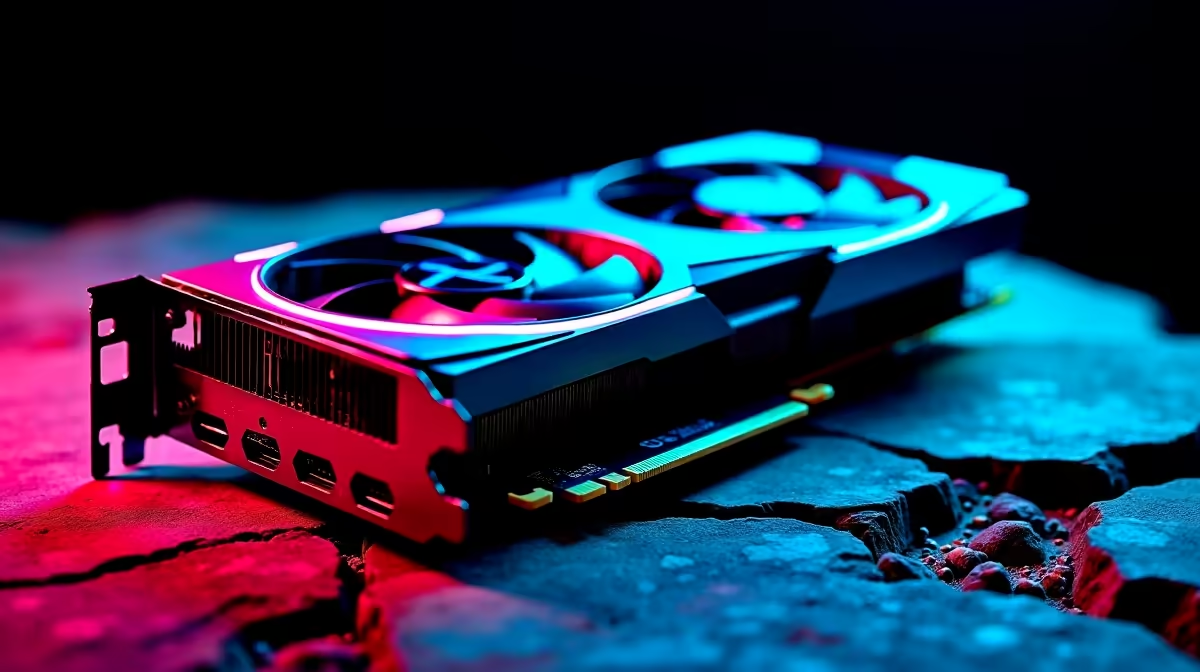
The RX 7700 XT has a 245W TDP, but real-world system power draw typically lands between 320W and 380W under gaming load depending on your CPU and other components. For South African builds, a quality 650W 80+ Gold PSU is the minimum safe recommendation, with 750W giving comfortable headroom.
RX 7700 XT TDP vs Real-World Draw
AMD rates the RX 7700 XT at 245W TDP, but that figure represents the GPU alone under controlled conditions. In a complete gaming PC, your CPU, storage, RAM, and fans all draw power simultaneously. A Ryzen 5 7600X paired with the RX 7700 XT will add another 65-105W under gaming load, pushing total system draw to around 330-360W. With a Ryzen 9 7950X or similar high-end CPU, you can hit 400W or more in CPU-heavy workloads that also stress the GPU.
Under peak stress testing (Furmark or similar), the RX 7700 XT can spike briefly above its rated TDP. This is normal behaviour and is why PSU headroom matters. A PSU running near its maximum rated wattage runs hotter, less efficiently, and has a shorter lifespan.
Recommended PSU Wattage for RX 7700 XT Builds
For a mid-range gaming build with a Ryzen 5 or Core i5 CPU, a 650W 80+ Gold PSU is the practical minimum. A 750W 80+ Gold unit gives you 20-25% headroom above typical load, which is the industry sweet spot for efficiency and longevity. If you are running overclocks, a Ryzen 9 or Core i9 CPU, or plan to add a second NVMe and multiple case fans, step up to an 850W unit.
In South Africa, loadshedding is a real concern for PSU health. Frequent power cuts and the surges that can accompany grid restoration put extra stress on PSUs. Investing in a higher-quality 80+ Gold or Platinum unit is worth the extra cost locally because it handles voltage irregularities better than budget units.
Quick PSU guide by system type:
- Budget build (Ryzen 5 + RX 7700 XT): 650W 80+ Gold
- Mid-range build (Ryzen 7 + RX 7700 XT): 750W 80+ Gold
- High-end build (Ryzen 9 + RX 7700 XT + overclocks): 850W 80+ Gold or Platinum
Efficiency, Rail Quality, and SA Power Considerations
The RX 7700 XT uses a standard 8-pin PCIe connector configuration and does not require the 16-pin 12VHPWR connector found on some Nvidia cards. This makes PSU compatibility simple across most modern units sold in South Africa.
When shopping locally, prioritise PSUs with Japanese capacitors and at least a 5-year warranty. Brands that manufacture to these specs are available at Evetech and offer the reliability South African grid conditions demand. Avoid budget no-name units that may not deliver rated wattage under temperature stress, which is common in summer months.
Frequently Asked Questions
Will a 550W PSU run the RX 7700 XT? Technically it may boot, but it is not recommended. A 550W PSU paired with a modern CPU leaves almost no headroom and will run at near-maximum load constantly, shortening its lifespan and risking instability under gaming load.
Does the RX 7700 XT need a special PSU connector? No. The RX 7700 XT uses standard 8-pin PCIe power connectors, which are present on any PSU made in the last decade. No 16-pin adapter is required.
How does loadshedding affect my PSU choice? Frequent power cycling from loadshedding accelerates wear on cheaper PSUs. A higher-rated, better-quality unit handles the electrical stress of repeated outages and restoration surges more reliably. Pairing your build with a UPS or line conditioner adds further protection.
Is 750W enough for future GPU upgrades beyond the RX 7700 XT? A 750W 80+ Gold PSU will handle most mid-range GPU upgrades comfortably. If you plan to move to a high-end GPU with a 300W+ TDP in future, 850W is a safer long-term investment.
Ready to Find Your Perfect Match? Ready to pair your RX 7700 XT with a quality PSU? Browse graphics cards and build components at Evetech.