You’re deep in a ranked match, the final circle is closing, and then… darkness. That sudden power loss isn't just frustrating; it's a direct threat to your expensive hardware. True smart recovery isn't about rebooting and hoping for the best. It's about preventing the shutdown in the first place, ensuring your machine and your data are always safe. 🛡️
Why Your PC Needs Smart Recovery from Power Cuts
An abrupt shutdown can corrupt your operating system, ruin a critical file you were working on, or worse, cause permanent damage to sensitive components like your SSD, motherboard, or power supply unit (PSU). This isn't just an inconvenience; it's a costly risk.
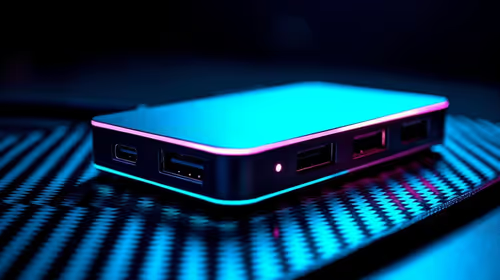
Implementing a smart recovery strategy with an Uninterruptible Power Supply (UPS) is the most effective defence. A UPS is essentially a big battery that kicks in the microsecond the power from the grid fails. It provides a seamless bridge of electricity, giving you precious minutes to save your work, exit your game safely, and shut down your PC correctly. No data loss, no hardware stress… just clean, consistent power.
Choosing the Right UPS for Instant Recovery
Not all power backup solutions are created equal. Finding the right one depends on your specific needs and setup. You need to consider the power draw of your PC and peripherals to ensure you have enough runtime.
For most gaming rigs and workstations, a line-interactive UPS is the sweet spot. It offers excellent protection against sags, surges, and blackouts. If you're looking for a reliable workhorse, brands like Titan offer fantastic options that balance performance and price. A solid UPS is the key to achieving faster, or rather, instant recovery from any power event.
Calculate Your Wattage ⚡
Check the wattage of your PC's power supply (e.g., 750W) and your monitor (usually 20-40W). Add them together and multiply by 1.6 to get a safe VA rating for your UPS. This ensures you have enough power overhead for a safe shutdown.
Finding a Fit for Your Budget
Protecting your gear doesn't have to break the bank. You can get excellent, reliable protection without spending a fortune. There are plenty of powerful UPS units available for under R1300 that can easily handle a standard home office or gaming PC setup. Think of it as a small investment to protect the thousands of Rands you've already spent on your components. It’s the ultimate peace of mind in our unpredictable power climate.
Practical Reliability Considerations
A UPS does more than just fight an unexpected outage. It also acts as a full-time power conditioner. It smooths out the small fluctuations and "dirty power" from the grid, providing your components with a stable and clean electrical current. This consistent power delivery can significantly extend the lifespan of your PC's internal parts. 🔋
From protecting against lightning-induced surges to ensuring your work-from-home setup never misses a beat, a UPS is one of the smartest, most essential peripherals you can own in South Africa. It's the unsung hero of every stable and reliable PC build.
Protect Your PC Today
Don't wait for the next power cut to cause irreversible damage. Explore our full range of UPS solutions for sale and give your rig the protection it deserves.