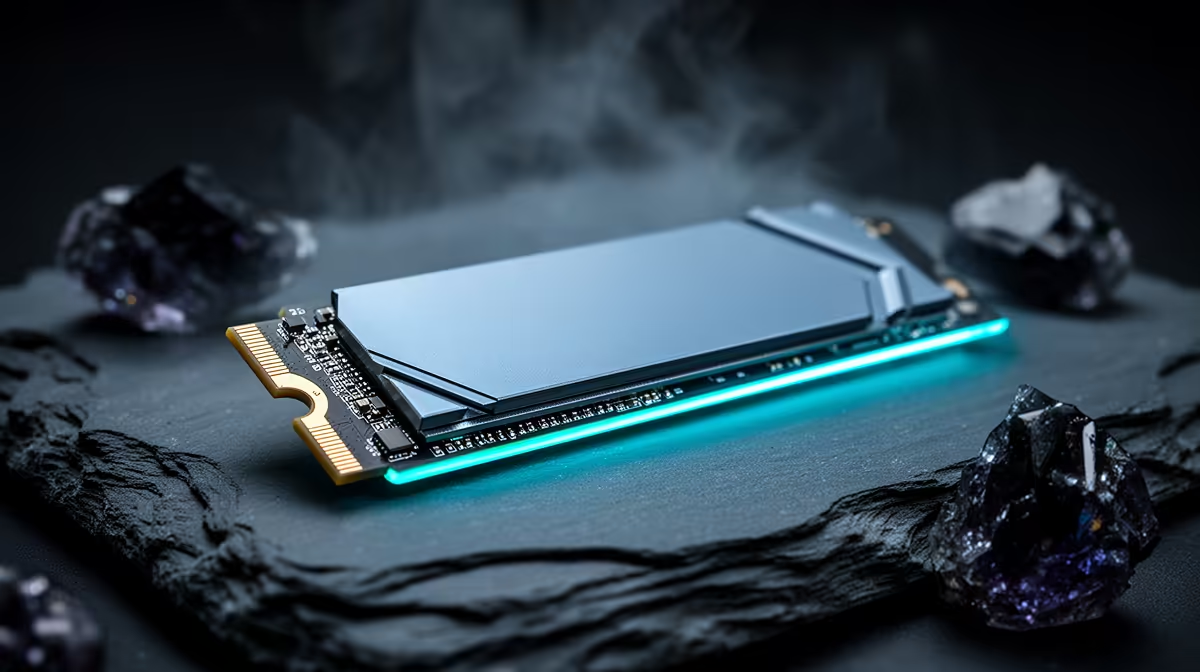
WD Blue SN5000 NVMe at R998 suits a solo podcaster who needs fast local storage for episode folders, voice recordings, edits, artwork, and exports without overspending. A 2TB nvme ssd is usually enough if you keep active projects on the drive and archive finished seasons elsewhere, because audio work grows steadily rather than explosively.
NVMe SSD picks for podcast workflow
The WD Blue SN5000 NVMe at R998 is the practical starting point for an editing machine where speed matters more than flashy extras. For regular recording, cleanup, mixing, and exporting, NVMe storage keeps project files responsive while you move between raw audio, edited timelines, and final masters.
ADATA LEGEND 900 1TB NVMe at R948 makes sense as a focused scratch or active-project drive. Its listed 1TB capacity is better for current episodes, guest recordings, jingles, and short-form clips than for holding every old season forever, so it pairs well with disciplined folder cleanups.
Samsung 990 PRO at R4,648 is the premium option when the workstation also handles heavy creator workloads alongside audio. It is still NVMe storage, but the higher price only makes sense if the same machine is used for larger media libraries, frequent exports, and demanding day-to-day production.
Creator desk storage in South Africa
For a creator desk, the ORICO NVMe M.2 enclosure at R160 is useful for moving session files between a recording laptop and an editing PC. Its M.2 enclosure format is especially handy when a guest recording, intro package, or archive batch needs to travel without opening the machine.
Ready to choose the right SSD?
Use WD Blue SN5000 NVMe at R998 as the podcast recording desk benchmark, then check whether its listed spec matches the space, workload, and upgrade path.