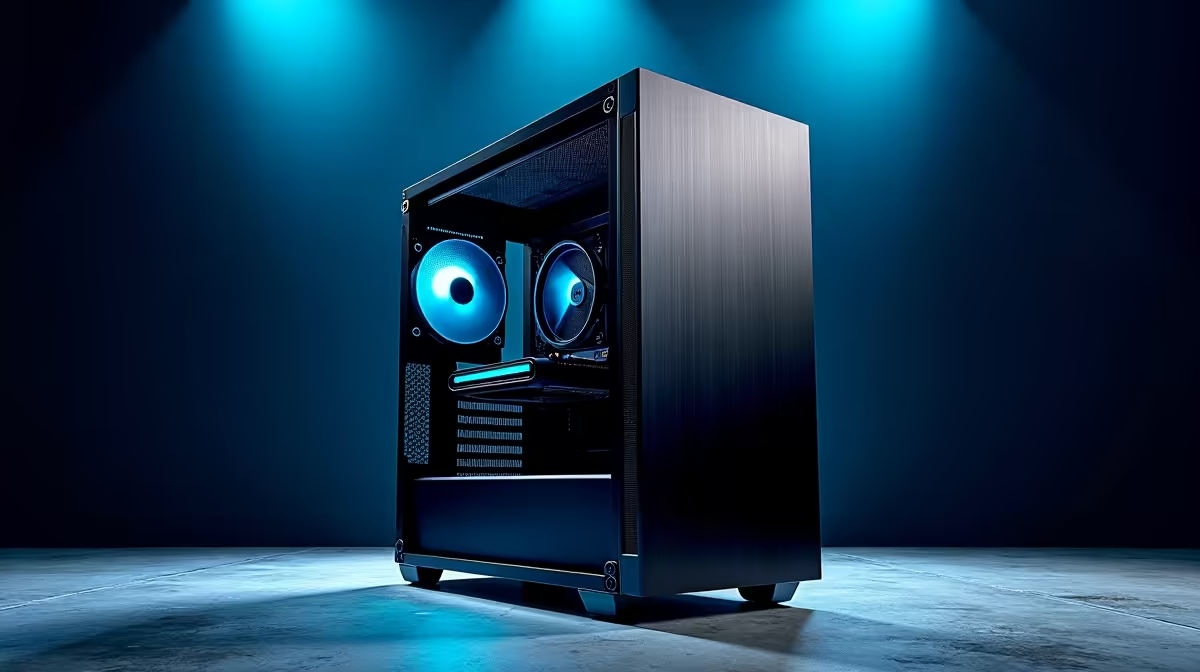
Quick Answer
Pay for the case fan feature only when it solves a real limit in the setup. For 4K video editing, use R120-R750 per fan as a cautious SA buying band and compare examples such as Arctic P12 PWM, Cooler Master SickleFlow 120 and Noctua NF-A12x25. Check 120 mm PWM fans, 800-1,800 rpm and 20-30 dBA targets, because that is where the purchase starts affecting real daily use.
Fix Airflow First
Start with the problem already in the setup: large files and sustained exports. If the case fan fixes that problem, shortlist it; if it only adds a nicer label, spend elsewhere. Good airflow can cut heat and noise, but it will not move an entry GPU into a higher FPS class. In SA homes, res rooms and shared flats, also check warranty support, cable length and the exact laptop, PC, console or monitor connection before you buy.
Fan Specs That Matter
A practical shortlist has three tiers. Budget picks around R120 should cover the basic job without vague specs. Balanced picks in the middle of the R120-R750 per fan range are usually the sweet spot because they add better build quality and headroom for daily use. Premium choices near R750 per fan make sense only when the device is used for long sessions, shared by several people, or connected to expensive hardware.
Quiet Setup Checks
Test against numbers, not hype: 120 mm PWM fans, 800-1,800 rpm and 20-30 dBA targets, cable reach, desk space, heat and setup time. For gaming-adjacent setups, consistency is the target: a 60 fps casual game, a 120 Hz or 144 Hz display, clear voice chat, or stable Ethernet should not become worse after adding the case fan.
FAQ
What is the safest budget for 4K video editing?
Plan around R120-R750 per fan for case fans, then move up only when the model adds a spec you will use every week. For large files and sustained exports, the balanced tier is usually safer than the cheapest listing.
Which spec should SA buyers check first?
Check 120 mm PWM fans, 800-1,800 rpm and 20-30 dBA targets first, then confirm compatibility with the exact PC, laptop, console, monitor or room. Specs that do not improve comfort, stability or setup time should not drive the final price.
When should you skip the premium option?
Skip premium when the current problem is placement, cabling, dust, room noise or unrealistic expectations rather than the case fan itself. Pay more when the upgrade removes a measurable limit such as heat, unstable signal, bad audio, cramped controls or poor comfort.
write down your exact device model, room size, monitor refresh rate and budget band; then compare case fans against those facts.