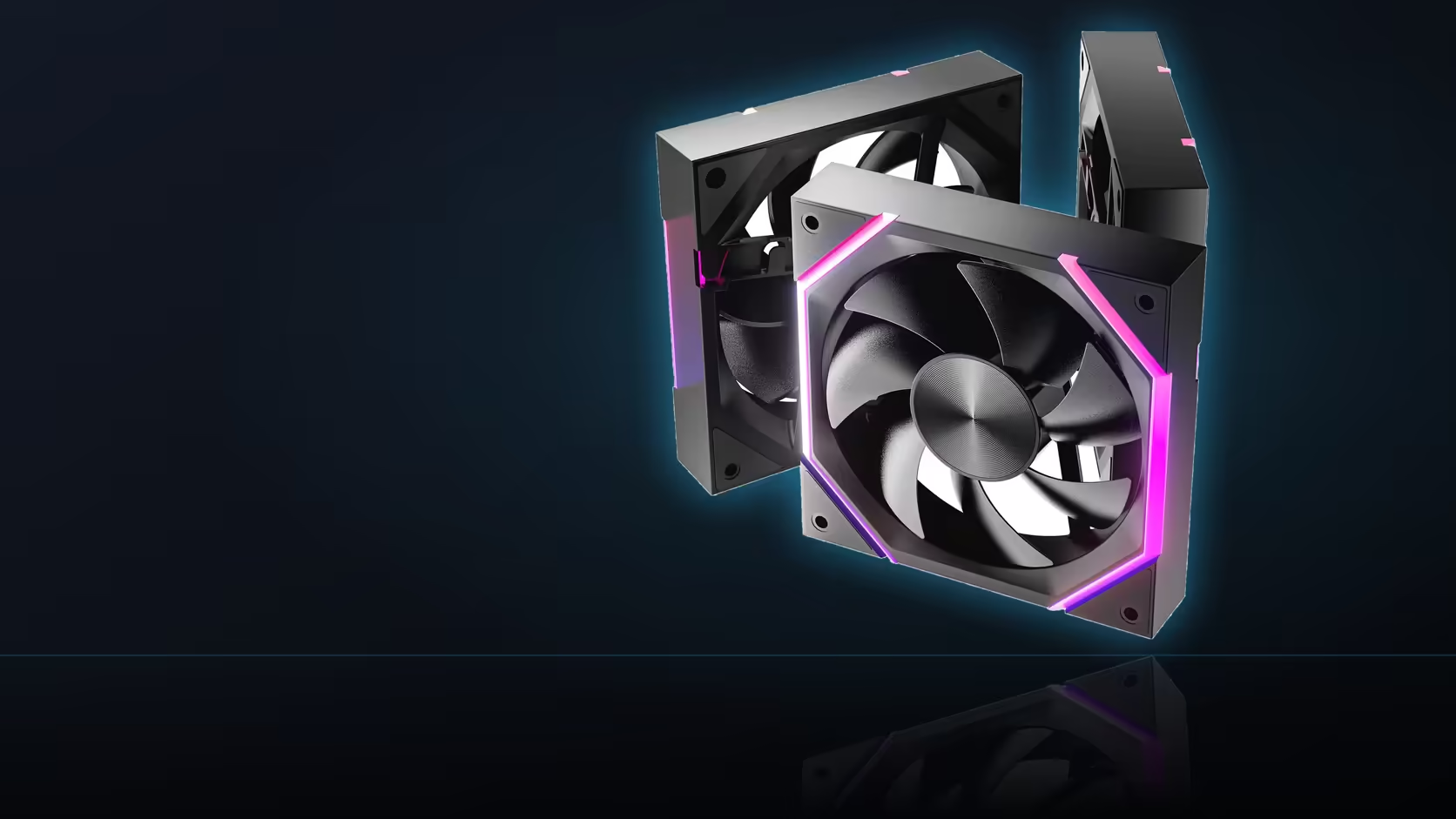
A CFM number on a spec sheet describes the fan spinning freely on a test bench, not the air that actually reaches your components through a dust filter and a restrictive front panel. The Nyota A12's 61.5 CFM figure is worth understanding for what it is before it shapes any expectations about your own build.
Quick Answer
61.5 CFM is the Nyota A12's rated airflow under unrestricted test conditions - it's a fan capability figure, not a prediction of what reaches your components through a case's dust filter and panels. Restriction from filters, mesh, and fan position all reduce the practical figure, and AsiaHorse publishes no installed number to compensate for that. Treat 61.5 CFM as a comparison point between fans rather than a guarantee. The three-pack costs R499.
📏 What a CFM rating actually measures
Cubic feet per minute is measured with the fan running freely, with nothing obstructing intake or exhaust - a standardised way for manufacturers to publish a comparable number across different models. It says nothing about what happens once that same fan is bolted behind a dust filter, mounted on a mesh front panel, or fighting cable clutter for a clear path through the case.
Why position changes the real number so much
An intake fan drawing air through a filtered, partially enclosed front panel faces considerably more restriction than an unobstructed exhaust fan simply pushing air out. The A12's published 61.5 CFM applies equally to both positions on paper, but the air actually delivered can differ meaningfully between them in practice.
🧱 Static pressure: the other half of the story
Static pressure describes how well a fan copes with that kind of restriction - a fan with strong static pressure holds up better behind a dense filter than one optimised purely for open-air CFM. AsiaHorse lists a static pressure figure for this model, but it's a specification-sheet value rather than something independently measured in a real case, so treat it the same way as the CFM number - a comparison point, not a promise.
Keeping filters clean matters more than it sounds
A clogged dust filter is one of the largest sources of airflow restriction a case fan encounters in ordinary use, often reducing effective airflow far more than the difference between two fan models. Regular cleaning does more for real-world cooling than chasing a slightly higher CFM figure on the box.
🎯 Using the number the right way
The 61.5 CFM figure is genuinely useful for one thing: comparing the A12 against another fan's published rating under the same test standard. It's not useful as a promise about temperatures in your specific case, because your case's filters, mesh density, and cable routing all change the equation in ways no spec sheet accounts for.
The only measurement that captures the whole airflow path - fan, filter, panel, and everything in between - is actual temperatures in your own build under real load.
Frequently Asked Questions
What exactly does a CFM figure measure?
Airflow through the fan under unrestricted, standardised conditions - useful for comparing fans, not for predicting installed performance.
How much does a dust filter actually reduce airflow?
It depends on the filter and how clean it is, and AsiaHorse doesn't publish a figure for performance through one.
Does fan position change the real-world number?
Considerably - a filtered front intake faces far more restriction than an unobstructed rear exhaust, even with identical fans.
Is static pressure a more reliable figure than CFM?
It describes how a fan copes with restriction, but the static pressure listed for this model is a spec-sheet value, not independently tested.
Can two fans be fairly compared using CFM alone?
Yes, as a relative comparison under the same standard, which is exactly what the figure is designed for.
Does cleaning a dust filter meaningfully help airflow?
Yes, often more than the difference between two fan models - a clogged filter is a major real-world restriction.
What's the most reliable way to judge cooling in my own build?
Actual measured temperatures under real load - the only test that accounts for the whole airflow path together.
Ready to plan airflow that accounts for your own case's filters and mesh? Browse case fans and case accessories to see what suits your build.
Planning real-world airflow, not just spec-sheet numbers?
Have a look through Evetech's case range to match filter density with fan choice.