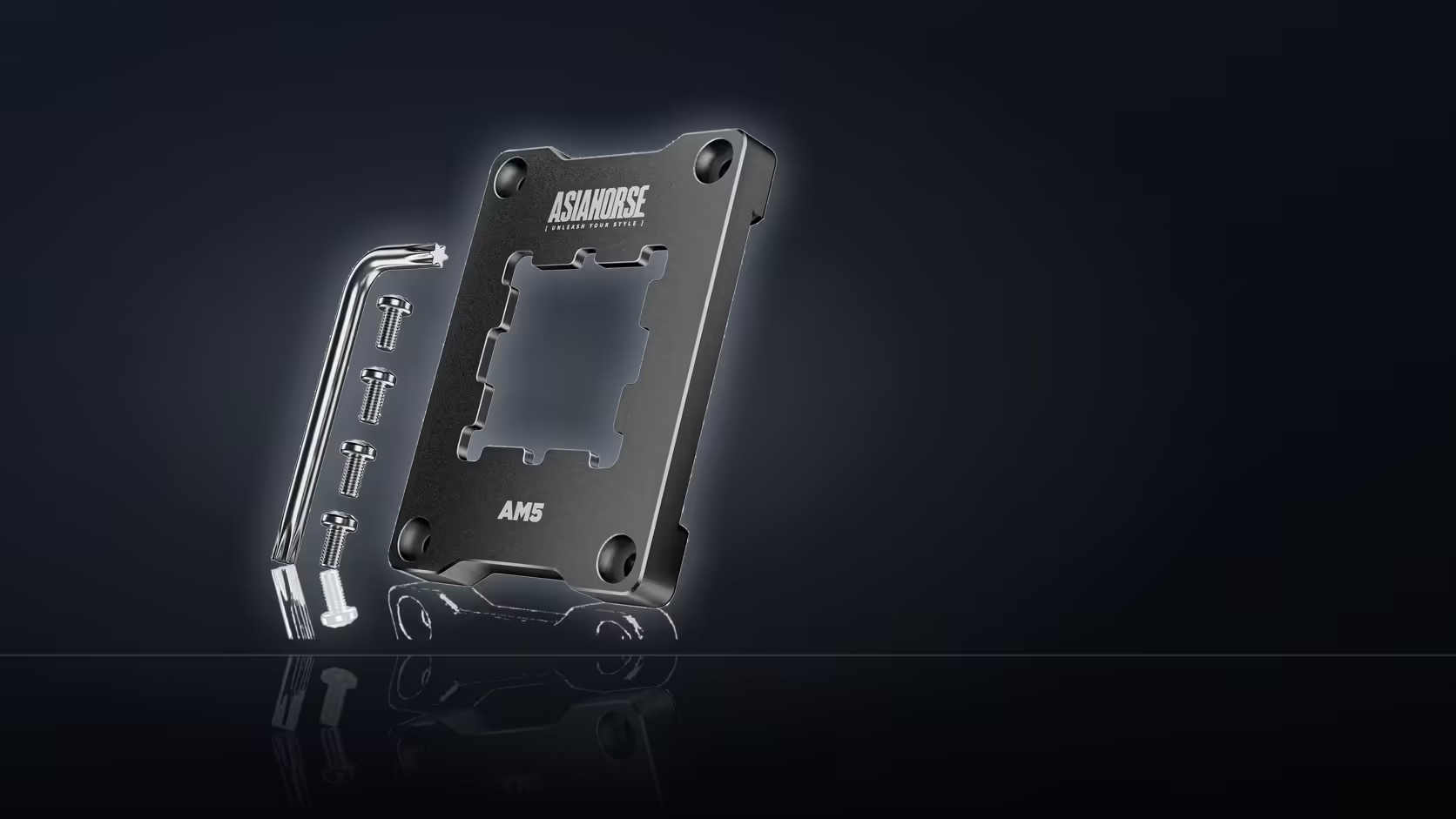
Throttling has more than one possible cause, and a contact frame only ever addresses one of them. Fitting the AsiaHorse Pulsar frame hoping it fixes an unidentified thermal problem is a reasonable gamble only once the cheaper, easier explanations have already been ruled out first.
Quick Answer
Old thermal paste, an undersized cooler, poor case airflow, high ambient room temperature, and aggressive processor power settings can all cause throttling, and cooler contact is only one item on that list. The R299 Pulsar frame addresses mounting pressure specifically - nothing else on that list. Fitting it in the hope of resolving a problem that has not actually been identified is a gamble worth taking only once the cheaper explanations have already been checked and ruled out.
🧯 The full list of usual suspects
Beyond cooler contact, throttling commonly traces back to thermal paste that has dried out or was applied unevenly, a cooler that was never sized for the processor's actual heat output, case airflow that cannot move enough air to keep pace with heat generation, an unusually warm room, or processor power settings that push harder than the cooling solution can sustain. Any one of these, alone or in combination, produces symptoms that can look identical to a contact problem from the outside.
Which are cheapest to rule out first
Thermal paste and fan curves cost nothing beyond the same effort of removing the cooler that fitting a frame would require anyway, so checking them first is close to free once the cooler is already off.
🔩 What the frame specifically addresses
The Pulsar frame's description links its mounting pressure directly to consistent contact between the cooler and the processor - that is the one specific mechanism it targets, replacing AM5's stock retention arms with an all-aluminium anodised design across X670, B650, and A620 boards.
🔍 How to know if contact is actually the issue
The paste spread visible when the cooler comes off is the most direct evidence available without any measurement equipment - an uneven or off-centre spread across the chip suggests contact was not consistent, while a clean, centred spread suggests the contact itself was probably fine and the problem lies elsewhere.
Does the listing promise anything measurable
No specific temperature reduction is published for the frame, so an improvement is genuinely possible rather than guaranteed by any stated figure - worth knowing before treating it as a certain fix for a problem that has not been confirmed.
🧪 Change one thing at a time
Changing paste, fan curves, and a contact frame all in a single session removes the ability to attribute any resulting improvement to a specific fix - which matters considerably when several genuine candidates are on the table at once. Look to the case accessories category for airflow-side hardware, and the cable solutions range for routing that keeps those paths clear afterwards.
If nothing helps at all
Cooler capacity itself, or the processor's own behaviour under sustained load, become the remaining areas worth examining once paste, mounting, airflow, and ambient temperature have all been checked and none of them explained the result.
Frequently Asked Questions
What else besides cooler contact causes throttling?
Old thermal paste, an undersized cooler, poor case airflow, high ambient temperature, and aggressive power settings, among other possible causes.
Which of these are cheapest to check first?
Paste condition and fan curves, both of which cost little beyond the same effort removing the cooler for a frame fit would already need.
What does the contact frame specifically address?
Mounting pressure, which the product description links directly to consistent cooler contact across the processor surface.
How would I know if contact is actually the problem?
The paste spread visible when the cooler comes off is the most direct evidence available without dedicated measurement equipment.
Does the frame's listing promise a temperature reduction?
No specific figure is published, so an improvement is genuinely possible rather than something guaranteed by a stated number.
Should several fixes be tried at once to save time?
Changing one thing at a time is what actually lets a result be attributed correctly, which matters when several candidates are plausible.
What if none of the usual fixes resolve it?
Cooler capacity itself, or the processor's own behaviour under sustained load, are the remaining areas worth examining next.
Chasing a thermal issue before committing to a hardware fix?
Browse cooling in the case accessories range and cable solutions for the airflow-friendly extras that come after diagnosis.