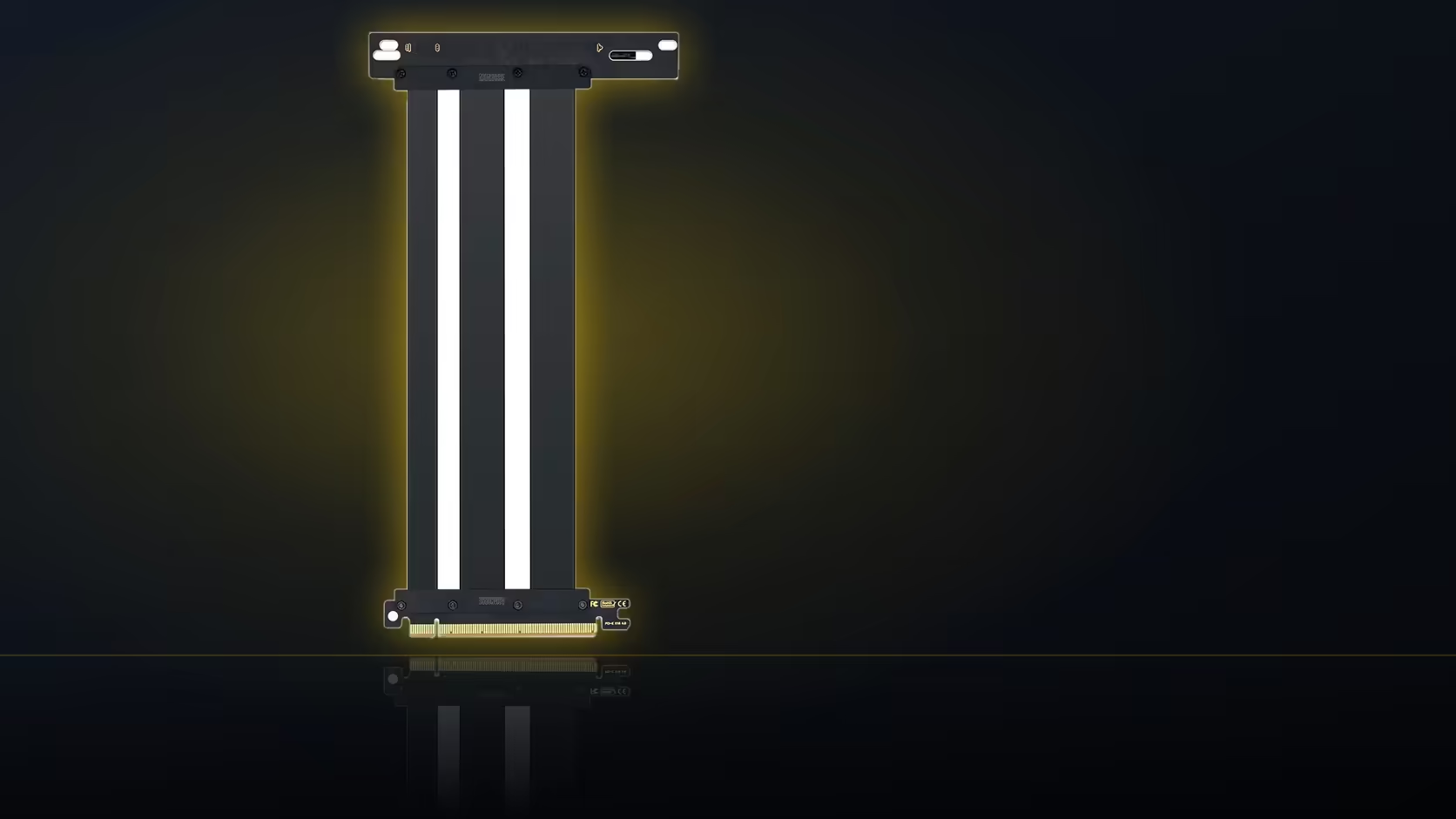
A cable that works electrically in a given slot generation tells you nothing about whether the hardware it plugs into actually fits inside your case. These are two separate questions, answered by two entirely different sources, and mixing them up is a common way a vertical build plan goes wrong before it even starts.
Quick Answer
The AsiaHorse riser working in PCIe 5.0, 4.0 and 3.0 slots is an electrical compatibility statement; it says nothing about whether a vertical mounting bracket fits your specific chassis. At R1,299 including VAT, both questions need separate answers before a vertical build is confirmed workable.
⚡ What the slot statement actually confirms
Working across PCIe 5.0, 4.0 and 3.0 slots is a statement about electrical and physical connector compatibility at the board slot itself. It confirms the riser will plug into and function correctly with any motherboard slot from those three generations. That is a genuinely useful piece of information, and it removes one variable from the planning process entirely, since it means this riser is not tied to a specific board generation.
🏠 What it does not confirm
None of that says anything about whether your particular case offers a vertical mounting position, whether a bracket exists for that specific chassis, or whether such a bracket would physically fit alongside everything else already installed. Slot compatibility and chassis compatibility are answered by entirely different parties: the motherboard's slot generation on one side, the case manufacturer's design on the other, and there is no relationship between the two that lets one imply the other.
📋 Where the chassis question actually gets answered
The case manufacturer's own documentation is the source for whether vertical mounting is supported, and if so, what specific bracket suits it. This is worth checking directly against your exact case model rather than assuming based on general expectations about case size or style, since support for vertical mounting varies considerably even within a single manufacturer's lineup.
🔧 Can a case be adapted with a universal bracket?
Some cases accept universal or third-party brackets even without a manufacturer-specific option, though fit and available depth behind the side panel vary considerably between different chassis and bracket combinations. This can work well, but it needs checking on its own merits rather than being assumed to work simply because the riser cable itself is broadly slot-compatible.
Does the riser work regardless of the chassis outcome?
Yes, in the sense that the cable's electrical function does not depend on where the card ends up mounted. It carries the connection wherever it is asked to, provided the physical route fits within 200mm. The riser is not the limiting factor in whether a vertical mount is physically achievable for a given case; the chassis and bracket are.
🥇 Which question should be settled first?
Chassis support, decisively. Without a viable mounting position confirmed for your specific case, there is nowhere useful for the riser to actually lead, regardless of how well it performs electrically. Confirming this first avoids spending time comparing riser cables for a vertical mount that the case was never going to support in the first place.
Start with case accessories to confirm the chassis genuinely supports the mount, then work through graphics card accessories for anything else the build needs, well before the riser cable itself enters the conversation.
Does depth factor into the chassis question too?
Very much so. Turning a card on its side puts it nearer the glass than it would ever sit in a horizontal slot, and it still needs enough room for its own cooling fans to draw air properly from that new position. This is a chassis-specific measurement, entirely separate from anything the riser cable's slot compatibility confirms.
Frequently Asked Questions
What does the slot compatibility statement actually cover?
That the cable works in PCIe 5.0, 4.0 and 3.0 slots, which is about electrical connection, not physical case fit.
What does it not cover?
Whether your case offers a vertical mounting position, and whether a bracket exists and fits for that specific chassis.
Where is the chassis question actually answered?
By the case manufacturer's own documentation, which states whether vertical mounting is supported and what bracket it needs.
Can a case be adapted with a universal bracket?
Some accept them, though fit and available depth vary considerably between different chassis and bracket combinations.
Does the riser cable work regardless of the chassis outcome?
Yes, its electrical function is not affected by where the card is mounted, provided the physical route fits within 200mm.
Which should be settled first, chassis or cable?
Chassis support, since without a viable mounting position the cable has nowhere useful to actually lead.
Not sure if your chassis supports vertical GPU mounting?
Browse Evetech's case range to find models with documented vertical mounting support.