Quick Answer
For campus residence rooms, buy a streaming mic now if you record lectures or stream regularly; a plug-and-play USB cardioid mic around R900 to R1,800 covers res life well. Wait only if your phone's voice memos already meet your needs.
Buy Now Or Wait: The Res-Room Call
Buy now if recording is part of your routine: narrating revision notes, capturing lecture audio, joining study calls, or streaming. A USB cardioid mic plugs straight into your laptop, rejects res-room noise, and immediately sounds far clearer than a built-in laptop or phone mic. For anyone doing regular voice work, that clarity is worth having from the start of the semester.
Wait if your needs are occasional and a phone voice memo already does the job. There is no point buying gear that sits unused. The trigger to buy is regular, quality-dependent recording, not the idea that you might record someday.
What To Buy When You Do
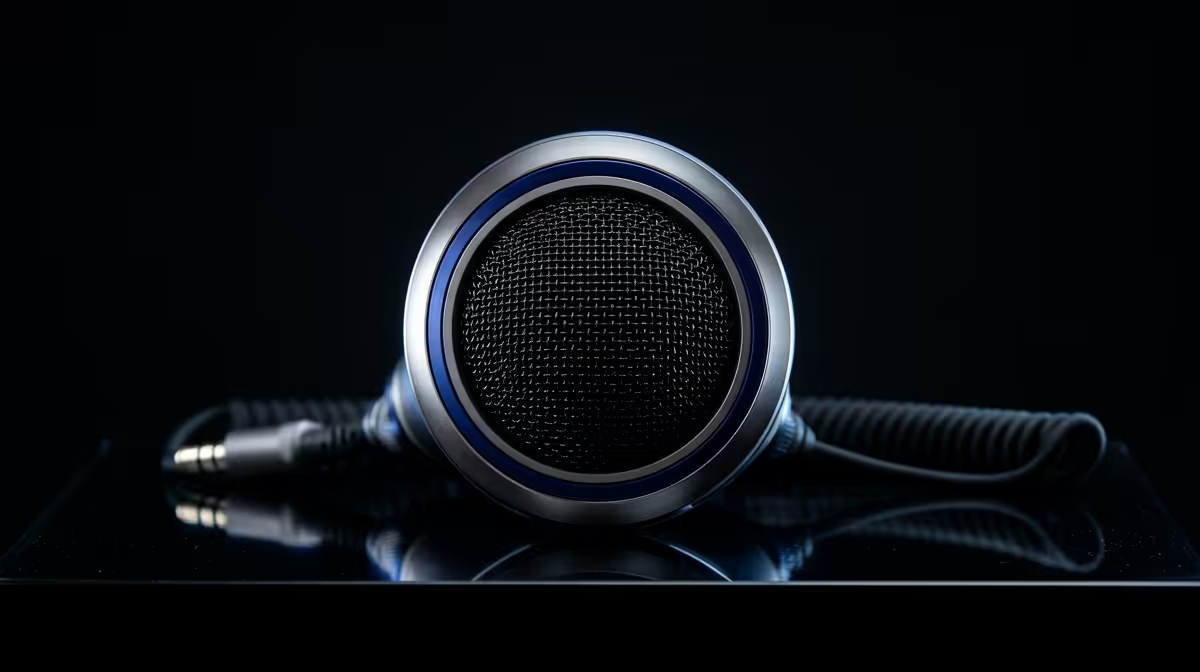
Choose a USB cardioid mic so it focuses on your voice and rejects the busy res background, with a detachable USB-C cable so a damaged lead is a cheap fix. A compact stand and a foam pop filter complete a res-friendly kit. Skip XLR-and-interface setups and RGB; in a shared room you want simple, clear, and portable, not studio complexity you will not use.
FAQ
Should I buy a mic for res now or later?
Buy now if you record lectures, narrate notes, or stream regularly. Wait if your needs are occasional and a phone voice memo already meets them.
What mic suits a noisy residence room?
A USB cardioid mic. It focuses on your voice and rejects the busy room background, and it plugs straight into a laptop without an interface or drivers.
Do I need an XLR mic and interface in res?
No. In a shared room, a simple USB cardioid mic is clearer to set up and carry. XLR and interface setups add cost and complexity you will not need there.
record or stream regularly in res, buy a USB cardioid mic now; if it is only occasional, a phone voice memo can hold you over until it is not.