Quick Answer
For engineering students recording simulation walkthroughs, buy a USB mic now if your coursework needs narrated demos; otherwise wait. A budget cardioid mic like the Rode NT-USB Mini (around R2,500) is the right starter, with the HyperX QuadCast S (around R3,000) for heavier recording.
Buy now or upgrade later for engineering recordings
If your simulations (MATLAB, ANSYS, Simulink demos) need a voiced walkthrough for submission or a tutorial channel, a clear USB mic now is worth it. The Rode NT-USB Mini (around R2,500) or Razer Seiren V3 Mini (around R1,200) covers narrated screen captures well. Upgrade to a Shure MV7+ (around R7,500) only if you commit to a regular content workflow later.
Mic features for technical narration
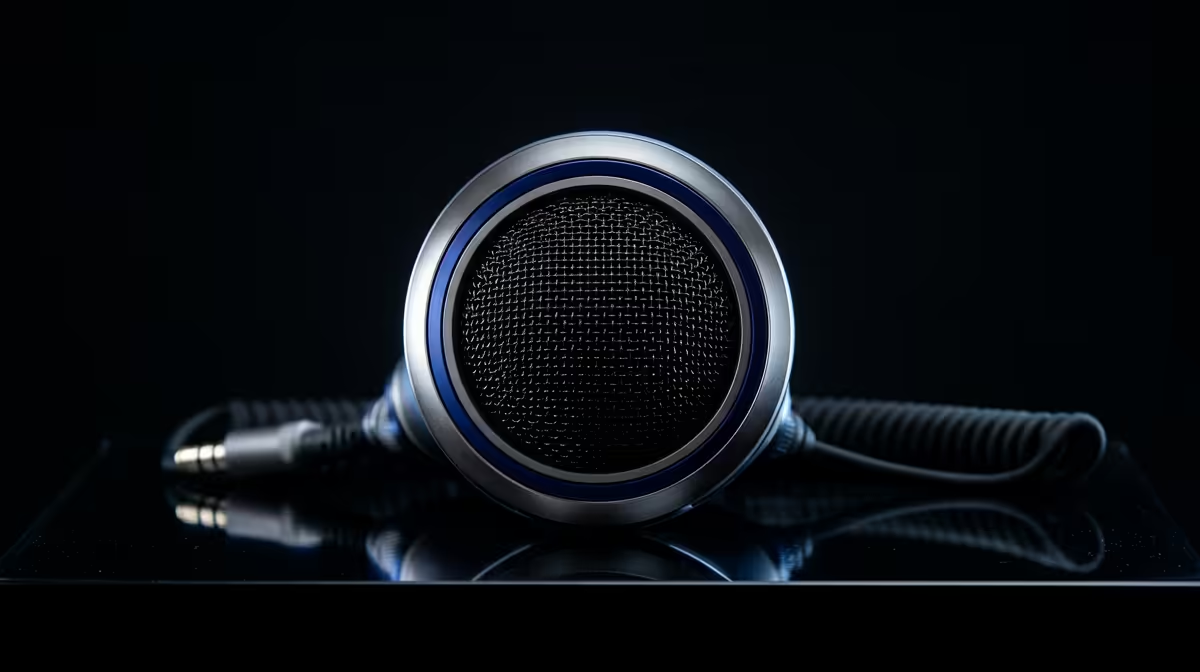
A cardioid pattern keeps the focus on your voice and rejects fan noise from a hard-working simulation rig, which matters during long renders. A pop filter smooths plosives across detailed explanations. Mounting the mic on an arm keeps it consistent at 15-20cm so your audio stays even across a multi-part simulation series.
Pairing audio with a simulation workstation
Engineering sims lean on CPU and RAM, so a Ryzen 7 7700 with 32GB RAM handles ANSYS and large MATLAB models far better than the mic budget would suggest. Record screen-and-voice in OBS Studio (free) and host on an unlisted channel with a 5-10 Mbps upload. Prioritise the workstation for the sim work and add a modest mic for the narration layer.
FAQ
Do I need a mic to record engineering simulations?
Only if your submission or channel needs narrated walkthroughs. A R2,500 Rode NT-USB Mini covers voiced screen captures of MATLAB or ANSYS demos. For silent screen recordings, the built-in mic is fine.
What mic pattern suits a noisy simulation rig?
Cardioid. It focuses on your voice and rejects fan noise from a hard-working workstation during long renders. Add a pop filter for plosives and a boom arm to keep the mic a consistent distance away.
Should I spend more on the mic or the simulation PC?
The PC. Engineering sims need CPU and RAM, so a Ryzen 7 7700 with 32GB matters more than a premium mic. A R2,500 cardioid mic handles narration; put the rest toward the workstation.
walkthroughs, a R2,500 cardioid USB mic plus a pop filter handles narration cleanly. Spend the bulk on a Ryzen 7 with 32GB RAM that actually runs your simulations.