Quick Answer
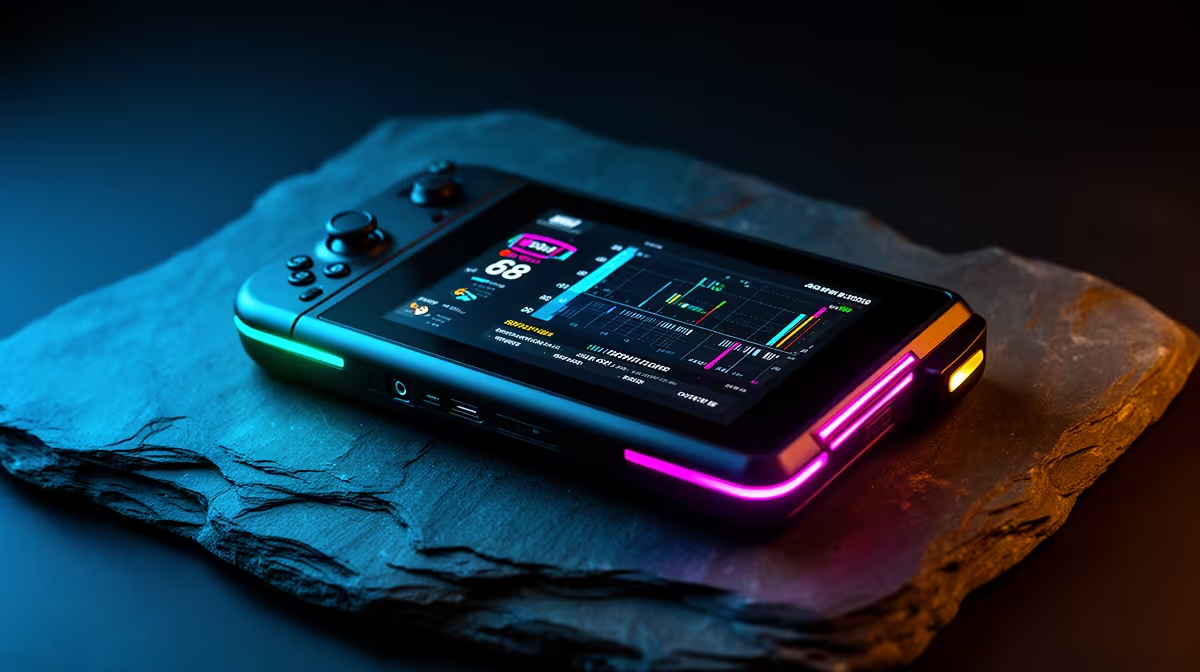
For travel-friendly study, the short list is a current 7-inch handheld near R12,000-R16,000 with 16GB RAM, a 512GB-1TB SSD and 6-8 hours of light-use battery, paired with a USB-C hub for a keyboard and external screen. That combination handles research, writing and light gaming on the move without a separate laptop.
What makes a handheld study-friendly
Study on the go means long battery life, a readable screen and the ability to dock to a keyboard. A handheld with a 7-inch 1080p panel is comfortable for reading, and 16GB RAM keeps a browser, PDF reader and note app open at once. Battery matters most: a 40-50Wh pack gives roughly 6-8 hours of light document work, enough for a campus day, while heavy gaming drains it in 2-3 hours.
Connectivity completes the picture. A USB-C hub with HDMI, USB-A and Ethernet lets the handheld drive a hostel monitor and a proper keyboard, turning it into a desk machine in the evening.
The buyer short list
Prioritise three things: 16GB RAM, at least a 512GB SSD (upgradeable to 1TB), and Wi-Fi 6 for fast campus and digs connections. Add a USB-C hub and a folding Bluetooth keyboard, and the handheld covers both study sessions and downtime gaming in one travel-sized device.
FAQ
Can a handheld replace a laptop for study?
For research, writing and presentations, a docked handheld with a keyboard and monitor works well. For heavy multitasking or long offline battery life, a laptop is still steadier.
How much battery life do handhelds give for study?
Light document work and browsing yield roughly 6-8 hours on a 40-50Wh battery, while gaming cuts that to 2-3 hours. Carry a USB-C power bank for long days.
What accessories make a handheld study-ready?
A USB-C hub for HDMI and USB-A, a folding Bluetooth keyboard, and a 1TB SSD or microSD for storage turn a handheld into a capable travel study machine.
study, prioritise 16GB RAM, a 512GB-1TB SSD and Wi-Fi 6, then add a USB-C hub and folding keyboard so the handheld doubles as a desk PC.