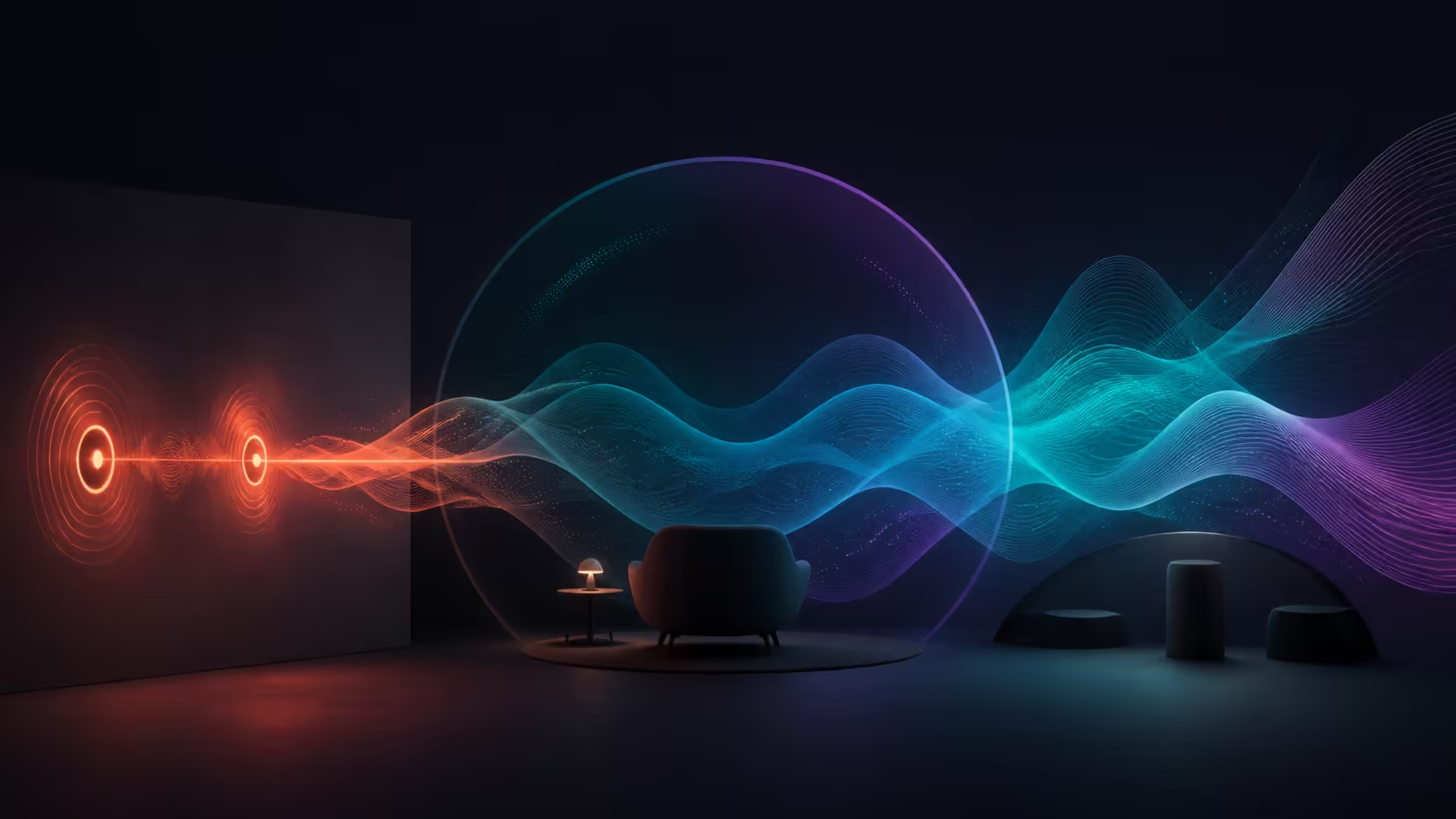
Speaker wattage cannot describe dialogue clarity, bass, room noise or the listener's preferred volume. Deciding whether dual 2W speakers can replace external gaming audio needs a listening trial with the exact screen, source, game and seating position.
Quick Answer
Dual 2W speakers may cover close casual listening, but no room-filling output or frequency specification supports replacing external gaming audio categorically.
Dual 2W speakers can replace external audio only when they deliver clear, comfortable sound for the intended room and player. Do not assume that speaker configuration for the R2,499 UPERFECT UGame NxtLED One Plus; confirm its exact audio hardware and connection path before comparing it with headphones or separate speakers.
🔊 Define what replacement actually means
For one user, replacement may mean intelligible game dialogue at a desk. Another may expect room-filling music, directional detail or private late-night play. Write the listening requirement before any wattage is scored.
Choose three familiar samples: spoken dialogue, layered effects and music with both quiet and loud sections. Keep game, source and room constant so the output device is the meaningful variable.
Listen from the normal chair, not directly beside the speaker. Record the lowest comfortable setting, the required setting and whether sound remains clear at that level.
The Evetech portable monitor collection can help identify exact displays whose audio information merits a product-level comparison.
🏠 Let the room expose limitations
Hard walls, open spaces, fans and conversation change perceived audio. Repeat the sample during ordinary room activity rather than testing only in silence.
Move the screen to its real working position. A speaker aimed away from the listener can behave differently from one tested at a showroom angle, and a desk surface may reinforce or obscure parts of the sound.
Wattage indicates electrical power context, not guaranteed loudness or quality. Driver design, enclosure and placement also affect the result, so do not award a pass from 2W alone.
🎮 Keep screen and sound decisions separate
An 18.5-inch IPS screen sits behind the NxtLED One Plus name, using 1920x1080, 120Hz and 14ms response. These display details identify neither speaker power nor audio quality.
First prove that the source and game can use the chosen visual mode. Then establish how sound leaves the source and reaches the listening device. A working picture does not confirm an audio route.
If sound support is important, save the selected output device and volume behaviour with the display configuration. This avoids rebuilding the route after travel or reconnection.
🎧 Decide when external audio wins
Headphones may serve privacy, directional detail or a shared room. Separate speakers can suit a wider listening area or a preference the monitor output does not meet. Compatibility must be checked against the exact source and connection plan.
Include power, cables, desk space and carried weight when external audio is considered. A sound upgrade that complicates every mobile session may fail the overall portability requirement.
Use the Evetech monitor accessories area after the audio role and connection are known. Keep built-in sound only when it passes the real sample without forcing unacceptable compromises.
Ask another listener to repeat the score without seeing the first notes. If both people identify the same clarity or volume limit from the normal seat, the result is more useful than one quick impression. Keep personal preference visible rather than averaging away a requirement that matters to the owner.
Repeat at the quietest practical volume. Clear low-level dialogue can matter more to shared-room play than maximum output.
The monitor's visual strengths are more explicit: Full HD at 120Hz, wide 178-degree viewing, 100% sRGB and glare control for changing environments. Use the built-in sound at the normal gaming distance, then compare speech, effects and maximum comfortable volume with the room's noise. If headphones or a speaker remain necessary, the portable case can keep the display kit organised without pretending its integrated audio solves every session.
Portable audio is also contextual: a quiet hotel room and a noisy gathering impose very different demands on the same four-watt speaker pair.
Choose headphones when privacy matters to nearby travellers.
Use the same game scene for both audio options.
Frequently Asked Questions
Why is a 2W label insufficient by itself?
It does not capture loudness at the seat, clarity, enclosure behaviour, room acoustics or listener preference.
Which test material gives a balanced result?
Use known dialogue, effects and music, preserving the same game, source, room and listening distance.
Does a gaming display mode identify audio support?
No. The 120Hz and 14ms display figures are unrelated to speaker configuration or the sound connection.
When should headphones enter the plan?
Consider them when privacy, shared-room noise or directional listening matters, subject to source compatibility.
Ready to make the audio decision with your own room and game?
Verify the monitor's sound route, then compare portable displays and purposeful listening accessories through Evetech.