Card length is the single easiest measurement to find before buying anything - it is on every spec sheet, every retailer listing, every review. Unfortunately, it is also nowhere near enough to answer whether the Hydrus 16-pin cable will actually fit your build, because fit here rests on three separate checks and length answers only one of them.
Quick Answer
Card length alone cannot confirm fit for the R699 AsiaHorse Hydrus 16-pin (12VHPWR) cable. It tells you where the power socket sits, but not whether the right-angle head clears the side panel, and not whether the 50cm cable reaches the power supply. Those are three distinct measurements, and length only settles one.
What card length actually tells you
Length determines roughly where along the case the card's power socket ends up positioned - a longer card pushes that socket further from the front, a shorter one leaves more room ahead of it. That is genuinely useful for planning things like front-mounted radiators or storage bay clearance, but it says nothing at all about the space immediately around the connector itself, which is the thing this cable actually needs.
The second measurement: depth behind the card
Separate from length is the depth between the card and the case's side panel - the space the right-angle head and the first few centimetres of cable actually occupy once connected. This dimension is invisible on any spec sheet; it only becomes apparent once the card is physically fitted and you can see how much room genuinely exists between the connector and the panel.
The third measurement: the route to the supply
Independently again, the 50cm cable has to cover the actual path from the power supply's modular socket to the card - a distance shaped by case layout, where the supply sits, and how many turns the route forces along the way. This has essentially nothing to do with card length; a short card in a deep case can still need a long route if the supply sits far away, and a long card in a compact case can need a short one if the supply is mounted close by.
How the three measurements relate to each other
They are only loosely connected. A longer card can shift where the socket sits relative to the supply, which can shorten or lengthen the route depending on the direction of that shift - but there is no reliable formula linking card length to either of the other two figures. Each genuinely needs its own check.
Which one gets overlooked most often
Depth is the one builders miss, precisely because it does not appear on any spec sheet the way length and reach both effectively do. It only becomes visible once the panel refuses to close cleanly, at which point the fix is considerably more annoying than it would have been as a five-minute check beforehand.
Doing all three checks properly
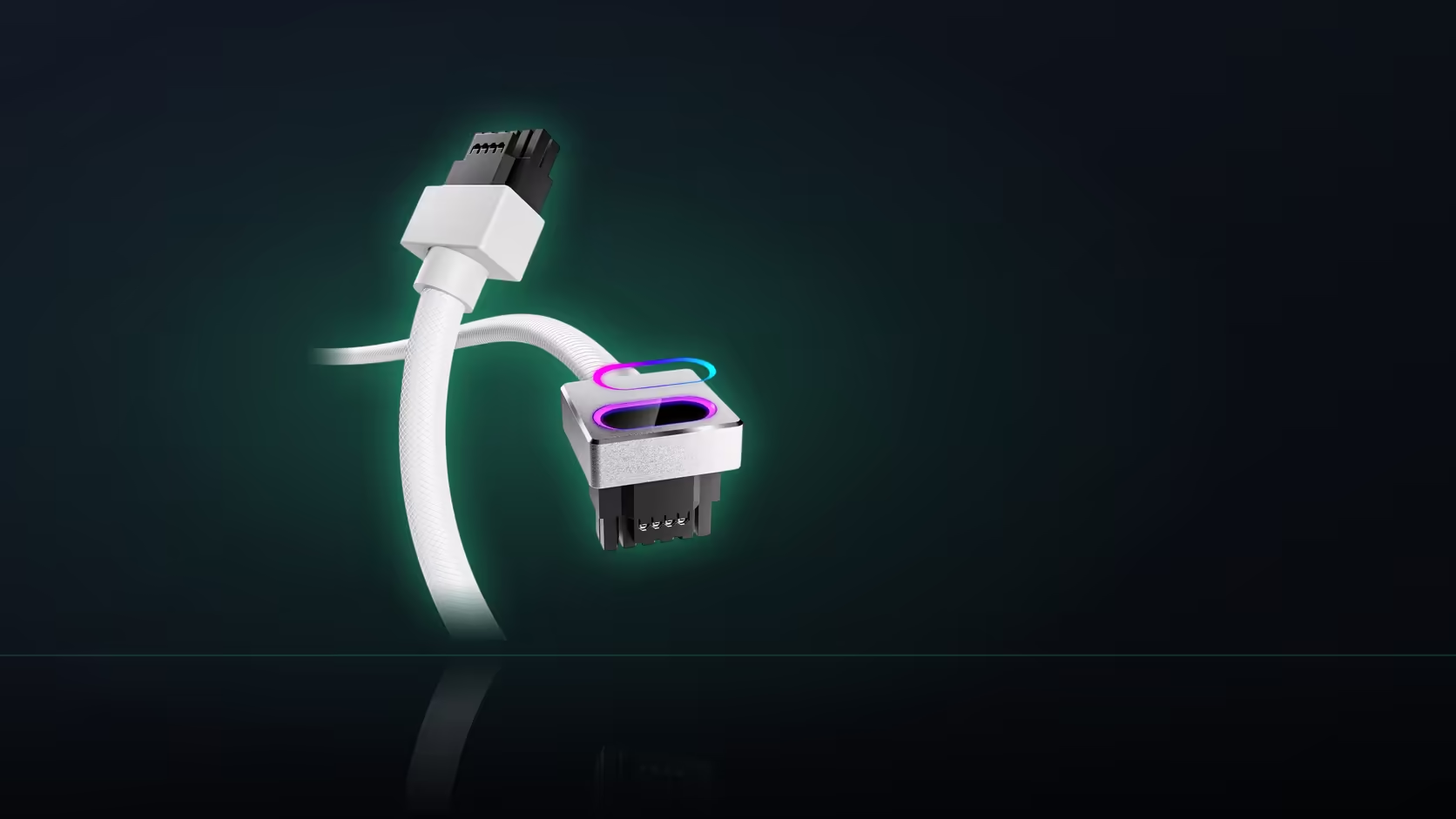
Reach and rough depth can sometimes be estimated from published case dimensions before a card even arrives, but the certain answer for both comes only once the actual card is installed and you can measure directly. The head's fixed direction also affects both depth and where the route begins, so it is worth knowing which way the head turns - visible in AsiaHorse's product photos - before finalising any plan.
Browse comprehensive cable solutions for the cable, and once all three checks are done, graphics card accessories covers the rest of a 12VHPWR build.
Frequently Asked Questions
What does card length actually determine?
Where along the case the power socket ends up positioned, which affects planning around the card but says nothing about clearance right at the connector.
What is the second measurement worth checking?
Depth between the card and the side panel, which decides whether the right-angle head and cable clear the panel cleanly.
And the third?
The path length from the power supply's socket to the card, which has to fall within the cable's 50cm reach.
Do these three measurements depend on each other?
Loosely. A longer card can shift where the socket sits relative to the supply, but there is no reliable formula linking all three together.
Which measurement is most often overlooked?
Depth, since it does not appear on any spec sheet and only becomes apparent once the panel will not close cleanly.
Can all three be checked before the card physically arrives?
Reach and depth can be roughly estimated from case specifications, though the certain answer comes with the card actually installed.
Does the head's fixed direction affect any of these three checks?
Yes, it affects depth and the starting direction of the route, so knowing which way it turns is worth confirming from product photos.
Ready to check fit properly rather than guessing from card length?
Install the card and measure the actual clearance, then browse Evetech's cable range once you know what fits.