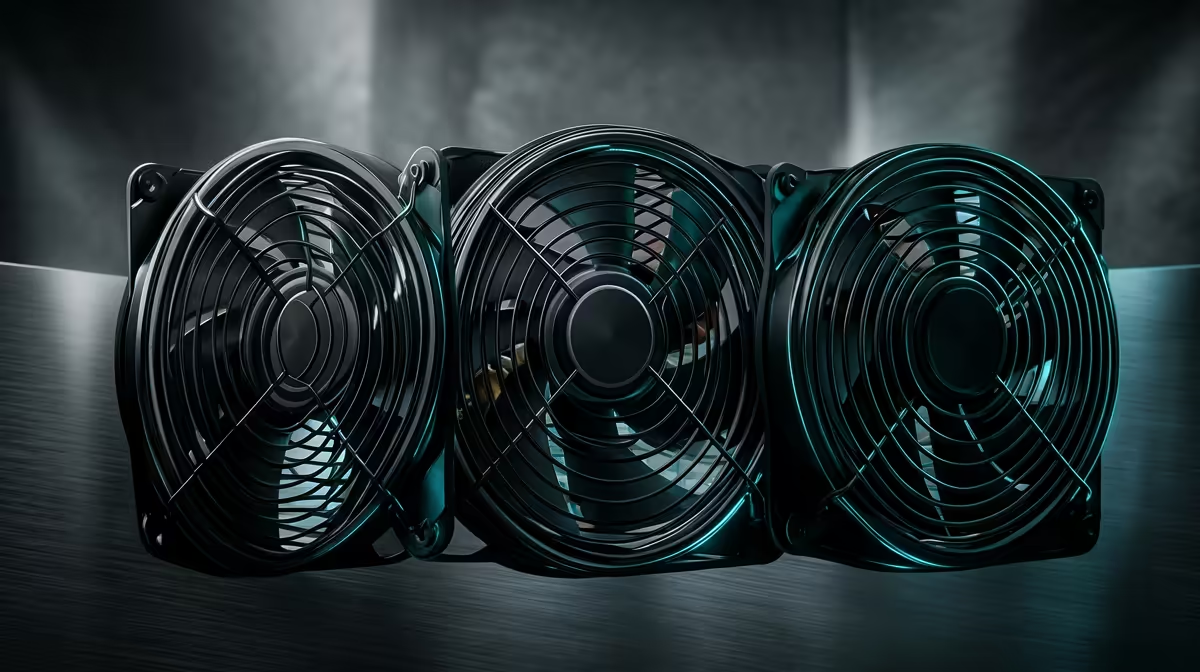
Quick Answer
For deal hunters, airflow is worth paying for when your case runs hot or houses a warm GPU, because a R250 high-airflow 120mm fan moving 55-60 CFM clears heat far better than a bargain fan pushing 30 CFM. If your build is cool and low-power, airflow matters less and a basic fan does the job.
When airflow justifies the spend
Airflow, measured in CFM, is how much air a fan moves, and it directly affects how well a case sheds heat. A deal-hunter fan that moves only 30 CFM struggles to cool a warm GPU or a packed case, letting temperatures climb until the hardware throttles. A R250 fan rated at 55-60 CFM clears that heat and keeps components in their comfort zone, which protects performance. For hot builds, paying a little more for airflow is the smart deal, and it protects a GPU that can cost R12,000 or more.
For a cool, low-power build, like an office PC or a light gaming rig, even a modest fan keeps temperatures fine, so chasing maximum CFM wastes money.
Spotting the right deal
Look past the price to the CFM and noise ratings. A good-value airflow fan moves 55-60 CFM at under 30 dB(A) near 1,400 RPM, which is the sweet spot for a deal hunter. Watch for very cheap fans that hit high CFM only by spinning loudly at 2,000 RPM; the noise is not worth the saving. Two intake and one exhaust gives clean positive pressure.
FAQ
When is airflow worth paying for in a case fan?
When your case runs hot or holds a warm GPU. A 55-60 CFM fan clears heat far better than a 30 CFM bargain fan, preventing throttling. A cool build needs less airflow.
How much CFM should a good fan move?
A solid value airflow fan moves 55-60 CFM at under 30 dB(A). Be wary of cheap fans that reach high CFM only by spinning loudly above 2,000 RPM.
Does fan placement affect airflow?
Yes. Two intake fans and one exhaust create slightly positive pressure, which improves airflow through the case and helps keep dust out.
hot build, hunt for a 120mm fan moving 55-60 CFM at under 30 dB(A); skip cheap fans that hit high airflow only by spinning loudly above 2,000 RPM.