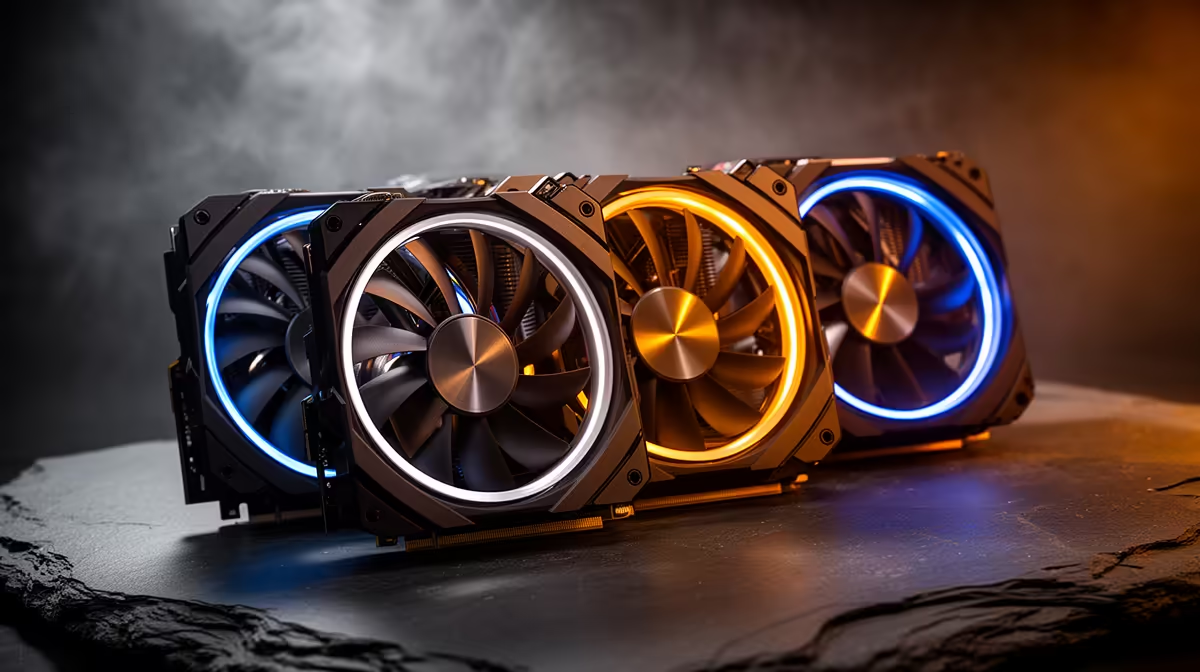
Sim racing fans cool a hot, hard-working rig, often a high-end GPU driving triple screens or VR for hours, so getting case fans right matters. The common SA buyer mistakes around case fans are easy to make and easy to avoid with a quick checklist.
Quick Answer
The case-fan mistake checklist for sim racing: do not ignore static pressure behind filters, do not run negative pressure that pulls in dust, and do not buy on RGB over airflow. Quality 120mm or 140mm fans under 25dBA, around R250 to R450 each or roughly R1,300 for a full set, keep a sim rig cool and quiet.
The Mistakes To Avoid
First mistake: choosing high-airflow fans for positions behind dust filters or radiators, where static-pressure fans push air through resistance far better. Second: running more exhaust than intake, creating negative pressure that sucks dust through every unfiltered gap, a real issue in dusty SA homes. Third: buying for RGB rather than performance, paying for lighting that cools nothing.
A sim rig under long load needs steady airflow more than it needs a light show.
Getting The Fan Setup Right
Aim for slight positive pressure, a touch more intake than exhaust, so filtered air comes in and dust stays out. Use static-pressure fans behind filters and radiators, airflow fans for open exhaust. Keep noise under 25dBA so the fans do not intrude on race audio. Two intake and one exhaust is a sensible base, scaled to your GPU's heat.
FAQ
Static pressure or airflow fans for sim racing?
Use static-pressure fans behind filters and radiators, and airflow fans for open exhaust. Matching fan type to position keeps the rig cool efficiently.
How do I avoid dust in a sim rig?
Run slightly positive pressure with more intake than exhaust, and keep dust filters on intakes. That forces air in through filters rather than pulling dust through gaps.
Is RGB a mistake on sim fans?
RGB adds cost and cabling without cooling. It is fine if you want the look, but never choose lighting over airflow and noise performance.
sim rig to slight positive pressure, a little more intake than exhaust, so filtered air enters and dust stays out during long racing sessions.