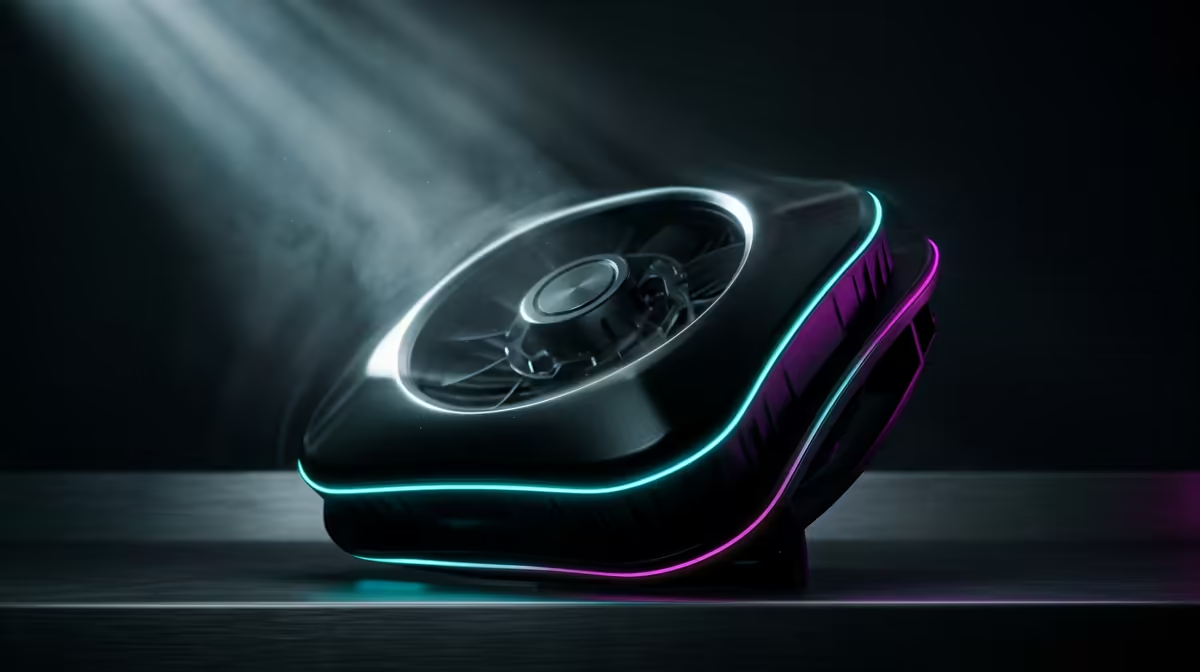
Good case airflow keeps clocks steady, and for buyers working with a small desk or bedroom steady clocks mean steady frame times.
Quick Answer
Pay for static pressure when fans sit behind dense filters or radiators, where it moves 20 to 30 percent more air than airflow-optimised blades. A three-fan static-pressure kit runs roughly R600 to R1,200 at Evetech.
Bearings and noise that you live with
Sleeve bearings are cheapest but die first and whine when mounted vertically. Fluid-dynamic or rifle bearings cost R100 to R200 more per fan and run quieter for years. Build the fan curve around noise: a steady 900 to 1,100 RPM beats fans that ramp up and down and distract you mid-game.
Static pressure vs airflow blades
Airflow fans move air through open space; static-pressure fans push through resistance like dense filters and radiators. Putting the wrong type behind a mesh filter loses 20 to 30 percent of effective airflow. Match the blade design to where the fan sits, not to the RGB you prefer.
Check your headers and case limits
Count motherboard fan headers before buying; most boards offer four to six, and a PWM splitter only works within the header's current rating. Measure supported fan sizes too: a case that takes 140mm fans moves the same air at lower RPM and less noise than 120mm units running flat out.
FAQ
PWM or DC fans for a quiet build?
PWM, every time. PWM fans let the motherboard fine-tune speed for a steady, quiet curve, while DC fans are blunter. A steady 900 to 1,100 RPM profile, drawing under 2W per fan, is far less distracting than fans that ramp constantly.
Static-pressure or airflow fans?
Use static-pressure fans behind dense filters and radiators, airflow fans in open spots. A 3W high-pressure fan moves 20 to 30 percent more air through a mesh filter than an airflow blade, so match the fan to its position.
How many case fans do I actually need?
Two front intakes and one rear exhaust is the practical baseline and drops temps 5 to 10C versus a sealed case. Each 120mm fan draws only about 2W, so a four-fan setup adds a trivial 8W to your power bill.
Match case fans stocked at Evetech to where they sit, static-pressure behind filters and radiators, airflow blades in open mounts, and check your motherboard's fan headers first.