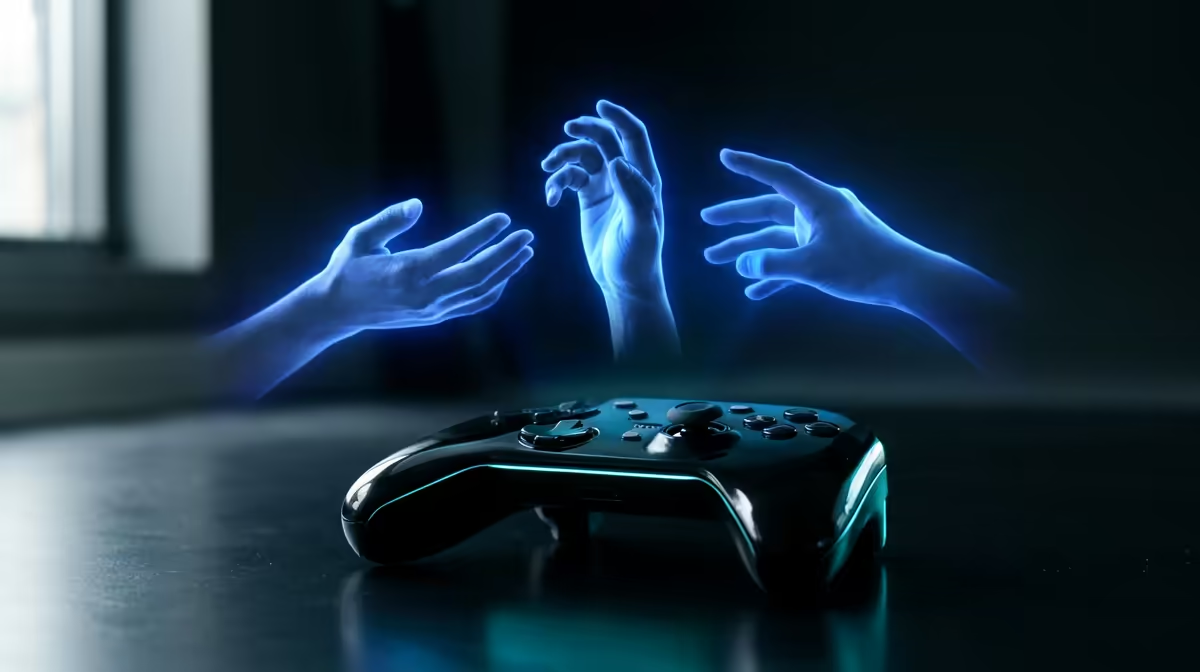
Slip on a modern VR headset and you face a quiet decision every session: reach for the controllers or just use your hands. Controllers versus hand tracking in VR is not really a contest, because the two input methods solve different problems. One gives you precision and feedback for games, the other gives you a controller-free way to poke through menus. Knowing which suits the moment makes the whole headset feel better.
Quick Answer
Controllers give haptic feedback and precise input that fast games and sim titles depend on, while hand tracking uses the headset's cameras to read your bare fingers for menus and casual apps. Most players use both: controllers for gaming, hand tracking for navigation and quick interactions.
How Each Input Method Works
Controllers are physical devices you hold, with buttons, triggers, thumbsticks, and motion sensors. They report exactly where your hands are and what your fingers are pressing, and they buzz with haptics to confirm actions. Hand tracking works differently. The cameras built into headsets like the Meta Quest watch your bare hands, and software reconstructs your finger positions in real time. No batteries, nothing to hold, but also nothing to press and no physical feedback.
Where Controllers Win
For anything fast or competitive, controllers are still the clear pick. A rhythm game needs the exact timing only a physical trigger delivers. A shooter needs the confidence of a thumbstick and a button you can feel without looking. Haptic feedback closes the loop, letting you feel a bowstring tense or a hit land. Sim titles, fitness games, and most polished VR experiences are designed controllers-first because that precision and feedback cannot be faked with cameras alone.
Where Hand Tracking Wins
Hand tracking shines for low-pressure interaction. Scrolling a menu, pinching to select an app, reading in a virtual environment, or showing someone the headset without handing over controllers all feel natural with bare hands. It is also more approachable for newcomers, since pointing and pinching needs no explanation. The trade-off is accuracy. In poor lighting, or when your hands leave the cameras' view, tracking drifts or drops. Fast or precise movements are where it struggles most.
Why Most People Use Both
The practical answer is to switch depending on the task. Pick up controllers for a gaming session, then set them down and navigate the menus and store with your hands afterward. Modern headsets switch between the two automatically, so it rarely feels like a deliberate choice. If you are weighing up headsets and wearables, the AR and VR glasses range at Evetech shows which current models support strong hand tracking alongside their controllers.
For the extra bits that round out a VR setup, such as charging docks, head straps, and cases, the most popular accessories at Evetech are worth a look once you have settled on a headset.
Frequently Asked Questions
Is hand tracking accurate enough for gaming?
For casual and slow-paced games, yes. For fast, competitive, or precision titles, controllers remain far more reliable because they report exact positions and offer haptic feedback that cameras cannot replicate.
Do I need good lighting for VR hand tracking?
Yes. The headset's cameras read your bare hands, so dim or uneven lighting reduces accuracy and can cause tracking to drop. Bright, even room lighting gives the best results.
Can I use hand tracking and controllers at the same time?
Not simultaneously, but modern headsets switch between them automatically. Set the controllers down and the headset detects your hands, then pick them back up to return to controller input.
Does hand tracking drain less battery?
There are no controller batteries to charge with hand tracking, but the headset's cameras and processing draw more power while tracking your hands. The net effect on headset battery life is small.
Choosing a headset comes down to how you will use it, controllers, hands, or both. Explore the AR and VR glasses range at Evetech (https://www.evetech.co.za/PC-Components/ar-glasses-433) to find a model with the tracking and controller support that fits your kind of play.