A defect under South Africa's CPA is more than "I do not like this PC." It is a material problem that makes the goods less acceptable, useful, practical or safe than people are generally entitled to expect in the circumstances. With PC hardware, the symptom must be connected to the product rather than a game bug, unstable overclock or damaged wall supply.
Quick Answer
GPU artefacts, repeatable memory errors, a motherboard that arrives dead and a power supply that shuts down under a valid supported load can all point to defects. A noisy fan or slow SSD needs context: compare the model's stated operation, test conditions and normal tolerances. Accidental liquid damage and harm caused by an unsupported modification are different from an inherent product fault. This is general CPA information; the evidence and current law decide an individual claim.
🧪 Turn a symptom into a repeatable record
Write down the exact game, workload and time to failure. Photograph artefacts, save memory-test results and record error messages. Return BIOS and component settings to supported defaults before testing, unless doing so is unsafe.
For a power shutdown, note the full hardware configuration and wall-power path. "Below the wattage on the label" does not by itself prove a PSU fault because rail limits, transient load, temperature and another failed part can matter.
Evetech's PC best-sellers and wider best-selling range show the system context that should match the invoice and delivered specification.
📏 Compare performance under the stated conditions
An SSD advertised with a peak sequential speed may run slower in a small-file workload, when nearly full or after its cache is exhausted. Test the intended benchmark, correct interface and healthy temperature before calling the difference a defect.
A fan can be audible and still normal. Grinding, bearing chatter or failure to spin is stronger evidence than a personal preference for silence.
🛑 Stop when testing could cause more damage
Disconnect power if there is smoke, a burning smell, liquid or visible electrical damage. Tell the supplier what happened and preserve the machine. Continued attempts can create a safety risk and complicate the original fault record.
Frequently Asked Questions
Is a GPU that artefacts under load a valid defect?
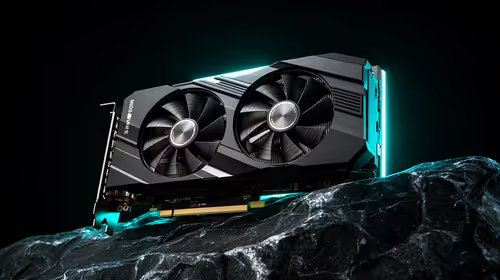
It can be when the behaviour is repeatable at supported settings and another cause has been reasonably excluded.
Does a PSU shutting down under rated wattage count as a defect?
It may. The complete load, temperature, power source and cause need diagnosis; headline wattage alone is insufficient.
Is random crashing from faulty RAM covered?
Qualifying faulty RAM can be covered. Save repeatable memory-test evidence at supported settings.
Does a noisy fan count as a defect?
Abnormal grinding or failure may. Normal airflow noise or a subjective sound preference may not.
Is accidental liquid damage covered as a defect?
Usually it is accidental damage rather than an inherent defect, subject to the actual facts and any separate cover.
Does a slow SSD count as a defect if it underperforms its spec?
Possibly, when tested under the specified conditions and after interface, capacity, heat and workload differences are accounted for.
Does overclocking damage count as a CPA defect?
Damage caused by unsupported settings can undermine a claim. A fault at supported defaults presents different facts.
Is a dead-on-arrival motherboard covered under the CPA?
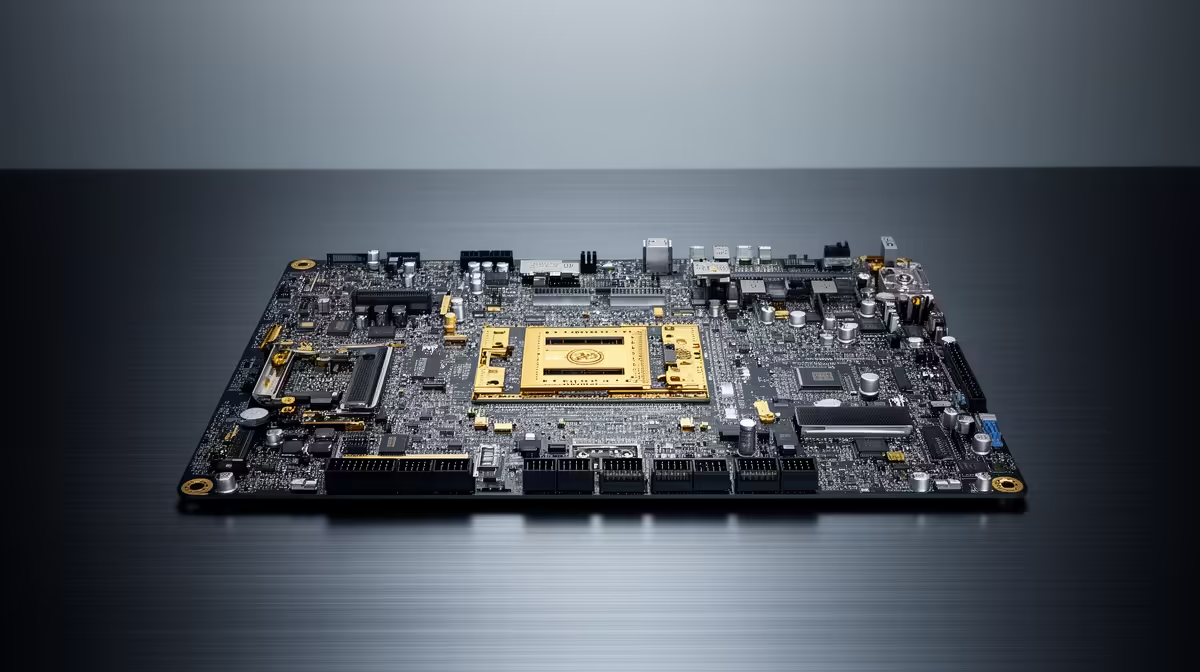
A motherboard that cannot perform its ordinary purpose on arrival can present a strong qualifying defect claim.
Buying a PC whose original working state may need to be shown later?
Compare Evetech gaming systems, then save the delivered specification and run a calm first-week baseline at supported settings.