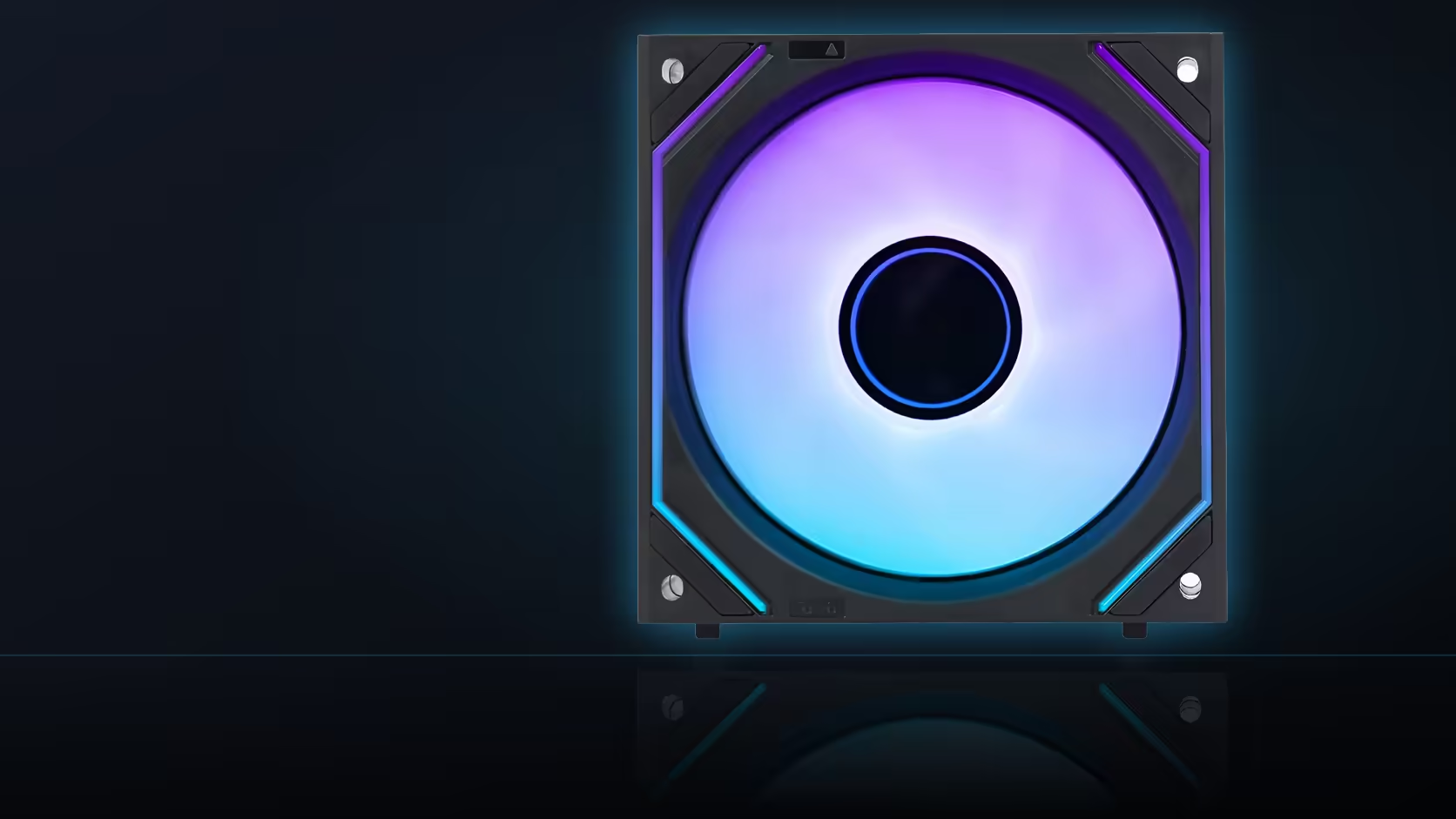
Spec-sheet naming across a single brand's range can look inconsistent even when the underlying engineering is not. AsiaHorse spells out "hydrodynamic bearing" on some fans and abbreviates it to HDB on others, and a shopper comparing listings side by side could easily read that as two different technologies rather than two labels for the same thing.
Quick Answer
Dawn Pro's product listings state "hydrodynamic bearing" in full, while AsiaHorse's Nyota Pro and Amici fan lines use the abbreviation HDB in their own names. Both describe the same bearing family; the naming differs, the engineering does not. Whichever term appears, it is worth checking the rest of the listing, since Dawn Pro is priced R269 single, R699 three-pack, while other lines in the AsiaHorse range carry their own separate figures.
🏷️ One bearing, two labels
Product naming conventions vary within a single manufacturer's own catalogue, and abbreviations creep into some model names while others spell the underlying term out in full. That is what has happened here: hydrodynamic bearing and HDB refer to the same fluid bearing technology, just written two different ways depending on which listing you are reading.
🆚 Where the actual differences live
A shared bearing label does not mean two fans perform identically. Blade design, speed range, airflow rating and lighting implementation all vary between models regardless of what the bearing is called, so a naming difference is not the place to look for a real performance gap between case fans in the same brand.
Checking rated bearing life across models
Dawn Pro lists a 50,000-hour rating alongside its hydrodynamic bearing description. Rated hours appear elsewhere in the AsiaHorse range too, so it is worth checking that figure per model rather than assuming it carries over just because the bearing family matches.
🔊 Does bearing type affect what you hear?
Fluid bearings, including this hydrodynamic and HDB family, are generally associated with quieter running than basic sleeve bearing designs. That reputation is part of why the term gets quoted prominently at all, even under two different spellings. A look through case accessories is worth pairing with any bearing comparison, since mounting quality affects real-world noise as much as bearing type does.
Frequently Asked Questions
Are hydrodynamic and HDB the same technology?
Yes, they describe the same bearing family, so a fan listed under one term is not using different engineering from one listed under the other.
Why does the naming differ between models?
Product naming conventions vary within a range, and abbreviations appear on some listings while the full term is spelled out on others.
Does shared bearing naming mean the fans perform the same?
No. Blade design, speed range and airflow all differ between models regardless of what the bearing itself is called.
Which AsiaHorse models use which label?
Dawn Pro states "hydrodynamic bearing" in full, while Nyota Pro and the Amici line describe theirs as HDB in the product name.
Do both carry the same rated bearing life?
Dawn Pro lists 50,000 hours; rated figures appear across the wider range too, so it is worth checking per model rather than assuming it carries over.
Does the bearing type change the noise you hear?
Fluid bearings like this one are generally quieter than simple sleeve designs, which is likely why the term is highlighted at all.
Should this naming difference change a purchase decision?
It mainly clears up a false distinction, so the actual comparison should rest on airflow, speed range, lighting and price instead.
Comparing bearing claims across AsiaHorse's fan range?
Explore Evetech's case fan category to see the full lineup and current pricing side by side.