A direct drive vs Bowden extruder comparison should focus on the filament path and the complete printer, not a promise that one layout always produces better quality. Tuning, material, motion and maintenance still shape the output from either architecture.
Quick Answer
Direct drive places the Neptune 4 Plus's 290g dual-gear extruder close to the nozzle, while a Bowden design pushes filament through a longer tube.
At R7,799, the Neptune 4 Plus uses direct drive, placing the extruder close to its 300C nozzle. A Bowden system feeds material through a longer route. Compare them with the same model and filament rather than assuming layout alone determines control or finish.
🧵 Map the Feed Path
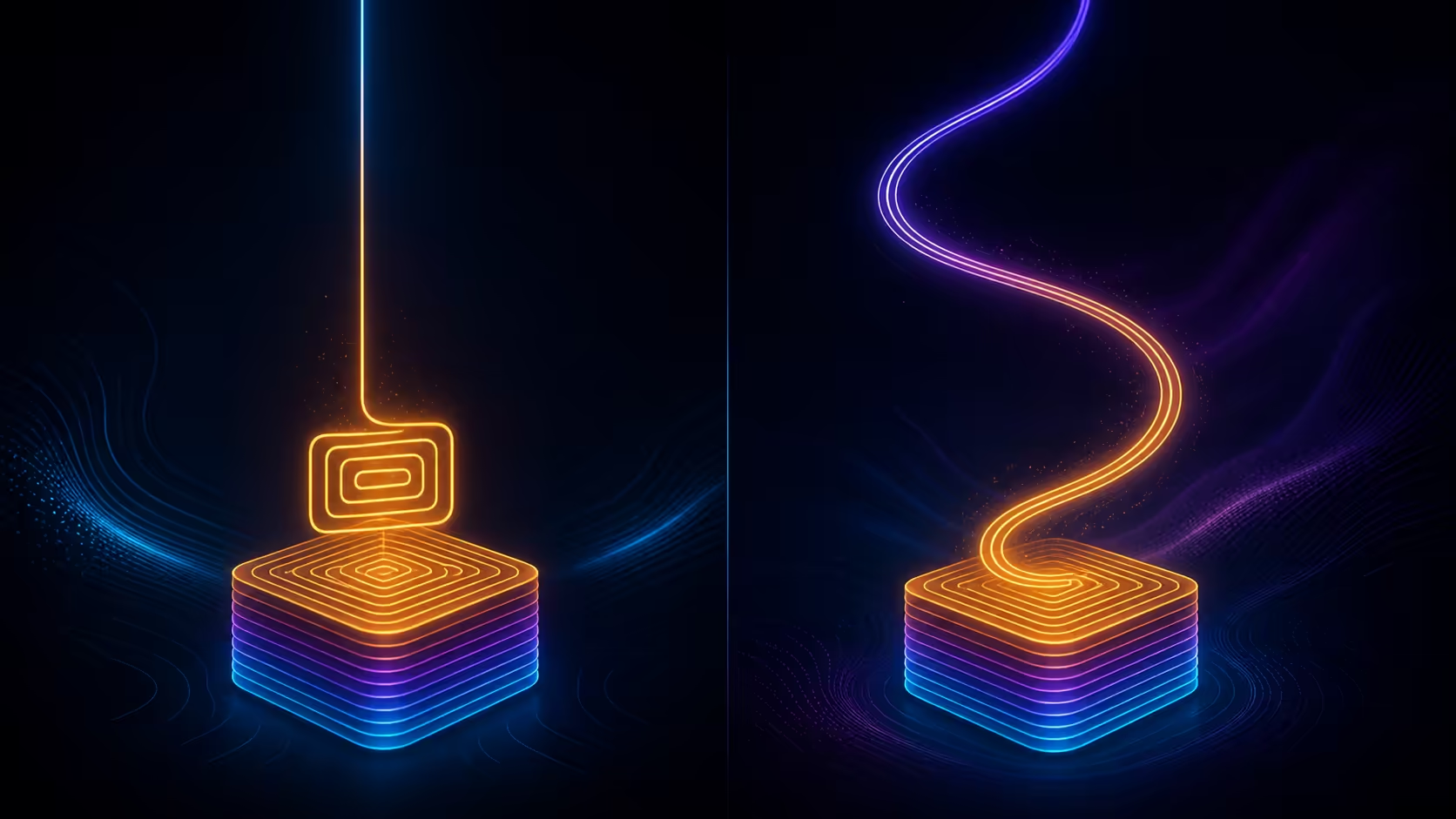
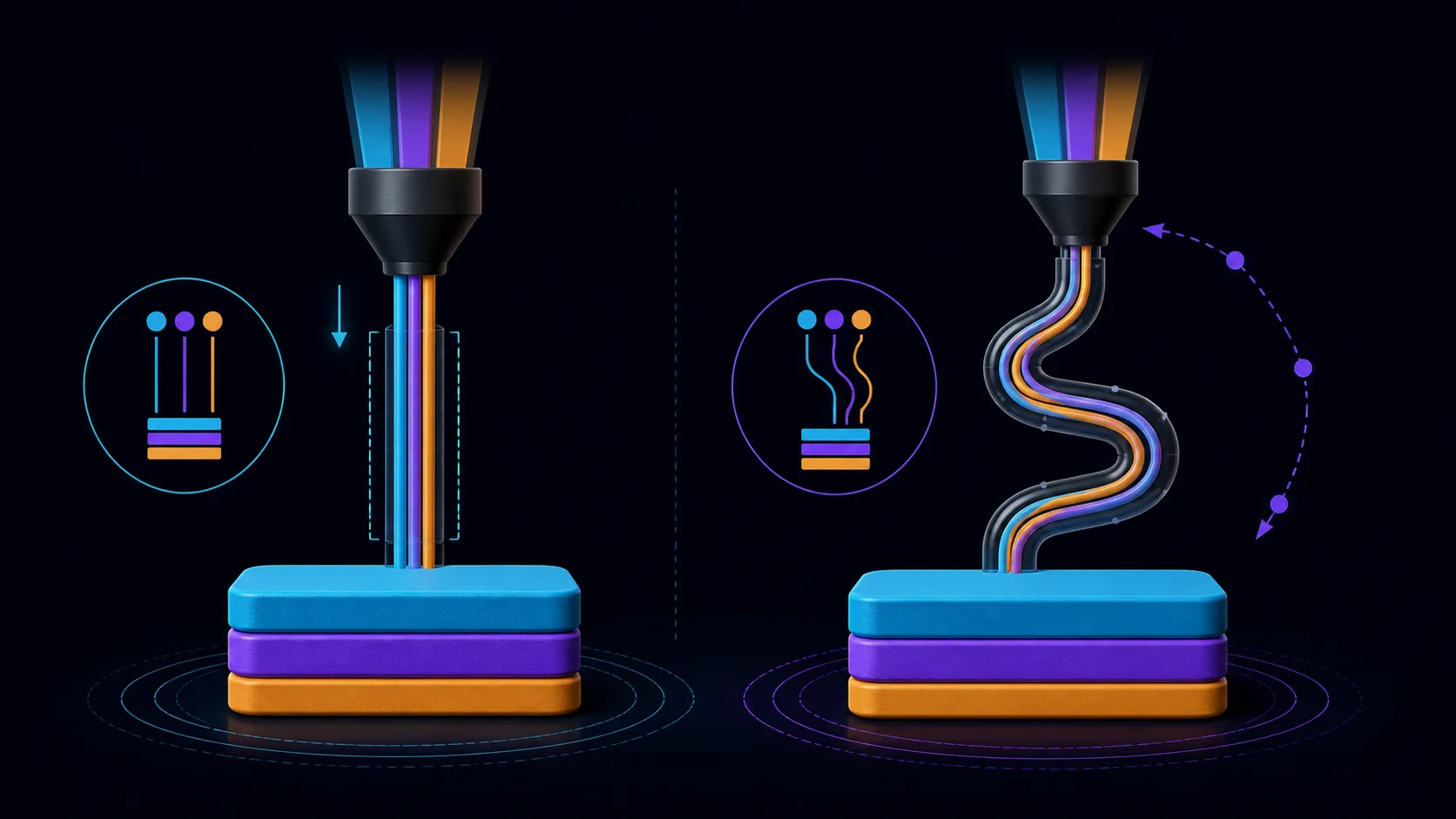
Direct drive shortens the distance between drive mechanism and nozzle. Bowden arrangements separate those elements with a longer filament route. This physical difference can change tuning priorities without deciding the result by itself.
Look at the complete system: spool travel, drive mechanism, nozzle, movement profile and material requirements. Two direct drive printers can behave differently, just as two Bowden machines can.
The Neptune 4 Plus combines its feed layout with Klipper firmware and motion reaching 500mm/s. Those features require coordinated tuning rather than being treated as independent guarantees.
⚖️ Compare Identical Jobs
Use the same sliced model, filament type, quality target and acceptance checks where possible. Establish sound first layers on both machines before judging extrusion.
Flexible-filament compatibility should be confirmed for each complete printer and chosen material. A shorter feed path may inform the assessment, but the word direct drive cannot create a universal filament list.
Compare candidates among Evetech's large 3D printer range with feed path and maintenance considered beside volume.
🔎 Judge Control and Quality
Inspect consistent line delivery, corners, retractions and fine features from completed samples. If one result is better, identify the setting or hardware interaction that explains it rather than assigning the whole difference to architecture.
Speed belongs in the trial because higher motion can expose flow limits. Do not force both machines to a common maximum if one has not produced an acceptable baseline there.
Select comparison material from Evetech's filament category after matching it to both full printer paths.
🧰 Include Maintenance and Cost
Review how the exact extruder is accessed, unloaded, cleaned and returned to a baseline. Do not infer service steps from the broad layout name.
Browse Evetech 3D printers for other configurations, recording each candidate's build volume, firmware and levelling process.
The R7,799 price covers the Neptune 4 Plus direct drive example along with a 320 x 320 x 385mm volume and automatic levelling. Value depends on using the whole package, not declaring one feed path universally best.
Add profile-transfer effort to the comparison. A setting developed for one machine cannot be copied blindly to another architecture, even when the model and filament are unchanged. Record the steps needed to reach accepted flow on each printer and include those trials in the final maintenance and time judgement.
Preserve both final samples under the same inspection conditions so memory does not replace evidence.
The Neptune direct drive's 5.2:1 reduction ratio supports controlled feed for PLA, PETG, ABS, ASA, TPU and high-temperature nylon. A Bowden carriage may be lighter, but needs its own retraction and flexible-filament evidence. Compare matched material, geometry, speed and finish instead of ranking the layouts by distance alone.
The direct-drive arrangement also concentrates the extruder's 290g mass on the moving head. Klipper input shaping and X/Y resonance calibration help manage motion, while the rear and head-mounted blowers cool deposited material. A fair Bowden comparison must consider carriage mass, feed distance, tuning and actual print acceptance together.
Frequently Asked Questions
What is the core feed-path difference?
Direct drive positions the drive mechanism near the nozzle, while Bowden feeds filament across a longer path.
Which extruder does the Neptune 4 Plus use?
It uses a direct drive layout paired with a nozzle that can reach 300C.
Does direct drive guarantee better print quality?
No. Material, calibration, motion, extrusion settings and model geometry determine the completed print.
Can either design prove flexible-filament support?
Neither label proves it alone. Confirm each material against the exact printer, feed path and operating requirements.
How should two extruders be compared fairly?
Use the same suitable material, representative model, quality target and documented settings after establishing sound first layers.
What does the direct drive example cost?
The Neptune 4 Plus costs R7,799 in South Africa and pairs its larger build volume with Klipper, automatic levelling and direct drive.
Where does print speed enter the decision?
Motion rate can expose delivery limits, so compare accepted complete results instead of maximum numbers in isolation.
Comparing feed paths around the work you actually print?
Explore FDM 3D printers at Evetech with one material, test model and acceptance standard ready for both layouts.