Whether a flagship X870E board is necessary for a top gaming chip depends on the features you actually use, not the chipset's prestige.
Quick Answer
No, you do not need an X870E board for a Ryzen 7 9800X3D to game well; a solid B850 board runs it fully, including PBO. X870E only earns its premium if you want maximum USB4, more PCIe 5.0 lanes, and heavy expansion, typically R2,000-plus over a good B850.
What X870E Adds
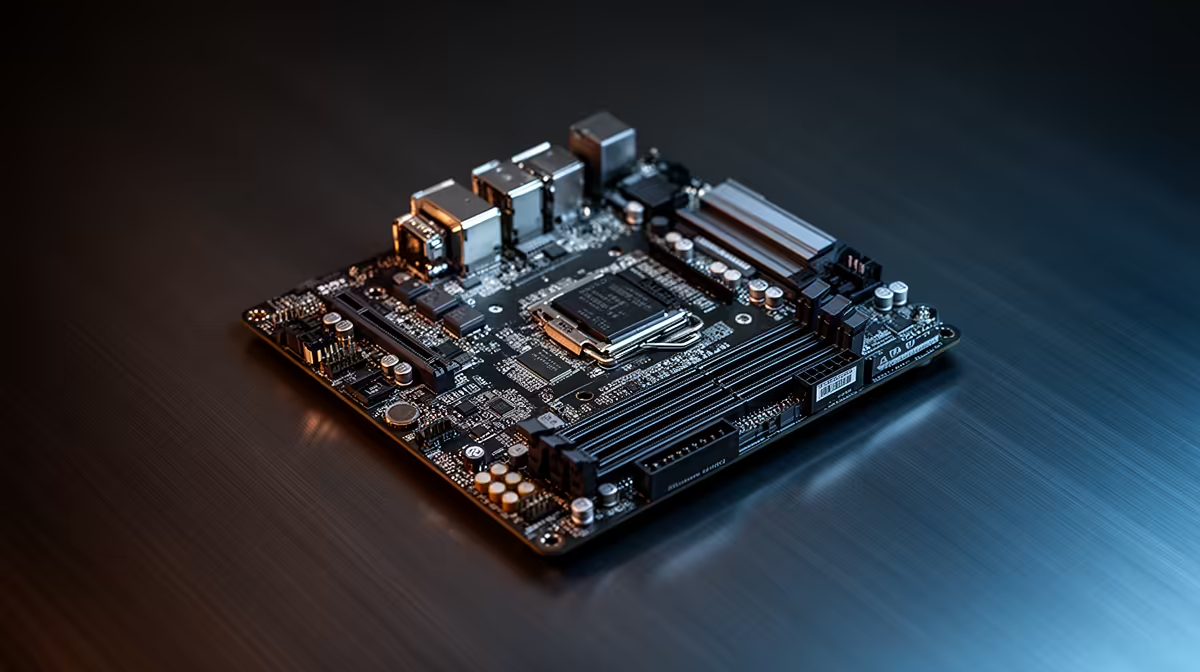
X870E brings guaranteed USB4, more PCIe 5.0 connectivity for the GPU and a second NVMe drive, and richer rear I/O. For a gamer running one GPU and one or two SSDs, those extras rarely change the experience. The 9800X3D gets its gaming edge from cache, not the chipset.
When B850 Is The Smarter Buy
A quality B850 board supports the 9800X3D, DDR5-6000 EXPO, PCIe 5.0 for the GPU, and PBO tuning, covering almost every gaming need. Spend the saved money on a better GPU or cooler. Step to X870E only for USB4 peripherals, multiple Gen 5 drives, or heavy expansion.
Where Buyers Go Wrong
Match the purchase to how you actually use your PC, not the spec you aspire to, since over-buying ties up money you could put toward the part that limits you most. Identify your real bottleneck and spend there first for the biggest gain. Reading the return and warranty terms before you order means any surprise is a quick swap rather than a costly write-off.
FAQ
Do I need X870E for a Ryzen 7 9800X3D?
No. A solid B850 board runs the 9800X3D fully, including DDR5-6000 and PBO. X870E only adds value if you need USB4 and heavy PCIe 5.0 expansion.
Will a B850 board limit gaming performance?
No. The 9800X3D's gaming edge comes from its cache, not the chipset, so a quality B850 with PCIe 5.0 for the GPU performs identically in games.
What does X870E offer over B850?
Guaranteed USB4, more PCIe 5.0 lanes for a second Gen 5 drive, and richer rear I/O, which matter for expansion rather than pure gaming.
-- Put the chipset savings toward a stronger GPU; a B850 board feeds the 9800X3D's cache just as well as X870E in games.