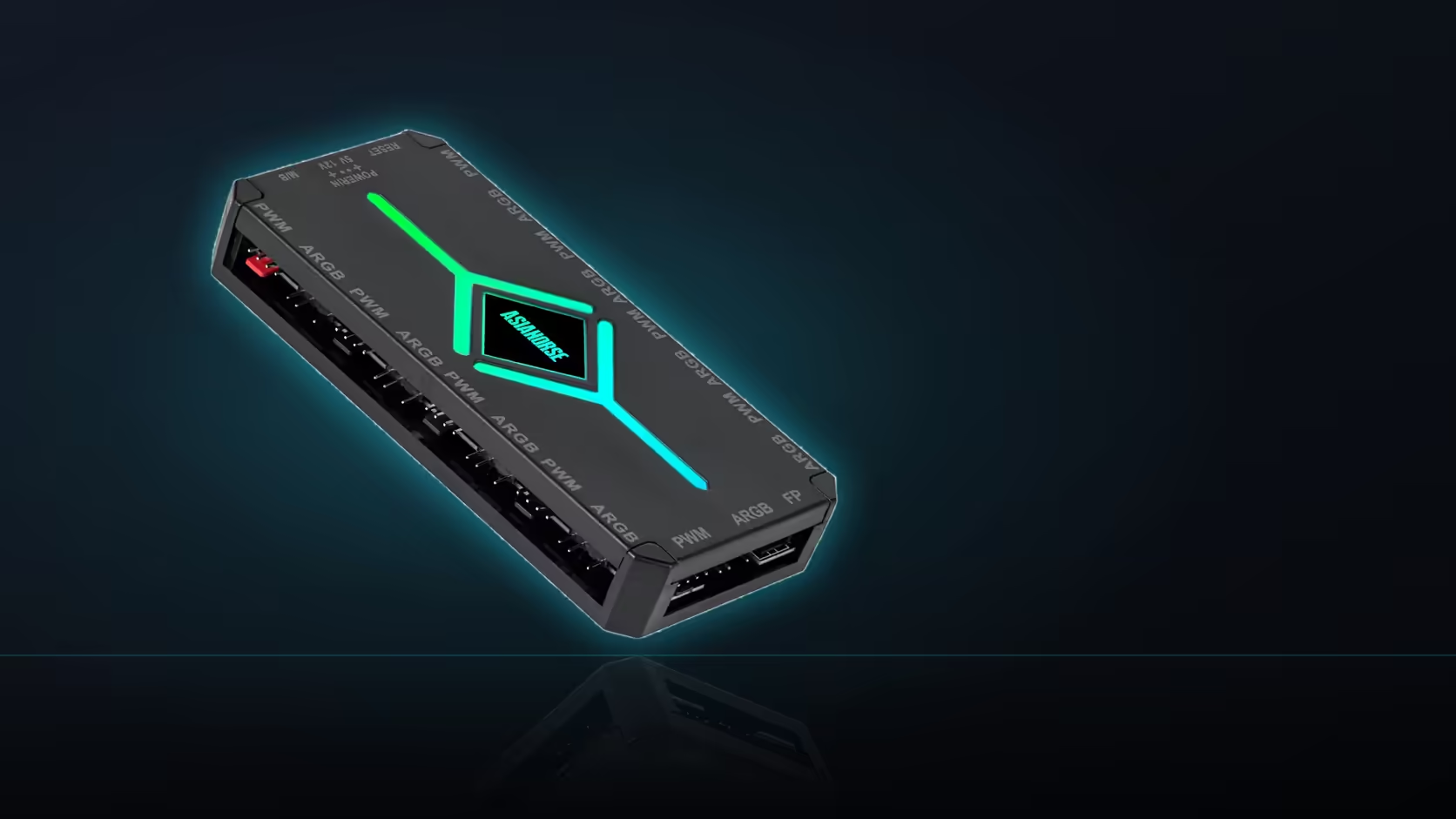
Nine sockets look like nine equal slots for lighting, and that assumption is exactly where an ASH-S1 lighting plan can go wrong. Port count and LED capacity are two different limits, and a build can run out of one long before the other.
Quick Answer
No, nine ARGB sockets does not guarantee room for nine equally large lighting chains. The ASH-S1's 377-LED rating applies across the whole hub, so a small number of large chains can exhaust the budget while several ports still sit empty. At R349, both limits - nine ports and 377 LEDs - are worth checking against a build's actual lighting plan.
🔀 Two limits, not one
Port count and LED capacity measure different things. Nine ports limits how many separate addressable devices can physically connect to the hub, while the 377-LED rating limits how much lighting the hub can drive across all of them combined. A build with nine small devices at twenty LEDs each sits at a hundred and eighty, comfortably within both limits. A build with three long strips at a hundred LEDs each is already at three hundred, still within the port limit but pushing hard against the lighting ceiling with six ports still unused.
⚖️ Which limit binds first depends on the build
There is no single answer to which limit matters more - it depends entirely on what is being connected. A case full of small fan rings and cable accessories is more likely to run out of ports before it runs out of LED budget. A case with one or two long strips wrapped around the interior, or an elaborate cable-cover setup, is more likely to hit the 377 ceiling with plenty of ports still spare. Totalling the LED count of the planned lighting before assuming nine ports means nine devices' worth of room avoids the surprise either way.
🧱 What a second hub changes
For builds that genuinely need more than either limit allows, a second hub is one route, though it comes with its own SATA connection and its own set of remote settings to manage separately. Simpler builds rarely need this - most cases with reasonable lighting plans sit comfortably inside both the port count and the LED total on a single ASH-S1. Devices with published LED counts are easiest to plan around, and Evetech's case fan range is a reasonable place to find them; for a build whose lighting needs are modest enough not to need the full nine-port bank, the NZXT fan controller covers the ground without the extra capacity.
Frequently Asked Questions
What is the difference between the two limits?
Port count limits how many separate devices can connect, while the LED rating limits how much lighting the hub drives in total.
Which limit tends to bind first in practice?
That depends on the build, since many small devices hit the port limit and a few large ones hit the LED limit.
Can a single port carry a long chain of LEDs?
It can, subject to the total, so one heavily populated port uses a large share of the 377 available.
How should the lighting branches be balanced?
By totalling the LED count first and then distributing devices across ports, rather than filling ports and checking the total afterwards.
What happens if the 377-LED total is exceeded?
It is beyond the stated capacity, so behaviour is outside what the product describes and is best avoided.
Is a second hub the answer for very large builds?
It is one route, though two hubs mean two SATA connections and two control points to manage.
Planning a lighting-heavy case build?
Check Evetech's case fan range for LED counts and see how they stack up before committing to a layout.