


FPS Drops Troubleshooting for DDR5 build
DDR5 build FPS drops needs a methodical troubleshooting pass. Review drivers, thermals, power settings, background apps, cables and game settings before replacing parts in an SA gaming setup.
Read moreDoes comfort matter for competitive gamers should be shortlisted around the job it must do. South African buyers should compare fit, performance, compatibility, and upgrade room, warranty path, and upgrade room before treating any pick as best.
Comfort matters a great deal for competitive gamers buying AR glasses, but the honest answer is AR glasses are a niche fit for competitive play due to latency and field-of-view limits. A comfortable tethered pair sits around R6,000 to R9,000 in SA, yet for fast competitive gaming a low-latency monitor usually beats AR glasses, whatever the comfort.
Comfort genuinely matters because competitive sessions run long, and heavy or pinching frames cause fatigue that hurts focus and reaction. A well-balanced pair under 100g with adjustable nose pads stays wearable for hours. But comfort cannot fix the core competitive limitation: tethered AR glasses can add a little display latency, and their field of view (often around 45 to 50 degrees) is narrower than a gaming monitor, which matters when you need fast peripheral awareness in a shooter.
So while comfort is important if you do use AR glasses, the more useful guidance for a competitive gamer is that a fast, low-latency monitor (a 144Hz-plus panel with low input lag) is the better tool for ranked play. AR glasses suit casual, travel, or media use far more than competitive gaming.
If you want AR glasses for competitive practice on the move, or for casual play alongside a monitor at home, comfort becomes the top spec to compare: light weight, adjustable fit, and good weight balance. For that use, a comfortable tethered pair is enjoyable. But do not expect AR glasses to replace a proper gaming monitor for serious ranked competition; prioritise the monitor for that, and treat comfortable AR glasses as a flexible secondary option.
They are a niche fit. Tethered AR glasses can add slight display latency and have a narrower field of view than a gaming monitor, so a fast low-latency monitor is the better tool for serious ranked play.
Very, for long sessions. A well-balanced pair under 100g with adjustable nose pads prevents the fatigue that hurts focus. But comfort cannot overcome AR's latency and field-of-view limits for competitive play.
For competitive practice on the move, casual play alongside a home monitor, or media use. For those, prioritise light weight and adjustable fit; just do not expect them to replace a gaming monitor for ranked.
ranked play, keep a fast low-latency monitor as your main display, and choose AR glasses, prioritising a sub-100g comfortable fit, only as a flexible secondary or travel option.
DDR5 build FPS drops needs a methodical troubleshooting pass. Review drivers, thermals, power settings, background apps, cables and game settings before replacing parts in an SA gaming setup.
Read more
Fps drops on ddr5 build in south africa usually needs a settings, driver, thermal, or power check first. Work through safe SA troubleshooting steps before replacing parts or assuming a full upgrade.
Read more
X870E motherboard frame pacing issues needs a step-by-step check before replacing parts. Review drivers, settings, thermals, power, background apps, display limits, cables, and game options before changing hardware.
Read more
4K monitors cost more as sharp panels raise the bar. See why 4k monitors still expensive for gamers in cape town before choosing screen specs, GPU targets, and value trade-offs.
Read more
4K monitors still feel expensive for Gqeberha gamers because panel quality, higher refresh rates, and GPU demands raise total setup cost. Compare 1440p, screen size, ports, and refresh rate before paying more for 4K.
Read more
ARGB cases explain mid-tier SA build appeal with visible style, airflow room, and cable control. For SA buyers, the smarter choice is a case where lighting, fan layout, and GPU clearance work together instead of just looking bright.
Read more DDR5 build FPS drops needs a methodical troubleshooting pass. Review drivers, thermals, power settings, background apps, cables and game settings before replacing parts in an SA gaming setup.
Fps drops on ddr5 build in south africa usually needs a settings, driver, thermal, or power check first. Work through safe SA troubleshooting steps before replacing parts or assuming a full upgrade.
Wi-Fi 6E vs Wi-Fi 6 depends on AAA single-player gaming needs, platform limits, and budget fit. Compare compatibility, latency, upgrade path, and real setup constraints before choosing for an SA build.
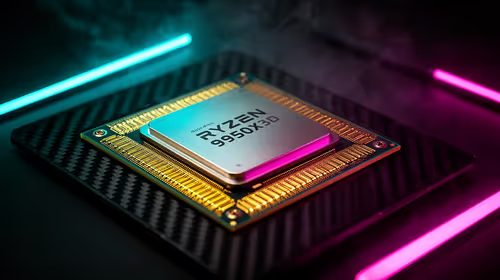
Ryzen 9 9950X3D dead pixel checks should isolate the panel first. Run colour fills, inspect the monitor menu, test another cable or input, and capture proof before linking it to the SA CPU upgrade.

YouTube will count public views from the first frame across video formats from 24 August, while earnings and eligibility remain tied to engaged viewing.
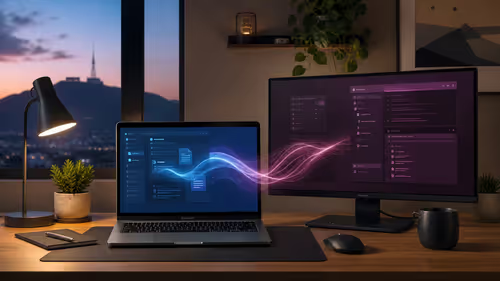
Canonical expects Ubuntu on WSL users to outnumber native Ubuntu desktop users before the end of 2026. The software is open source and runs inside supported Windows PCs.
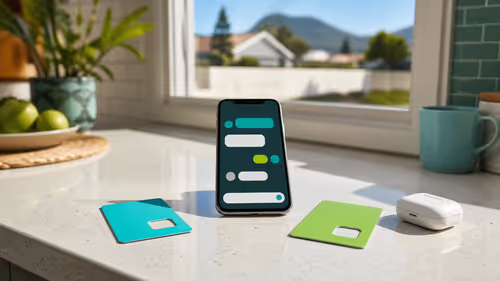
Telkom's daily bundles pair WhatsApp access with 10 all-network voice minutes. The R15 option includes 300MB, while the R17 option uses a fair-use threshold.
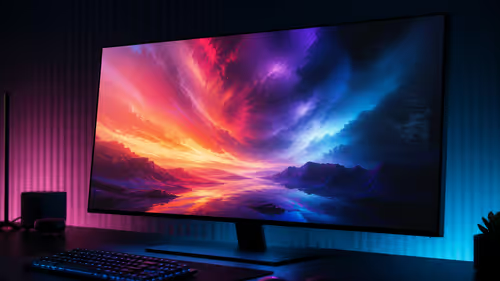
A 10,000-hour test found similar image retention across older and newer OLED TVs, while newer panels were brighter and more efficient. Local OLED monitors started at R9,999.
YouTube will count public views from the first frame across video formats from 24 August, while earnings and eligibility remain tied to engaged viewing.
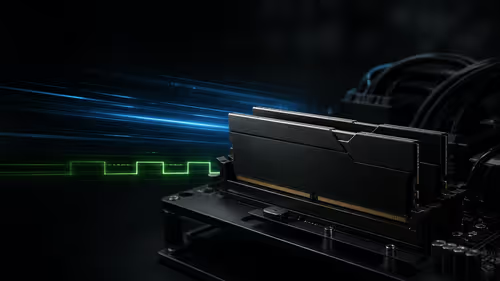
CXMT memory has been demonstrated at DDR5-9000 and DDR5-6000 CL28, but the results depend on tuned hardware and do not represent a broad retail specification.
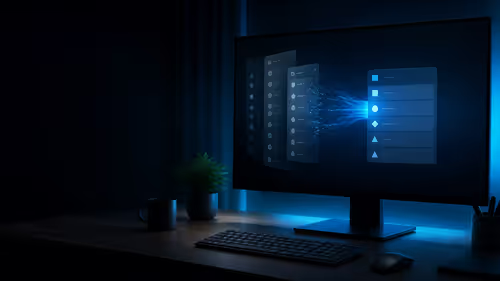
Microsoft is testing a simpler File Explorer context menu with controls for built-in commands, app extensions, icon labels and the position of Properties.
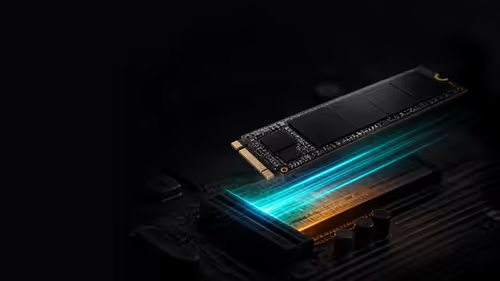
Lexar's THOR ULTRA is a DRAMless PCIe 5.0 SSD rated up to 11,000MB/s reads and 10,000MB/s writes, with capacities from 512GB to 4TB.