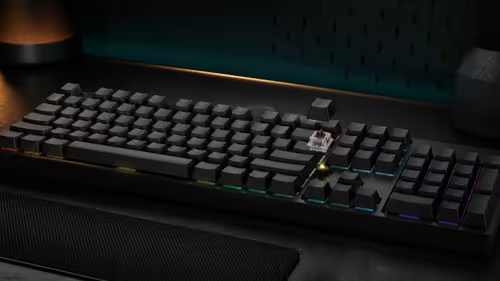
RGB can make a PC look faster. It cannot make the GPU finish a frame faster. The does RGB increase FPS meme survives because lighting and performance parts are often sold together, not because red LEDs have found a secret route into the graphics pipeline.
Quick Answer
No, RGB lighting does not increase FPS. The LEDs add a small electrical load and visual effect, while the CPU and GPU determine frame production. Background control software can consume some system resources, so any measurable difference from turning RGB off would come from closing software or correcting a power or thermal fault, not from darkness itself. Evetech's July 2026 gaming-PC category had a R26,722 median across mixed builds, making lighting a preference inside a much larger performance budget.
💡 Where the meme came from
Gaming hardware frequently combines faster components with lighting. The RGB machine wins the benchmark because it contains a stronger GPU or CPU, while the visible feature receives the joke.
Colour stereotypes add to it: red is fast, blue is cool and green is efficient. None changes clock speed unless software also applies a performance profile.
⚡ The real electrical effect
LEDs use a small amount of power through motherboard headers, hubs or controllers. A suitable PSU has ample margin for that load. If lighting causes instability, investigate wiring, overloaded headers, a faulty controller or inadequate power delivery.
RGB fans cool according to blade, motor, speed and placement. The lighting does not make them better or worse by itself.
🧠 Control software can matter
Lighting utilities run in Windows and may use CPU time, memory or background services. On a healthy modern PC the effect is normally small, but duplicate utilities can conflict or add needless startup work.
Test properly: hold the game, settings, scene and power mode constant, then compare repeated runs with the application active and closed. A one-frame difference inside normal variation proves nothing.
Evetech's gaming PC deals let buyers compare the actual processor, GPU and memory behind the lights.
🎨 Buy RGB for the right reason
Lighting can make a desk feel personal, show component temperature or improve visibility inside a case. Those are valid reasons.
Do not preserve RGB while cutting the GPU tier, PSU suitability or required memory. Use Evetech's PC best sellers to compare complete builds and treat lighting as the finishing choice.
Synchronised lighting can also reduce cable and software clutter when one supported ecosystem controls it. Verify connector standards before mixing hubs, strips and fans.
Frequently Asked Questions
Does RGB draw enough power to affect performance?
Not in a correctly powered PC. Instability points to a fault or inadequate setup, not normal LED use.
Why does the meme persist?
Fast gaming parts and RGB are marketed together, and the visible lighting gets humorous credit.
Can turning RGB off improve FPS?
The LEDs do not. Closing heavy or conflicting control software could remove a small background load.
Do RGB fans perform worse?
Not because of lighting. Compare airflow, pressure, noise and speed.
Has RGB been benchmarked?
Controlled tests generally show no meaningful LED-driven gain. Test software overhead separately.
Can RGB software affect FPS?
It can consume resources or conflict with other utilities, although the impact is usually small.
Should I buy RGB for looks or performance?
For looks, visibility or status cues. Spend performance money on the components that render frames.
Ready to keep the glow in its proper place?
Choose the CPU, GPU, cooling and PSU first, then compare Evetech gaming PCs for the lighting style that fits the finished build.