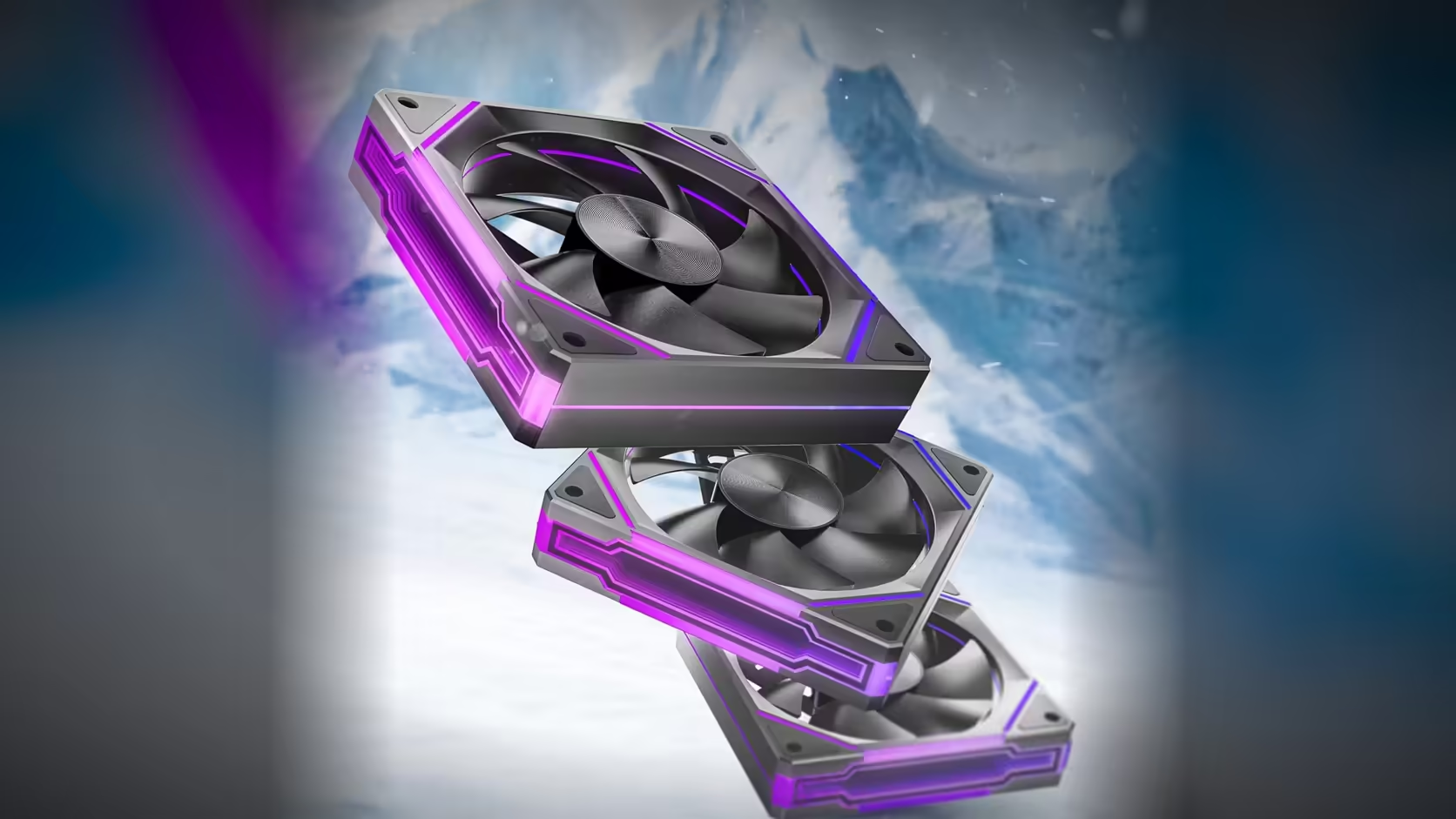
Blade design and airflow direction get confused more often than they should. The Amici Pro uses standard forward blades, and understanding what that phrase actually controls - and what it does not - clears up a common point of confusion when planning a build's cooling layout.
Quick Answer
Amici Pro's forward blade design suits either intake or exhaust use - the fan ships only as a 3-pack at R399, VAT included, and that number is not fixed and can move over time - because airflow direction comes from how the fan is physically mounted, not from the blade type itself. Turning the fan around reverses which way it moves air, regardless of blade design.
🔄 What actually sets airflow direction
Mounting orientation is the deciding factor, full stop. Turn a fan around in its bracket and it reverses which way it pushes air, whatever blade shape it uses. This applies to every standard case fan, not just the Amici Pro - blade design and airflow direction are two separate things that happen to get conflated in casual conversation.
So what does "forward blade" actually mean?
It refers to the blade shape itself and which face of the fan looks finished when you look at it directly - essentially a cosmetic and structural distinction, not a directional one. A forward blade fan has its polished, uniform face on one side and the frame spokes visible from the other, which matters for how the fan looks through a window but has nothing to do with which way air travels.
🧭 Setting up intake or exhaust correctly
The same Amici Pro fan can serve either role depending purely on which way round you fit it in the case. For an intake position, mount it so it draws air into the case; for exhaust, flip the orientation so it pushes air out. Most fan frames carry a small arrow moulded into the plastic indicating flow direction, and holding a light strip of paper near a spinning fan confirms it immediately if the arrow is hard to see.
Checking your case's airflow plan
Decide the overall airflow path for your case first - which positions bring air in, which take it out - typically following the manufacturer's manual as a sensible starting point. The Amici Pro fits either role without needing a different model, since forward blades work in both directions once mounted correctly. Browse the case fans range if your build needs a mix of fan types across different positions.
👁️ Does the visible face change?
The ring lighting surrounds the fan, so it remains visible from either side regardless of orientation - only the blade face you see up close differs between intake and exhaust mounting. There is no reverse-blade version of this specific model, so where the rear frame face being visible through a window matters more than airflow, a different AsiaHorse model may suit better. Check case accessories for mounting screws if you need to adjust orientation on an existing installation.
Frequently Asked Questions
What actually determines whether a fan is intake or exhaust?
How it is mounted in the case. Turning the fan around reverses which way it moves air, whatever blade design it uses.
Does "forward blade" refer to airflow direction?
No, it refers to the blade design and which face looks finished, rather than to which way the fan moves air.
Can one Amici Pro fan serve both roles over time?
Not simultaneously, but the same fan works for either role depending on which way round it is fitted at installation.
How do I check which way a fan is blowing?
Most frames have a small arrow moulded into the plastic, and a light strip of paper held near the fan confirms it quickly.
Is there a reverse-blade version of the Amici Pro?
No, both listed variants use standard forward blades only, in black or white, with no reverse option in this model.
Does the ring lighting look different depending on orientation?
The ring surrounds the fan and stays visible from both sides, though the blade face you see up close does change.
Planning your case's intake and exhaust layout?
Check Evetech's case fan range to build out the right airflow setup.