


650W PSU Planning for RTX 5090 Builds in SA
650W for RTX 5090 needs a full-build check, not a simple yes. Review GPU guidance, CPU draw, transient load, connectors, PSU quality, and upgrade plans before deciding.
Read moreA G-code file that won't open or shows as corrupt on the printer is usually sliced for the wrong firmware flavour - Marlin G-code sent to a Klipper machine or a proprietary format used on the wrong model.
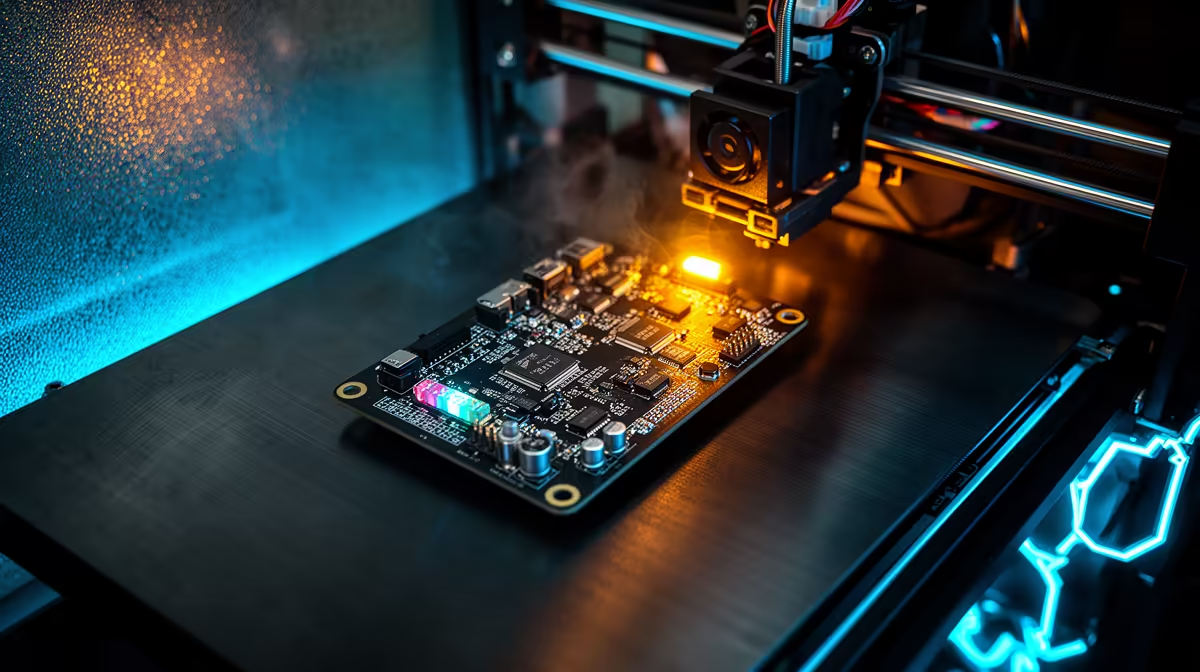
Your printer beeps, flashes "file corrupt" or simply refuses to list the job, and the SD card looked fine on your PC. Nine times out of ten the file itself is healthy. The problem is that your G-code file was sliced for a different firmware flavour than the one running on your machine, so the printer's parser chokes on commands it does not recognise the moment it tries to read the job.
Reslice the model with the correct firmware flavour set in your slicer (Marlin for most Creality and Prusa-style boards, Klipper for Voron and modded machines), then re-transfer the file. A genuine flavour mismatch is fixed in under five minutes once the slicer profile matches the board.
G-code is not one universal language. Marlin, Klipper, RepRap and proprietary Bambu formats share a common core, but each adds commands the others ignore or reject. A Marlin profile injects acceleration and jerk limits (M201 to M205) that a Klipper machine will warn about or misread. Send a job full of M486 object-exclusion markers to a board that does not support them and the firmware either skips them silently or, on stricter parsers, flags the whole file as malformed.
Proprietary formats make this stricter still. Bambu and some closed Anycubic firmwares wrap the G-code in a packaged container, so a raw .gcode opened on the wrong model reads as garbage. The fix in every case is the same: match the slicer's output to the board, do not edit the file by hand.
Open your slicer (PrusaSlicer, OrcaSlicer or Cura) and find the printer settings. Set the G-code flavour field to the firmware your board runs. If you are unsure, the firmware name usually appears on the printer's boot screen or in the machine's info menu. Klipper machines report their version over the web interface; classic 8-bit and many 32-bit boards run Marlin.
Once the flavour is correct, reslice the model from scratch rather than reusing the old output. Save it to a freshly formatted SD card or USB stick, eject cleanly, and load it on the printer. A clean reslice rules out both the mismatch and any transfer corruption in one pass. The full lineup of machines and the firmware each ships with is listed across the 3D printer range at Evetech, which helps when you are checking what flavour a new buy expects out of the box.
If the flavour is already correct and the file still will not open, the card or the copy is the suspect. Cheap or worn SD cards drop bytes during writes, leaving a truncated file the printer cannot parse. Reformat the card as FAT32, copy the freshly sliced file, and avoid yanking the card before the write completes. A spare quality card pays for itself here, and the everyday spares worth keeping on the bench show up in the accessories best sellers.
Check the boot splash screen or the machine info menu. Klipper machines expose a web interface (Mainsail or Fluidd) that names the firmware; most stock Creality, Anycubic and Prusa boards run Marlin. When buying, the product spec lists the firmware.
Often it loads, because Klipper is largely Marlin-compatible, but you can hit warnings or wrong motion limits from M201 to M205 commands. For clean results, set the flavour to Klipper and reslice rather than relying on the overlap.
No. Hand-editing risks breaking the file further and will not convert proprietary container formats. Reslicing with the right profile is faster and reliable.
Your PC reads it as plain text and shows no error. The printer's firmware actually parses and executes each line, so it is the only thing that rejects unrecognised or malformed commands.
Yes. A worn or low-quality card can write a truncated file that reads as corrupt. Reformat to FAT32, recopy, and test with a known-good card before assuming a flavour mismatch.
Matching your slicer to the right firmware takes the guesswork out of every print. Browse the current 3D printer lineup at https://www.evetech.co.za/components/3d-printers-130 to see which machines ship Marlin or Klipper-ready out of the box.
Check the boot splash screen or the machine info menu. Klipper machines expose a web interface (Mainsail or Fluidd) that names the firmware; most stock Creality, Anycubic and Prusa boards run Marlin. When buying, the product spec lists the firmware.
Often it loads, because Klipper is largely Marlin-compatible, but you can hit warnings or wrong motion limits from M201 to M205 commands. For clean results, set the flavour to Klipper and reslice rather than relying on the overlap.
No. Hand-editing risks breaking the file further and will not convert proprietary container formats. Reslicing with the right profile is faster and reliable.
Your PC reads it as plain text and shows no error. The printer's firmware actually parses and executes each line, so it is the only thing that rejects unrecognised or malformed commands.
Yes. A worn or low-quality card can write a truncated file that reads as corrupt. Reformat to FAT32, recopy, and test with a known-good card before assuming a flavour mismatch.
650W for RTX 5090 needs a full-build check, not a simple yes. Review GPU guidance, CPU draw, transient load, connectors, PSU quality, and upgrade plans before deciding.
Read more
How to fix FPS drops Windows 11 RX 9070 XT starts with GPU drivers, overlays, power plans, and frame pacing checks. For SA gaming PCs, verify chipset updates, HAGS, refresh rate, thermals, and per-game graphics settings.
Read more
How to fix FPS drops on X870E motherboard starts with BIOS, chipset drivers, PCIe settings, and memory stability. SA gamers can check EXPO, resize BAR, thermals, display refresh, and background apps before replacing components.
Read more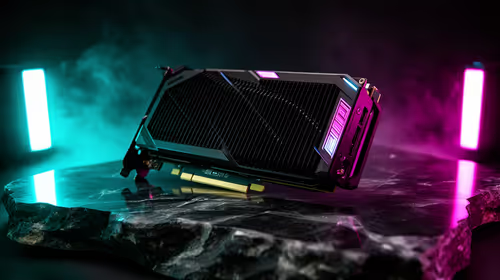
RTX 5060 is popular with SA students because it can fit gaming, coursework, and creative app needs in one setup. Compare total system price, cooling, RAM, storage, and screen quality before picking a desktop or laptop.
Read more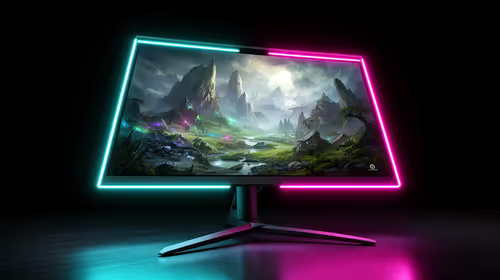
1440p is the sweet spot for SA gamers because it balances sharp visuals, high frame rates, and GPU cost better than 4K. It is a practical monitor target for players who want smoother upgrades without the heavier hardware demands of 4K.
Read more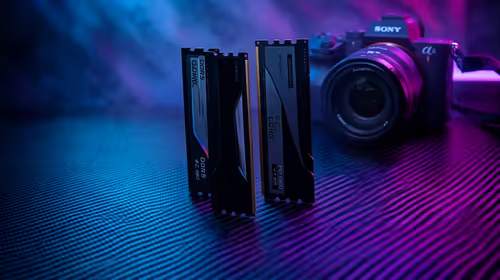
RAM pricing for Midrand gamers can shift with exchange rates, supply, specs, and model tier. Treat the title as a buying prompt, then compare SA warranty, timing, and build priorities.
Read more
From 1 October 2026, WhatsApp Business Platform service replies in South Africa are expected to cost about $0.0076, or 12 cents, per delivered message.
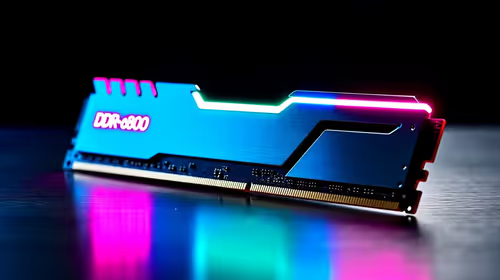
DDR5-8000 RAM Kits pros and cons depend on the build, budget, and workload. Weigh gaming needs, platform fit, power, cooling, warranty support, and South African pricing context before shortlisting it.
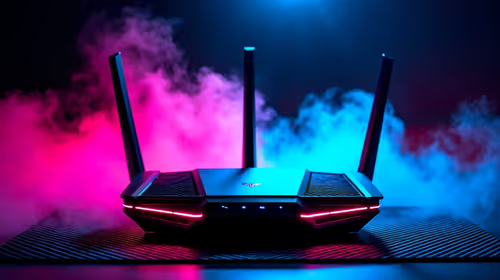
Wi-Fi 6E vs Wi-Fi 6 depends on AAA single-player gaming needs, platform limits, and budget fit. Compare compatibility, latency, upgrade path, and real setup constraints before choosing for an SA build.
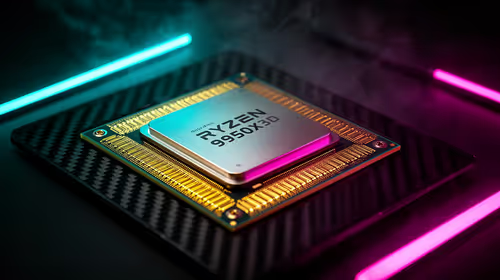
Ryzen 9 9950X3D dead pixel checks should isolate the panel first. Run colour fills, inspect the monitor menu, test another cable or input, and capture proof before linking it to the SA CPU upgrade.

YouTube will count public views from the first frame across video formats from 24 August, while earnings and eligibility remain tied to engaged viewing.
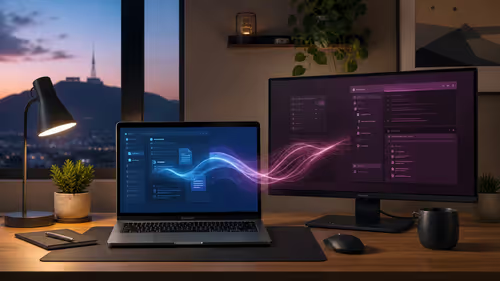
Canonical expects Ubuntu on WSL users to outnumber native Ubuntu desktop users before the end of 2026. The software is open source and runs inside supported Windows PCs.
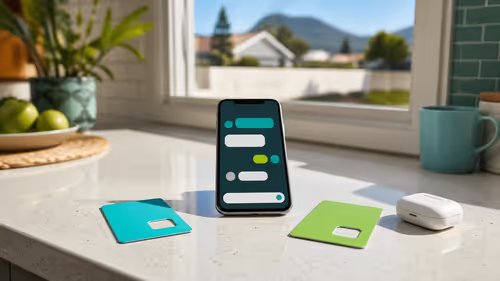
Telkom's daily bundles pair WhatsApp access with 10 all-network voice minutes. The R15 option includes 300MB, while the R17 option uses a fair-use threshold.
A 10,000-hour test found similar image retention across older and newer OLED TVs, while newer panels were brighter and more efficient. Local OLED monitors started at R9,999.

Windows 11 update KB5121003 is linked to crashes in several multiplayer games on versions 24H2 and 25H2. Check the build, report the fault and avoid risky file or update changes unless the problem is confirmed on your PC.

Comsol's standalone 5G network covers about one million Gauteng homes and starts commercial ISP service in September. Early packages range from R275 to R875 a month, but coverage and fair-use rules still decide the real value.

Sennheiser's Momentum True Wireless 5 adds user-replaceable batteries, 12-hour playback and a $299.95 launch price. There is no confirmed South African date, so compare longevity with live earbuds from R199 to R2,999.

AVerMedia's GC531 and GC535 are professional HDMI capture devices for continuous streaming, with RGB24 capture up to 2K30 and 4K30. South African creators should compare them with live 4K capture cards from R2,099.