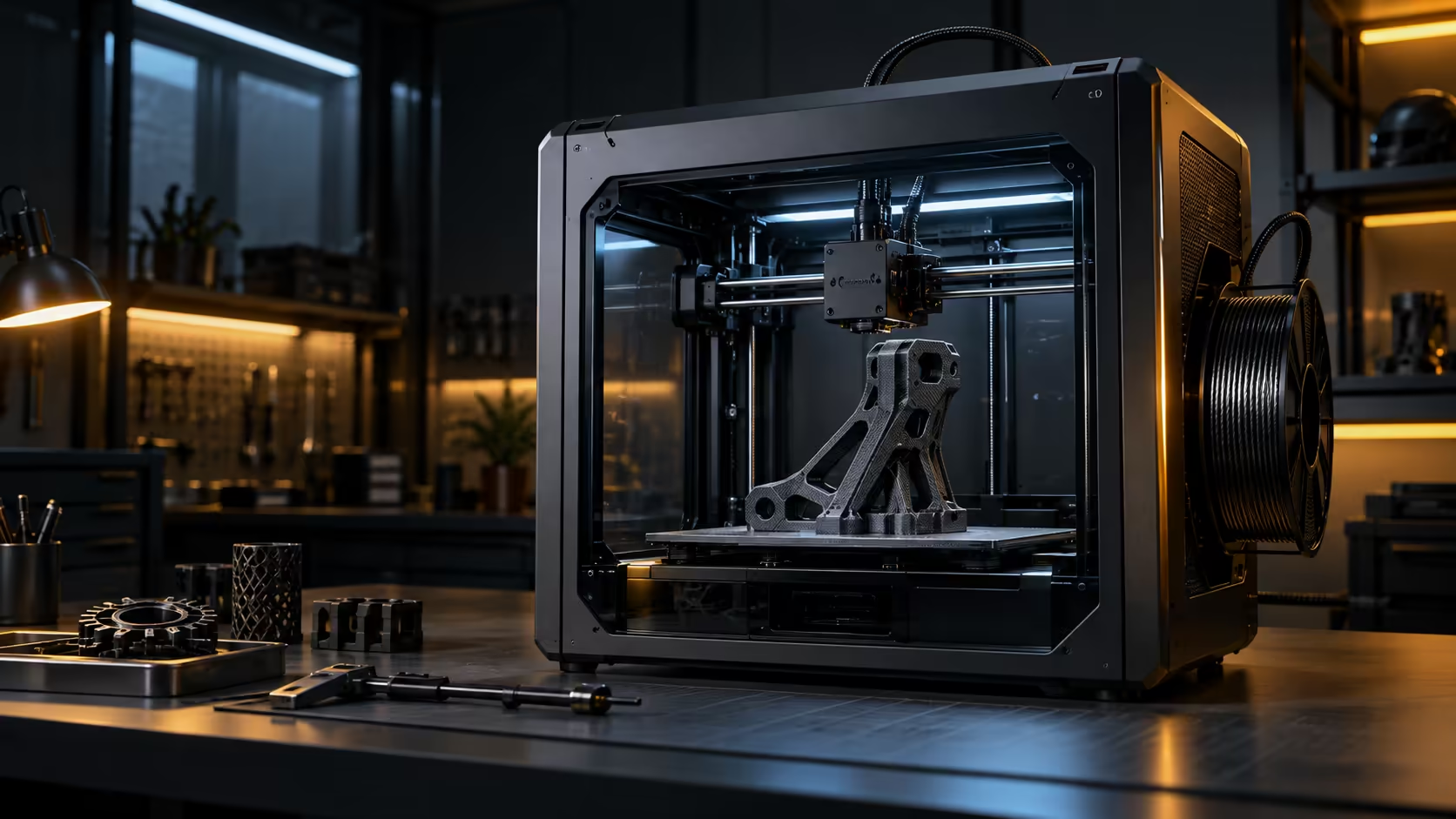
A stronger grip on filament is only useful if it changes something visible on the finished part, and the specific changes it produces are easy to spot once you know what to look for. A 50N direct drive extruder shows up on the print itself in a few particular ways.
Quick Answer
It shows up as walls of even thickness from top to bottom and corners that stay sharp even when the head is moving quickly through a direction change. Consistent push means the nozzle is never briefly starved of plastic mid-line, and short retraction distances from a head-mounted motor cut down on stringing between separate features. The Creality K1C runs a 50N feed and sells for R12,599.
📏 Even wall thickness, top to bottom
A wall that starts at a full 0.4mm and thins to 0.35mm or less as a print progresses often points to a feed system losing grip gradually as pressure builds inside the nozzle. A strong, consistent drive force holds its grip evenly regardless of how far into the print you are, which shows up as a wall measuring the same thickness near the top as it did at the base.
✂️ Sharp corners at speed
Corners are where flow demand spikes briefly, since the toolhead needs plastic delivered right up until the direction change and immediately after it resumes. A feed system with margin to spare handles that brief spike without a stutter, while a marginal one can under-deliver for as little as 0.1 seconds exactly at the corner, leaving a slightly rounded or thin spot that a sharper design would not show.
🧵 Less stringing between features
A head-mounted, direct drive motor allows for much shorter retraction distances than a Bowden system needs, since there is far less distance for filament to travel back before the pressure inside the nozzle actually drops. Shorter, more effective retraction directly reduces the fine strings that otherwise stretch between separate features on a print, which is one of the more visually obvious defects a weak feed system produces.
Watch for these three signs specifically when evaluating whether your feed system is holding up: wall consistency, corner sharpness and stringing between features, since each one points at grip rather than temperature or cooling settings. Compare drive force ratings listed in the 3D printer range against whatever materials you actually run, browse filament suited to your feed system's strengths, and resin printing from a range like Elegoo's sidesteps this comparison entirely for detail work where extrusion consistency is not the relevant factor at all.
Frequently Asked Questions
Does wall thickness really reveal a feed system problem?
Yes, a wall that thins gradually through a print often points to a feed system losing grip under sustained pressure rather than a slicer setting issue.
Why do corners specifically show feed weaknesses more than straight sections?
Corners demand a brief spike in flow right around the direction change, which exposes any margin the feed system does not have to spare.
Can better retraction settings compensate for a weaker extruder?
Partially, but a short physical distance from motor to nozzle achieves more reliable results than tuning retraction settings around a longer, flexing path.
Is stringing always caused by the feed system rather than temperature?
Not always; temperature and cooling settings also affect stringing, but retraction distance and feed consistency are common contributing factors worth checking first.
Seeing thin walls, rounded corners or excess stringing?
Check your extruder's grip and retraction distance before adjusting temperature settings.