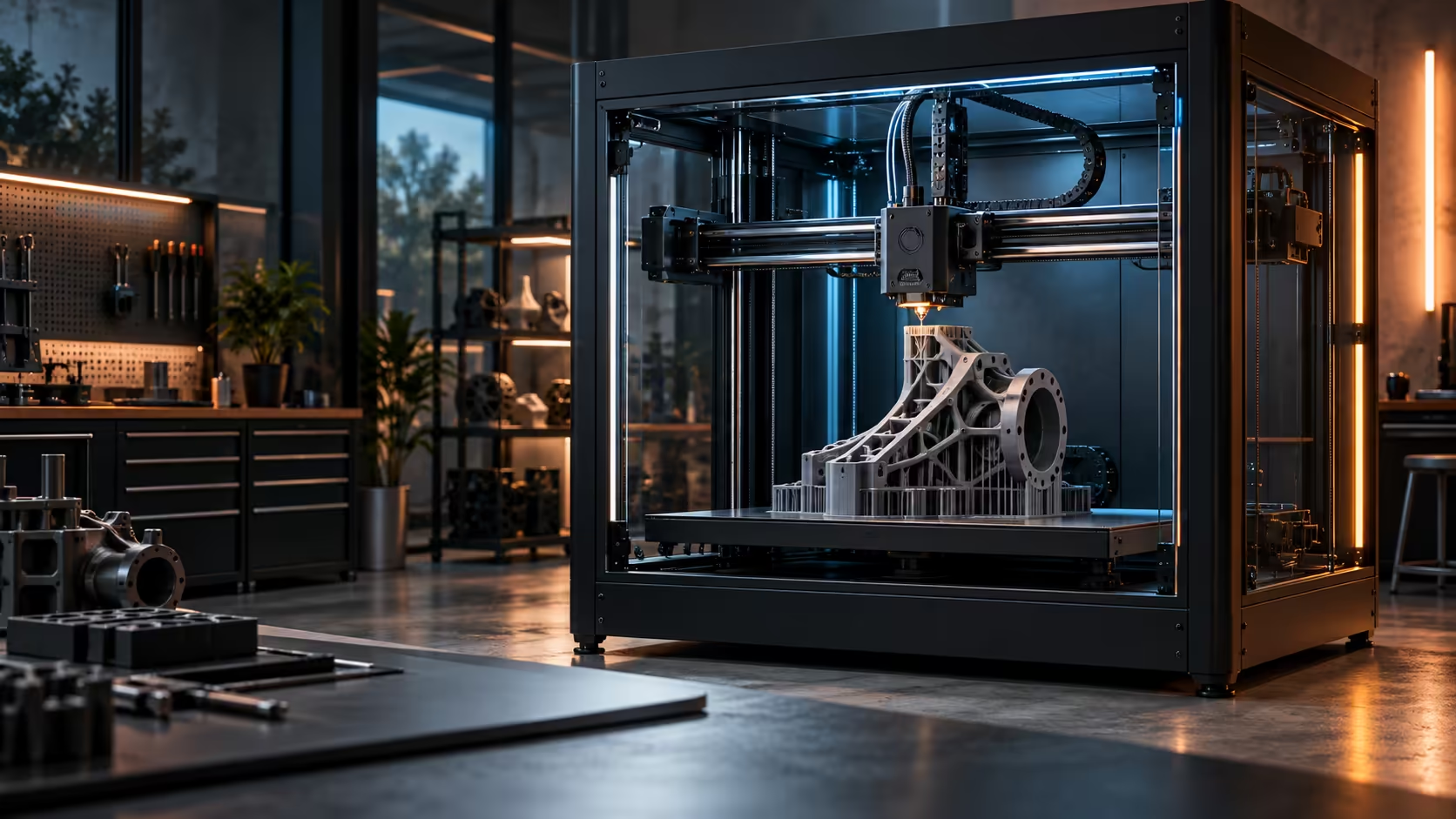
A touch probe and a LiDAR sensor both claim to check a print bed, but they are answering two different questions about it. AI LiDAR adds a second question that a touch probe was never built to ask.
Quick Answer
A LiDAR sensor maps plate height using light instead of physically touching the surface, which lets it scan quickly and repeatedly without wear. It then goes a step further and scans the line the nozzle just extruded, checking its width against what it should be. That second step is the real difference: a touch probe only knows where the bed is, while the Creality K1 Max at R13,999 also knows what actually came out of the nozzle onto it.
📏 What a touch probe has always done well
A physical probe touches the plate at a grid of points spaced roughly 50mm apart and builds a height map from those readings, which is a reliable, well-proven way to compensate for a bed that is not perfectly flat. It has one job, and it does that job accurately.
Its limitation is that it only ever measures the bare plate. It cannot tell you anything about the plastic that gets extruded onto that plate once the print actually starts, which is where a first layer can still go wrong even after a perfect levelling pass.
💡 What scanning with light adds
Because a light-based scan does not need to physically contact the surface, it can check hundreds of points across the plate in well under 60 seconds, far more often and far more quickly than a touch probe realistically could, and it can be aimed at more than just bare plate height. Reading the width of an extruded line requires exactly this kind of fast, repeated, non-contact measurement.
🧵 Why checking the extruded line matters
A first layer can be perfectly level and still fail, if the line coming out of the nozzle is too thin from slight under-extrusion or too thick from over-extrusion. A touch probe would never catch either case, since both bed height and the model itself look identical to a purely mechanical sensor.
Catching a width problem at the first layer, rather than discovering it as poor adhesion three layers up, is what separates a scan that checks the plate from one that checks the print. Not every machine in the 3D printer range reads the line this way, so it is worth confirming on a specific model rather than assuming every automatic levelling routine goes this far. Stock filament that extrudes consistently, since even a good sensor works better with material that is not fighting it from the start, and browse a webcam accessory if you want a visual record of the first layer alongside the sensor data.
Frequently Asked Questions
Is LiDAR more accurate than a touch probe for bed height alone?
Both can be highly accurate for height; the real advantage of LiDAR is the additional check it can perform on the extruded line itself.
Can a touch probe detect under-extrusion?
No, it only measures physical height, so it cannot tell whether the plastic being extruded is the right width or thickness.
Does light-based scanning wear out over time the way a physical probe can?
Non-contact scanning avoids the mechanical wear a physical probe experiences from repeated touching, since nothing physically contacts the plate.
Should I still manually inspect the first layer even with this kind of scan?
A quick visual check is still worthwhile, especially early on, since it builds your own sense of what a good first layer looks like on your specific setup.
Want more than just a level bed guaranteed before printing?
Look for a scan that checks the extruded line, not just the plate underneath it.