Growth from four screens to a wall of 32 should be a sequence of tested stages, not one giant jump. The safest multi-display synchronization plan reserves capacity while requiring every expansion step to reproduce the accepted timing, canvas and content behaviour of the smaller system.
Quick Answer
RTX PRO Sync and Mosaic provide a defined path from four displays to a 32-screen or projector canvas, supported by as many as eight GPUs and two sync cards.
Scale by grouping displays into planned phases, assigning each phase to the appropriate RTX Pro GPU resources and testing synchronization after every addition. PNY's R19,599 card puts Genlock, Frame Lock and Mosaic behind an expansion route that ends at eight GPUs and 32 synchronised screens.
🪜 Define expansion milestones
Turn "four to 32" into named stages based on the project's real rollout. Each stage should state its display total, intended content area, active GPUs and acceptance test. The next phase begins only after the previous one has a recorded working baseline.
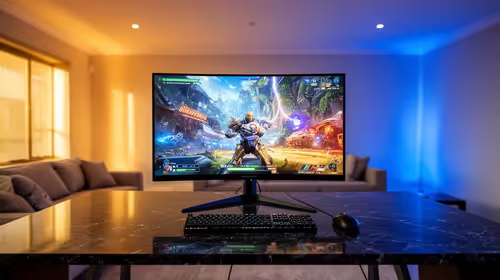
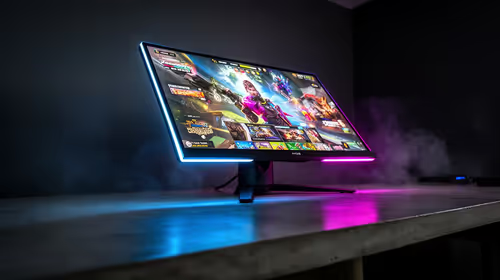
This approach makes physical growth visible too. Compare screens through Evetech's PC monitor category with future placement, panel boundaries and audience distance included in the layout drawing.
🧮 Grow GPU ownership deliberately
Do not add displays without deciding who renders and outputs their content. Assign new panel groups to the participating graphics processors and mark every boundary where imagery crosses between GPUs. PNY caps this growth path at eight NVIDIA RTX Pro processors.
Evetech's workstation graphics card range can be reviewed at each milestone, but the choice should follow the workload and output table. Extra processors are useful only when a phase has a defined role for them.
🕒 Carry synchronization through every stage
Mosaic carries the visual arrangement into each expansion phase. Genlock covers alignment with the intended reference, and Frame Lock keeps the contributing graphics resources in frame agreement. The PNY RTX Pro Sync component offers this toolkit for R19,599.
After adding a group, replay the same motion sequence used on the smaller wall. Watch old boundaries as well as new ones; a successful new section should not disturb an accepted part of the visual field. Keep the active configuration with the test result.
📦 Reserve capacity without oversizing today
The 32-display maximum creates a clear end point for this card. A four-screen starting system does not have to be configured as though every future panel already exists. Budget each phase and release its hardware when the project has an approved need.
Use Evetech's graphics card accessories selection for stage-specific supporting components after the architecture is signed off. Keep the sync card's R19,599 line distinct from screens and professional GPUs.
Set a rollback point for every phase
Before connecting the next display group, save the accepted configuration and identify how the team will return to it if the expansion test fails. A rollback point protects the working four-screen or intermediate wall while the new outputs are investigated.
The phase test should include content that begins in the established area and finishes in the added section. Observe old GPU boundaries as well as new ones, then confirm the normal operating layouts. Approve the expansion only when the larger system reproduces the earlier result and passes the new boundary checks.
Update the capacity table after acceptance. It should show the live display total, participating processor count and remaining room below the product ceilings.
Additions should stay inside that architecture and be commissioned in stages. The package supplies four 12-inch pieces and two 24-inch alternatives for synchronisation links within the system. Record which GPU and card serve each new group, then repeat the motion and alignment tests. This preserves a known good boundary as the wall approaches the full 32-output limit.

Frequently Asked Questions
Is 32 the required display count?
No. It is the supported ceiling. The installation can start with four screens and grow through smaller validated stages.
How should GPUs be added during expansion?
Assign processors according to application workload and output ownership. The completed plan may include up to eight RTX Pro GPUs.
Do the synchronization functions change as the wall grows?
Their roles remain distinct: Mosaic arranges the canvas, Genlock handles reference timing, and Frame Lock keeps the graphics hardware's frames coordinated.
Can the product determine every expansion step?
No. The project team sets phase sizes, physical layout and acceptance tests within the card's GPU and display boundaries.
When should an expansion phase pause?
Pause when the added group fails its new boundary test, disturbs an accepted section or cannot be returned cleanly to the previous configuration. Investigate from the saved rollback point before more screens or processors join the wall. Growth succeeds only when the larger state reproduces the old result and adds its own passing evidence.
Ready to plan the next display milestone?
Compare Evetech's professional GPUs, monitors and support categories against a phased map that ends at the scale you truly need.