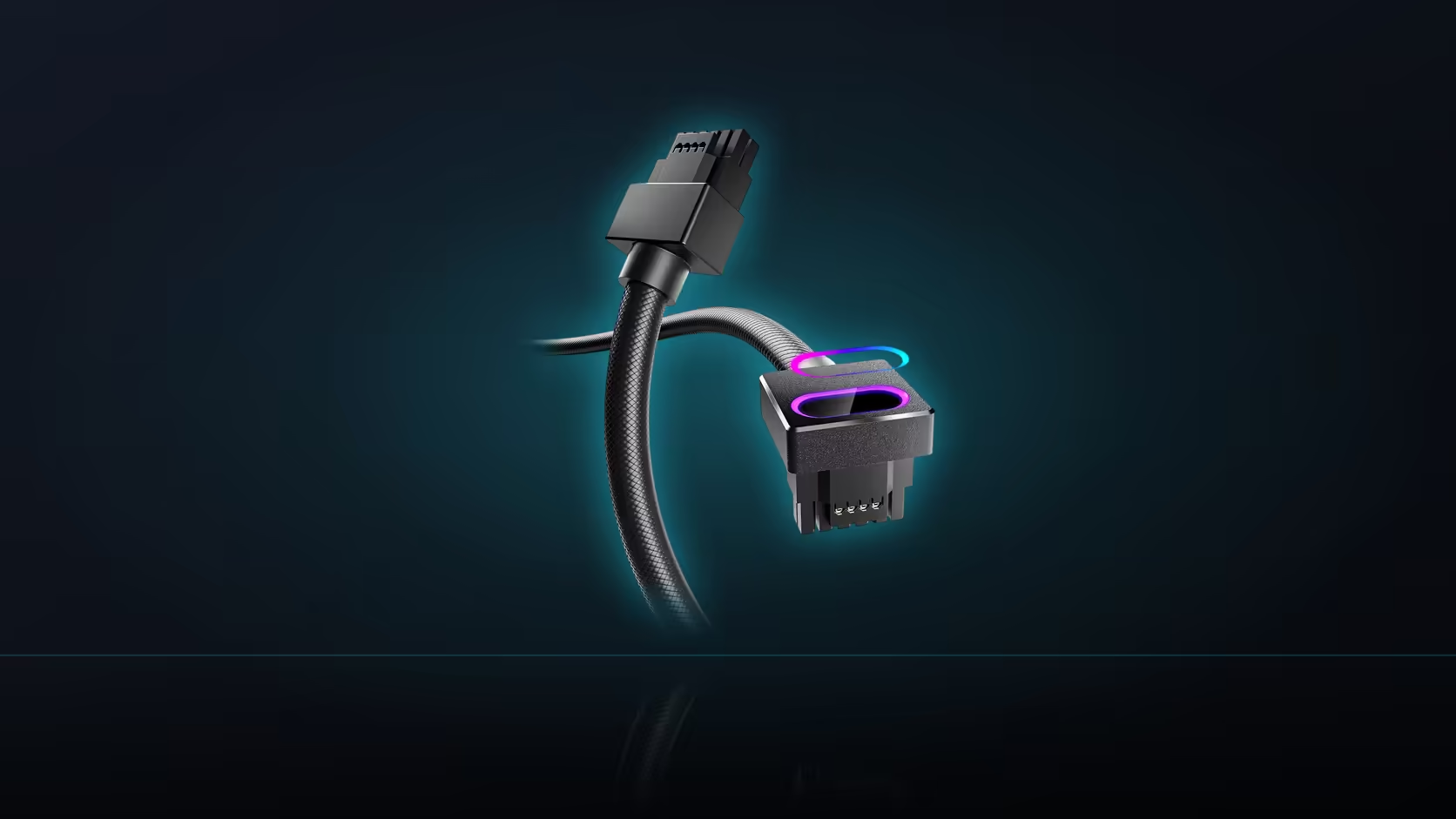
A glowing connector looks like good news, and it is - just not the specific piece of good news you actually need at that moment. The Hydrus 16-pin cable's ARGB head can be lit and working perfectly while the power connector underneath it sits only partly seated, because those two things run on entirely different circuits.
Quick Answer
A lit head on this R699 AsiaHorse cable does not establish that the 16-pin power connector is fully seated. Lighting and power run on separate connections, so a glowing head confirms only that the 5V 3-pin lead is working. AsiaHorse asks for a firm seat with no gap, and only looking directly at the joint - not the light - can actually confirm that.
Why the lighting can genuinely mislead
The ARGB head draws from a 5V 3-pin lead running to an addressable header on the motherboard, entirely separate from the 16-pin power path carrying current to the card. That separation means the light works whether or not the power connector is fully home - the two circuits simply do not depend on each other in any way. A glowing head is real evidence that one specific, small circuit is functioning. It is not evidence about the other, larger connection sitting right beside it.
What the actual test looks like
A visual check that the head sits flush against the card's socket with no visible gap, backed up by gentle pressure to confirm nothing shifts. That is the standard AsiaHorse describes explicitly - firm, no gap - and it is a test of the joint itself, not of anything the lighting circuit can tell you.
Could a partially seated plug still light up and still power the card?
That is precisely the scenario the no-gap instruction exists to guard against, which is exactly why the check is stated as an explicit condition rather than left implicit. A connector sitting close to home but not fully engaged may still complete enough of the circuit to power the card and drive the lighting, while remaining in a state genuinely worth avoiding rather than accepting.
Does turning the lighting off actually help?
It removes the glare sitting right at the joint you need to inspect, which makes a genuine gap considerably easier to see under an angled torch than it would be with the head lit and washing out the shadow line. It is a small step that meaningfully improves the reliability of the check.
When should this be checked?
Before the system is first powered on, and again any time the machine has been transported somewhere - a car boot, a flight, even a longer drive over rough roads is enough to disturb a connection that was genuinely firm at the original build. Both moments deserve the side panel off and the same careful look.
Is the supply end vulnerable to the same false impression?
No, and this is a useful contrast: the supply end carries no lighting at all, so nothing there can create the same misleading signal a lit head produces at the card end. It still needs a full, firm seat, but there is no glow to potentially distract from checking it properly.
What else could a lit head potentially hide?
Only the specific joint it sits directly over - which, unhelpfully, happens to be exactly the one place AsiaHorse's instruction asks you to look closely at.
Browse comprehensive cable solutions for this cable, and graphics card accessories for what else a 12VHPWR build needs.
Frequently Asked Questions
Why can a lit ARGB head give a false impression of the power connection?
Because it draws from a separate 5V 3-pin lead to the motherboard, so it works whether or not the 16-pin power connector is fully home.
What is the actual test for a properly seated connector?
A visual check that the head sits flush with no gap, backed by gentle pressure confirming it does not move under light contact.
Could a partially seated plug still power the card and light up normally?
That is exactly the situation the no-gap instruction exists to prevent, which is why the check is stated as an explicit condition.
Does switching the lighting off actually help with the inspection?
Yes, it removes the glare sitting at the joint, making a genuine gap far easier to see under an angled torch.
When should this specific check happen?
Before the system is first powered on, and again after the machine has been transported anywhere significant.
Is the power supply end vulnerable to the same misleading signal?
No, that end carries no lighting, so nothing there can create the same false impression a lit head produces at the card end.
What is the one thing a lit head genuinely cannot hide?
Nothing beyond the joint it sits directly over - which happens to be exactly the spot the seating instruction asks you to check.
Want to be sure your connector is actually seated, not just lit?
Switch the lighting off and inspect the joint directly, then browse Evetech's cable range if anything needs replacing.