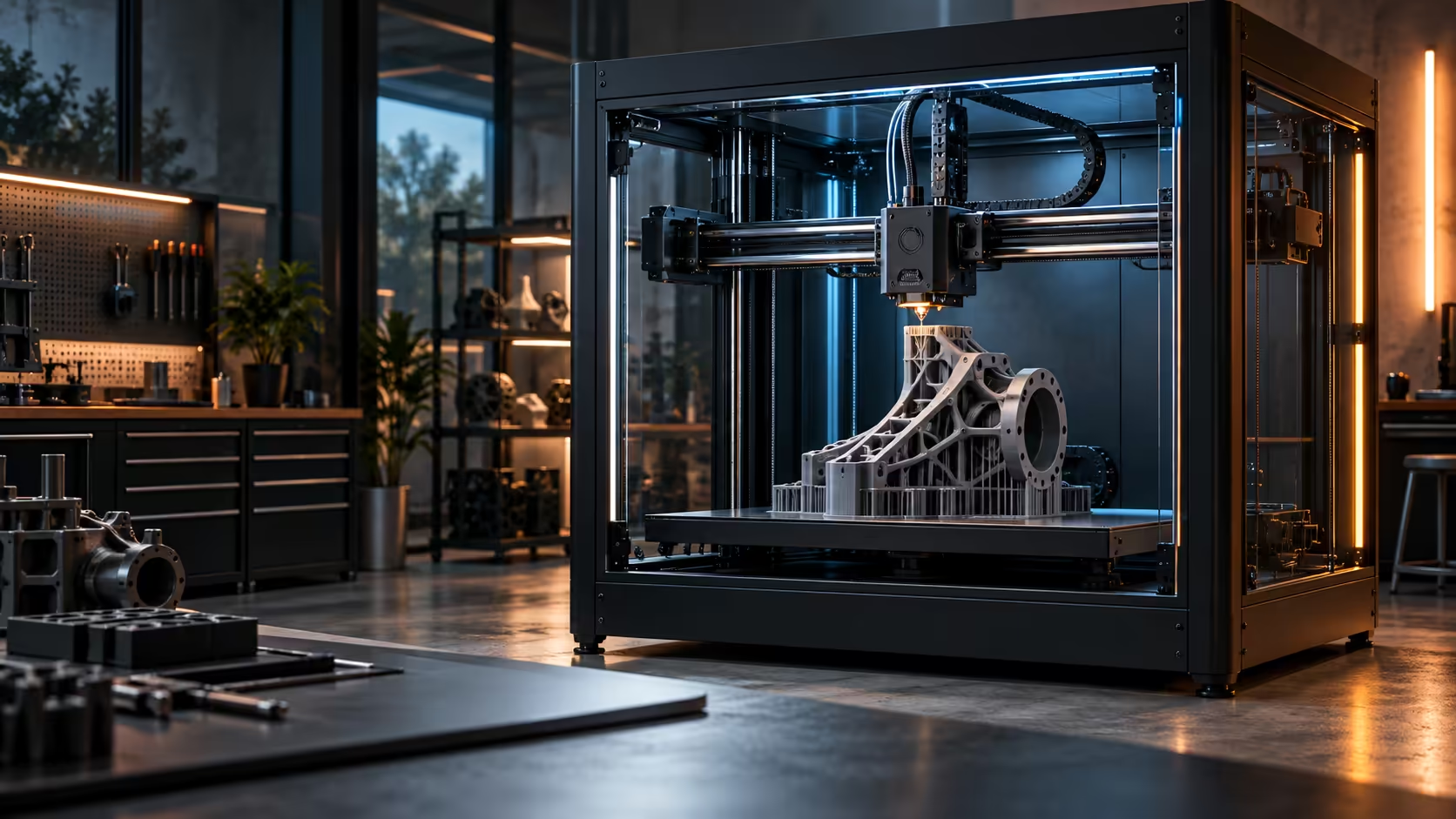
A flow rate number by itself tells you very little until you attach it to a line width, because plastic per second only means something once you know how wide a line that plastic is forming. 32mm3/s flow for large-format printing is a good example of a spec that needs its partner number to make sense.
Quick Answer
32mm3/s is plenty for large-format work, because big parts are usually printed with wide lines, and wide lines turn flow rate directly into speed rather than wasting it on detail nobody asked for. At a 0.6mm line width and 0.25mm layer height, that flow rate sustains roughly 210mm/s of continuous extrusion, which is the difference between a 300mm job finishing overnight and the same job dragging on for two days on a machine with lower flow.
🧮 The maths behind the number
Flow rate is a volume per second, and a printer converts that volume into distance travelled by dividing it by the cross-sectional area of the line being extruded. A wide line at 0.6mm by 0.25mm has a larger cross-section than a fine 0.4mm by 0.2mm line, so the same 32mm3/s of flow moves the nozzle faster across a wide line than it would across a fine one.
This is why large-format printing and high line widths go together deliberately. Choosing a wide line width is how a print takes advantage of available flow rather than leaving it unused while the nozzle inches along a thin, detailed path.
📐 When 32mm3/s stops being enough
Fine detail work, thin walls, and small text or logos on a part all use narrow 0.2 to 0.4mm line widths where the flow rate available is not the limiting factor at all; cornering, cooling and geometry take over as the real speed limits long before flow does. Large-format printing is the case where flow rate genuinely becomes the bottleneck, which is exactly why it is the number worth checking closely for this kind of work.
⏳ What this actually saves on a real job
A large enclosure or prop that would take roughly two days at a lower flow rate and finer line width comes down to a single overnight run at 0.6mm lines and 32mm3/s of sustained flow. That difference matters most on parts where surface finish is not the priority, structural or functional pieces, jigs, large enclosures, where a slightly visible line width is an acceptable trade for finishing on time. Check flow rate specifically when comparing the 3D printer range for large-format work, and browse resin printing instead for parts where fine surface detail outranks speed, since flow rate stops being the relevant comparison entirely on that kind of machine.
Frequently Asked Questions
Is 32mm3/s a high flow rate for a 3D printer?
It is on the higher end for consumer machines and is specifically well suited to wide-line, large-format printing rather than fine detail work.
Does flow rate matter for fine detail prints?
Less directly; fine detail is usually limited by cornering speed and cooling rather than by how much plastic the hotend can melt per second.
What line width takes best advantage of high flow?
Around 0.6mm to 0.8mm, since wider lines use more of the available flow per pass than a standard 0.4mm line does.
Can I switch between wide and fine line widths on the same printer?
Yes, line width is a slicer setting, so the same machine can run wide lines for large parts and fine lines for detailed ones depending on the job.
Printing large parts and tired of waiting days for them?
Widen your line width to put your printer's flow rate to actual use.