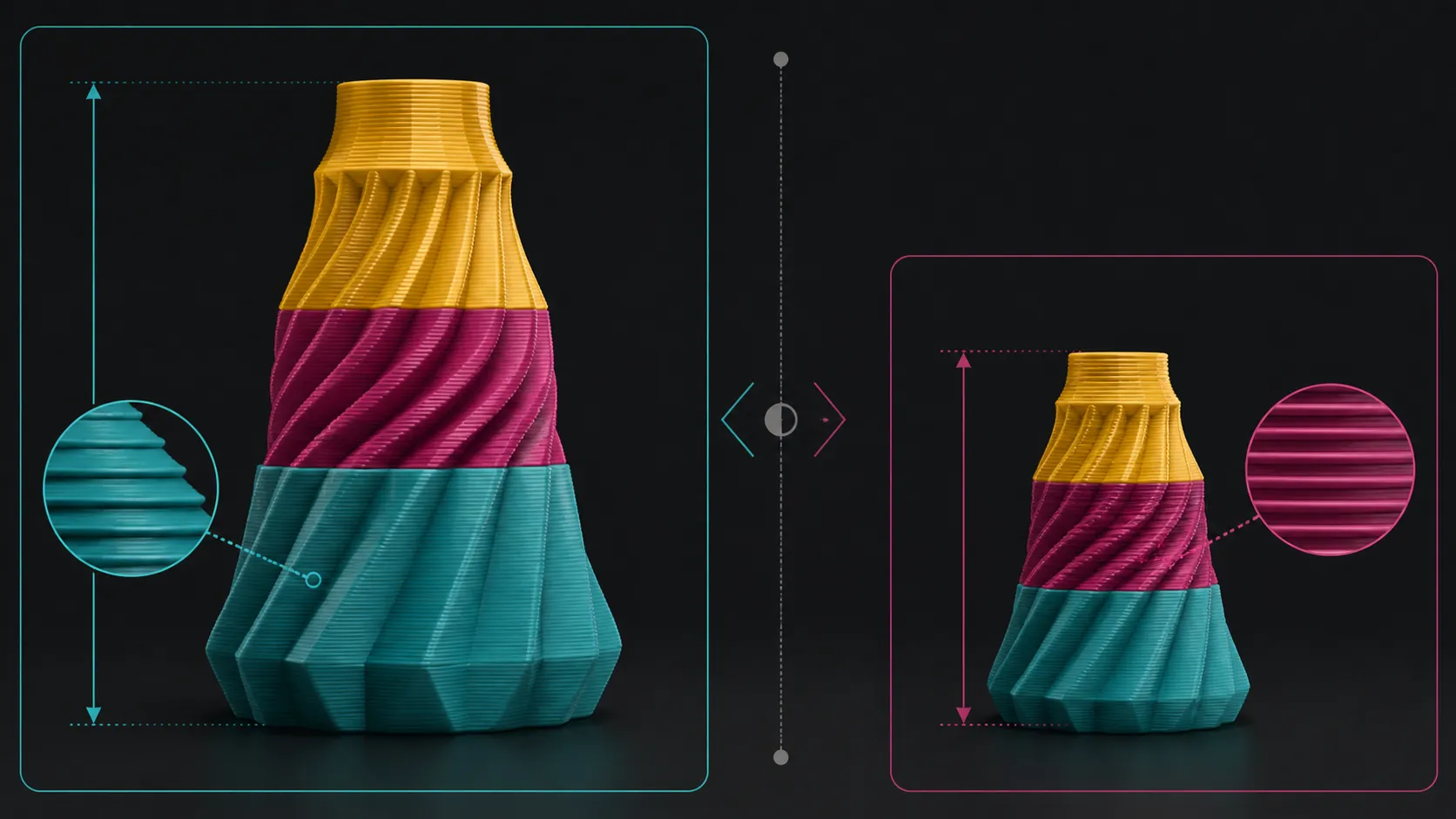
The right printer size is the smallest envelope that handles regular work without expensive compromise. Comparing large-format FDM vs standard 3D printers in South Africa means measuring projects, split labour, batch yield and available room before spending Rand.
Quick Answer
The Neptune 4 Max suits South African projects that use 420x420x480mm capacity; a standard printer makes more sense when most work fits comfortably inside a smaller volume.
Choose large-format FDM when recurring prepared models press against an axis or one-piece production removes valuable assembly work. Choose standard size when normal jobs fit and rare oversized pieces can be split sensibly. South African buyers can use the Neptune 4 Max's R9,399 price and 420 x 420 x 480mm envelope as a reference, while measuring room footprint separately.
📐 Compare Real Prepared Dimensions
Export the oriented dimensions of recent models after support decisions. Mark the blocking axis and the change used to make each fit. This shows whether the workshop needs more width, depth or height rather than a vague bigger machine.
Use large-format printer options on Evetech with that dimension sheet. A standard printer stays competitive when every important row passes without forced scaling or poor orientation.
Add committed future jobs, but keep speculative concepts separate. Capacity margin should follow a measured trend, not one imagined extreme.
🧩 Put Split Work Into the Rand Case
Sectioning can introduce alignment, assembly, bonding or fastening, finishing and inspection. Calculate the active labour for one real split model. The larger envelope earns value when it removes those steps repeatedly.
Splitting can also be beneficial. Modular props travel more easily, a damaged section can be replaced and another orientation may improve the result. Do not award one-piece printing automatic victory.
📦 Test Batch Use Independently
A 420 x 420mm bed can contain repeated smaller parts, but usable yield matters more than the packed count. Run a modest and a larger layout, then record accepted units, elapsed time and operator handling.
The Neptune's Klipper high-speed hardware allows rates reaching 500mm/s, yet maximum motion cannot predict full-batch throughput. A standard-size machine running dependable sequential jobs may suit the schedule better.
Use Evetech's wider 3D printer category to score single-part scale independently from batch production.
🏗️ Measure Room and Material Workflows
Obtain exterior dimensions for every candidate and map moving clearance, spool placement, cables, plate access and maintenance. Never use the printable envelope as the South African workshop footprint.
The Neptune reaches 300C at the nozzle and has a plate usable on both faces. Neither fact identifies compatible filament or surface care. Once the material is named, inspect Evetech's filament choices and verify the complete process and room requirements.
Finish with a weighted score: routine fit, avoided split labour, validated batches, installation and R9,399 price. Large-format makes sense when those lines beat the standard alternative for normal work.
Run a sensitivity check by removing the single largest project from the list. If the large printer still wins, the capacity case is broad. If the result flips immediately, decide whether that one job is valuable and certain enough to control the purchase.
Perform a second check using only the next six months of committed work. This limits optimistic forecasting and shows whether a standard machine plus a planned external route for rare oversized pieces is more economical. Record the decision date and review it promptly whenever committed work changes in scope or timing.
Large-format value includes fewer seams, batch space and material flexibility from the 300C hotend, but also demands more room and raises the cost of long failed prints. The 121-point levelling grid and direct drive support the broad platform. Compare the largest recurring oriented model, not a hypothetical future object, and account for printer clearance before choosing the larger class.
Frequently Asked Questions
When does large-format FDM make more sense?
It makes sense when important repeated projects need the additional axes, avoid costly joints or use a proven wide-bed batch layout.
When can a standard-size machine be enough?
It can be enough when regular prepared files fit and occasional larger work has an acceptable modular or external route.
What large envelope anchors this comparison?
The Neptune 4 Max provides 420mm width, 420mm depth and 480mm height at R9,399.
How should split work be valued?
Count design, alignment, joining, finishing and inspection, while also recognising cases where modular construction improves the project.
Does the larger build volume reveal room requirements?
No. Exterior size, movement, handling and service clearance must be measured separately for the intended location.
What local price supports the decision?
The ELEGOO example costs R9,399. Compare the Rand amount with the specific capacity and workflow gains the buyer will use.
Ready to choose printer size from South African project evidence?
Explore large and standard FDM options at Evetech with model dimensions, split labour and room clearance already compared.