Quick Answer
Upgrading a monitor before a GPU makes sense when your current display holds back the GPU you already own: if you game at 60 Hz on a card that pushes 120+ fps, a 144 Hz panel is the bigger felt upgrade. In that monitor-first plan, CPU coolers matter once a faster CPU runs hot; a R450-R650 cooler tames it before you chase frames.
When the Monitor Is the Real Bottleneck
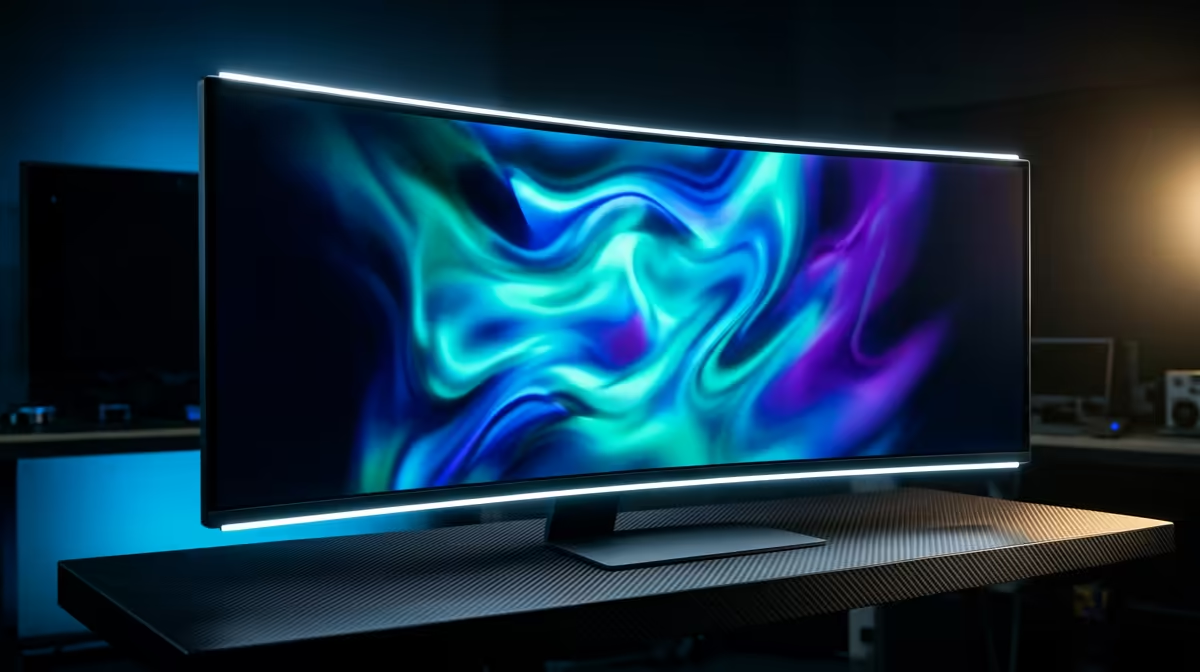
A GPU can only show what your monitor displays, so a 60 Hz panel caps a capable card at 60 fps no matter how many frames it renders. If your GPU already pushes well past 60 fps in your games, a 144 Hz or 165 Hz monitor unlocks the smoothness you are paying for, making it the bigger upgrade than a new GPU. Match the panel to the card: a mid-range GPU pairs well with a 1080p or 1440p 144 Hz monitor, where it can actually drive the high refresh rate.
So upgrade the monitor first when your display, not your GPU, is the limit; upgrade the GPU first when frames are the limit.
Where CPU Coolers Fit the Plan
Coolers enter the picture when a CPU upgrade is part of the chain. A faster CPU to feed a high-refresh setup runs hotter, and a stock cooler may let it throttle. A R450-R650 tower air cooler keeps a Ryzen 5 7600 or Core i5-13600K under 75 C so it sustains the clocks that feed your frames. The cooler is not the headline upgrade, but it protects the performance of the CPU that drives a high-refresh monitor, so size it to the chip before pushing for more fps.
SA Buying Notes
Locally stocked monitors at Evetech list refresh rate, resolution and panel type; coolers list socket support and height. Match the monitor's refresh rate to what your GPU can drive, and size any cooler to your CPU and case clearance. A 144 Hz 1080p or 1440p panel suits a mid-range GPU; pair a hotter CPU with a capable air cooler.
FAQ
Should I upgrade my monitor or GPU first?
Upgrade the monitor first if your current panel caps a capable GPU, for example a 60 Hz screen limiting a card that pushes 120+ fps. Upgrade the GPU first if your frame rate, not your display, is the limit in the games you play.
What refresh rate suits a mid-range GPU?
A 144 Hz or 165 Hz panel at 1080p or 1440p suits a mid-range GPU, which can drive those refresh rates in many titles. A 240 Hz panel only pays off with a strong GPU and competitive settings that reach those frame rates.
Why would a CPU cooler matter in a monitor-first upgrade?
Because a faster CPU added to feed a high-refresh setup runs hotter and can throttle on a stock cooler. A capable air cooler keeps it under 75 C so it sustains the clocks that drive your frames, protecting the upgrade.
GPU's frame rate against your monitor's refresh rate first; if the card already exceeds your panel's Hz, a 144 Hz monitor is the bigger felt upgrade, and a capable cooler keeps any new CPU from throttling.