Data science coursework loads a PC differently from gaming: long model-training runs and big data joins keep the CPU and RAM busy for minutes or hours, generating steady heat rather than short spikes. The no-regret case fan choice for SA students is about sustained airflow that holds temperatures during those marathon jobs.
Quick Answer
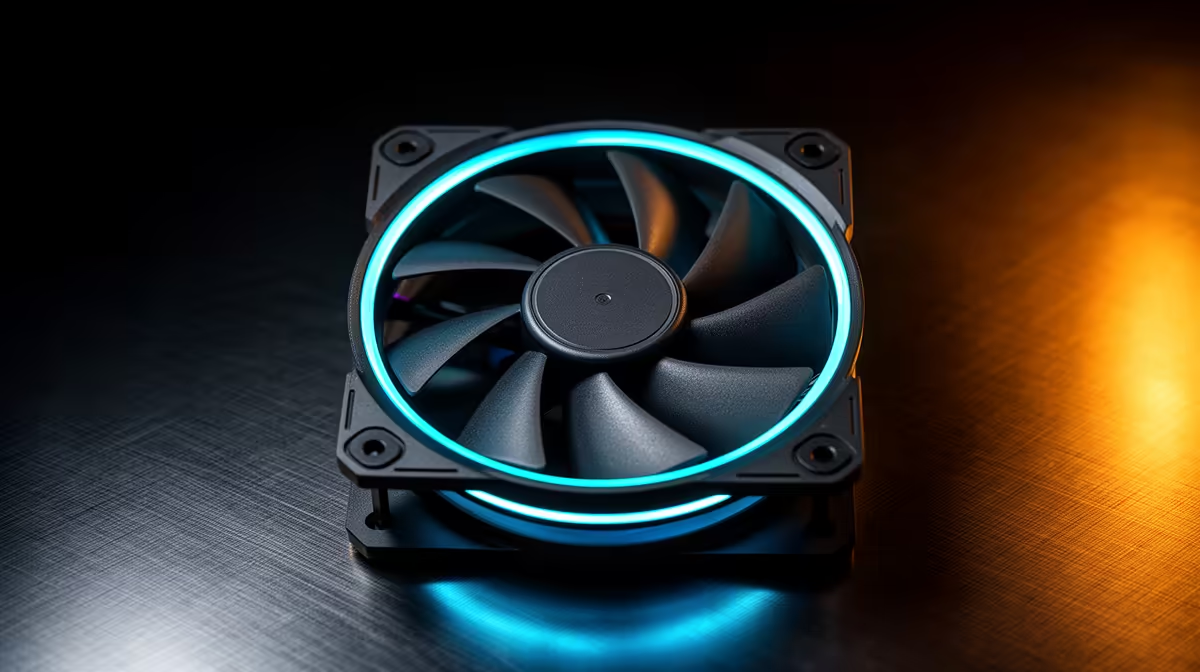
For data science coursework, fit at least two 120mm or 140mm intake fans and one exhaust, targeting a balanced setup that keeps a Ryzen 5 7600 or Core i5 under 80C during long training runs. Quality fans run R150 to R450 each; a R900 set of three good 120mm fans is the no-regret floor for a quiet, thermally stable coursework machine that pairs well with a typical R18,000 student build.
Sustained airflow beats peak gaming cooling
A model-training run can pin your CPU for an hour, so the heat is constant rather than bursty. Two 120mm or 140mm intakes at the front feeding cool air across the components, plus one rear exhaust, create the front-to-back path that holds a Ryzen 5 7600 below 80C through a long job. Positive pressure, slightly more intake than exhaust, also keeps dust off the boards, which matters when the machine runs for hours most evenings.
Static pressure versus airflow fans
Fans split into airflow-optimised and static-pressure designs. For open intake and exhaust positions, high-airflow fans move the most air at a given noise level. For fans bolted to a radiator or a dense dust filter, static-pressure fans push through the restriction better. A R350 static-pressure fan on a CPU radiator and R200 airflow fans in the case is a sensible split that keeps long coursework runs cool without one wrong fan choking the build.
Quiet running for shared study spaces
Data work often happens in a res room or shared flat where fan whine is antisocial late at night. Larger 140mm fans move the same air as 120mm units at a lower RPM and pitch, so they stay quiet under load. A PWM fan that ramps with temperature, paired with a sensible curve in the BIOS, keeps the machine near-silent at idle and only audible during the heaviest training, which is the comfortable balance for nightly coursework.
FAQ
How many case fans do I need for data science work?
At least three: two front intakes and one rear exhaust create a steady front-to-back airflow path. That holds a mid-range CPU under 80C during long training runs that keep the processor busy for an hour or more.
Are bigger 140mm fans better than 120mm?
For quiet running, yes. A 140mm fan moves similar air to a 120mm at a lower RPM and pitch, so it stays quieter under sustained load, which suits late-night coursework in a shared res room.
Do I need expensive fans for a coursework PC?
No. A R900 set of three solid 120mm or 140mm fans gives stable temperatures and quiet running. Spend extra only on a static-pressure fan for a CPU radiator, where it pushes through the fins better.
temperature-based fan curve in your BIOS so fans stay quiet at idle and only ramp during long training runs. You get silence while writing code and full cooling when a model is actually training.