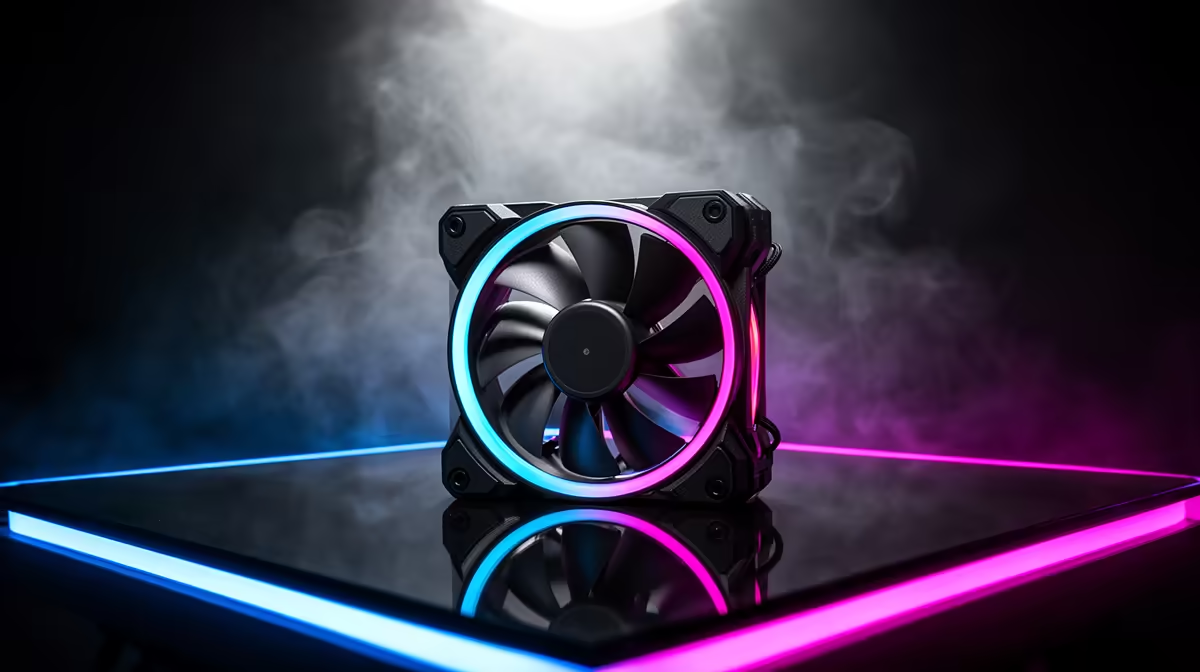
VR fitness apps drive the GPU at full tilt for long, continuous workouts, generating sustained heat the cooling must handle. The no-regret fan specs lean toward strong, consistent airflow to keep the rig stable through demanding sessions in a warm room.
Quick Answer
No-regret case fan specs for a VR fitness setup are high-airflow 120mm or 140mm PWM fans moving 60 to 75 CFM with a fluid-dynamic bearing, since VR fitness loads the GPU hard for long, sweaty sessions. Quality fans around R250 to R400 each keep an RTX-class GPU below throttling temps through intense, sustained play.
Airflow that handles sustained VR loads
VR fitness keeps the GPU near maximum for the whole session, so prioritise fans moving 60 to 75 CFM to clear that constant heat. Two or three 140mm intake fans plus an exhaust keep an RTX 4070 or RX 7800 XT below throttling temps across a 45-minute workout. A R250 to R400 high-airflow PWM fan delivers the steady cooling a VR fitness rig needs more than a quiet, low-airflow fan would.
Bearing quality for long, repeated sessions
A fluid-dynamic bearing handles long daily run-times without wearing out or getting noisy, which matters when the rig runs hard for an hour most days. Cheaper sleeve bearings degrade faster under sustained heat. For a setup used intensely and regularly, the better bearing is a no-regret choice that keeps airflow and noise consistent over years.
Balance airflow with manageable noise
VR fitness needs airflow, but you do not need screaming fans; a PWM curve that ramps with GPU temperature keeps things quiet during warm-up and only spins up under full load. 140mm fans move the required air at lower noise than smaller fans. The no-regret result is strong sustained cooling that stays as quiet as the workload allows, protecting both performance and your ears.
FAQ
How much airflow do VR fitness setups need?
More than typical gaming, because the GPU runs near maximum for the whole session. Fans moving 60 to 75 CFM, with two or three intakes plus an exhaust, keep an RTX-class GPU below throttling temps through long workouts.
Why does bearing type matter for a VR fitness PC?
Because the rig runs hard most days, a fluid-dynamic bearing handles sustained heat and long run-times without wearing out or getting noisy. Cheaper sleeve bearings degrade faster under that kind of continuous load.
Do VR fitness fans have to be loud?
No. While VR fitness needs strong airflow, 140mm fans deliver it at lower noise, and a PWM curve keeps them quiet until full load. You get sustained cooling without constant screaming fans.
fitness, fit 140mm PWM fans moving 60 to 75 CFM and set a curve that ramps with GPU temperature; sustained airflow keeps the GPU from throttling mid-workout.